
The Most Overlooked Carry-On Item for Long-Haul Comfort
The Moment Every Long-Haul Traveler Knows
Halfway through a long-haul flight, something shifts. Your lower back tightens. Your legs feel heavy. Sleep becomes impossible. You start adjusting, stretching, repositioning—nothing quite works.
And then you notice something strange: the passenger across the aisle looks… comfortable.
Not business class. Not upgraded. Just smarter.
Because while most travelers focus on seats, pillows, and headphones, they miss the one item that quietly transforms long-haul comfort.
The Most Overlooked Carry-On Item: A Portable Footrest
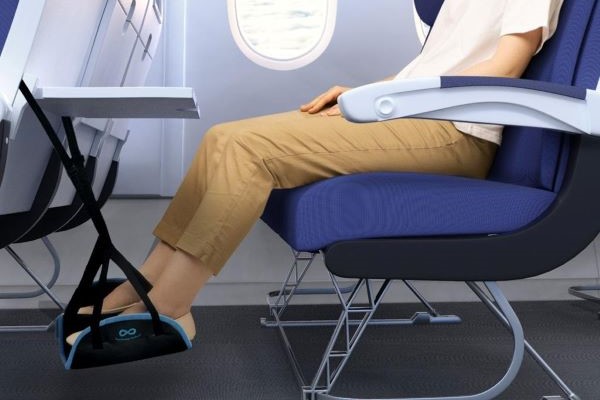
It’s not flashy. It doesn’t show up in airline ads. But frequent flyers know: a compact foot hammock or footrest can completely change how your body feels in economy.
Get the SkypropreAir Free Travel Pack
Plan smarter, choose a better seat and enjoy a more comfortable long-haul journey. Enter your details below to receive the Travel Pack.
This lightweight sling attaches to your tray table and lets you elevate your feet slightly—fixing one of the biggest problems in modern aircraft seating.
Why This Small Upgrade Feels Like a Big One
1. It Solves the Real Problem: Your Posture
Most economy seats force your legs downward, putting pressure on your lower back. A footrest lifts your legs just enough to align your spine more naturally.
If you’ve ever wondered why flying suddenly feels more exhausting, it often comes down to posture—not just seat size. (See: Why Flying Suddenly Feels More Exhausting)
2. It Reduces That “Heavy Legs” Feeling After Landing
Long flights restrict circulation. That’s why your legs feel stiff, swollen, or numb.
A footrest improves blood flow just enough to reduce fatigue—something most passengers only realize after experiencing it once.
This ties directly into the hidden science behind cabin fatigue that most travelers ignore.
3. It Makes Sleeping in Economy Actually Possible
Here’s the truth: sleeping upright is hard—but sleeping with unsupported legs is worse.
A footrest stabilizes your lower body, making it easier to relax into a sleep position—especially on red-eyes.
Pair this with the right seat strategy (see: Seats You Should Never Book on a Red-Eye) and your chances of real rest increase dramatically.
4. It Creates a “Quiet Upgrade” Effect
No, it’s not business class. But it feels closer than you’d expect.
In fact, many experienced travelers would choose a well-set-up economy seat (with the right accessories) over poorly configured premium cabins.
It’s part of a bigger shift in how smart travelers think about comfort (see: The Tiny Comfort Habit Frequent Flyers Swear By).
Why Airlines Don’t Talk About It
Because it doesn’t make them money.
Airlines focus on selling upgrades—not optimizing your economy experience. So the best comfort hacks are often the ones you discover outside their ecosystem.
Smart Traveler Move: Combine It With These
If you want to maximize comfort without upgrading your ticket:
-
Book strategically (see: The 24-Hour Seat Selection Trick Airlines Don’t Explain Clearly)
-
Avoid problematic rows (see: The Worst Rows on a Plane Ranked)
-
Add small comfort upgrades like a footrest
That combination often beats paying hundreds more for a slightly better seat.
Smart Booking Tip
Before your next long-haul flight, it’s worth comparing routes and aircraft types—because seat comfort varies more than most people realize.
Use platforms like Aviasales to quickly spot better aircraft and seat layouts before booking.
Travel Safety Tip Most People Skip
Comfort doesn’t end on the plane. Delays, missed connections, or medical issues can quickly ruin a trip.
Frequent travelers quietly rely on providers like SafetyWing for flexible coverage—especially on long international trips.
Final Thought: Comfort Is a Strategy, Not a Price Tag
The biggest myth in flying is that comfort comes from spending more.
In reality, it comes from knowing what actually matters.
And sometimes, the difference between arriving exhausted and arriving refreshed…
is a small item in your carry-on that almost nobody talks about.
Suggested FAQs
1. Are portable footrests allowed on all airlines?
Most airlines allow them during cruising but require removal during taxi, takeoff, and landing. Always check airline-specific rules.
2. Is a footrest worth it for flights under 6 hours?
It can help, but the biggest benefits show up on long-haul flights where posture and circulation become real issues.
3. What if I don’t have a footrest?
A backpack or blanket can work as a substitute—but it won’t offer the same adjustability or consistent support.