
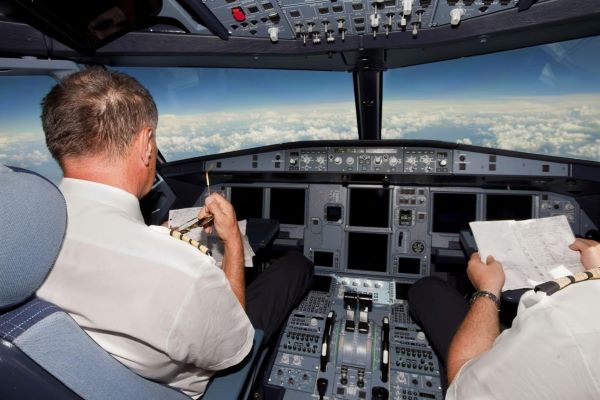
What Happens in the Cockpit During Takeoff?
The Most Critical Minutes of the Flight Happen Behind a Closed Door
The aircraft begins to move.
Cabin lights glow softly. Passengers adjust their seatbelts, check their phones one last time, and glance out of the window. Everything feels routine.
Yet behind the reinforced cockpit door, a completely different reality is unfolding.
Two pilots are preparing for one of the most demanding moments in aviation. Every switch, every instrument, every word spoken carries significance. There is no room for distraction. No room for assumptions.
The next few minutes will determine how hundreds of people safely leave the ground and begin their journey through the sky.
Get the SkypropreAir Free Travel Pack
Plan smarter, choose a better seat and enjoy a more comfortable long-haul journey. Enter your details below to receive the Travel Pack.
Most passengers never see what happens during takeoff.
And that’s exactly what makes it so fascinating.
If aviation safety interests you, don’t miss our article on The Safety Layers Protecting Every Commercial Flight.
The Final Moments Before Departure
Long before the engines roar, the pilots are already working.
Weather reports are reviewed.
Runway conditions are checked.
Fuel levels are verified.
Aircraft performance calculations are completed.
Emergency procedures are discussed.
Every takeoff requires a unique plan.
A heavily loaded aircraft on a rainy runway requires different calculations than the same aircraft departing on a dry summer afternoon.
Pilots calculate critical speeds that will guide every decision during takeoff:
-
V1 – Decision speed
-
VR – Rotation speed
-
V2 – Safe climb speed
These numbers are not estimates.
They are carefully calculated based on aircraft weight, weather conditions, runway length, and dozens of other factors.
When passengers see the aircraft taxiing, the planning phase is already complete.
Now comes execution.
Travel Smarter
Before booking your next flight, compare fares using SkypropreAir’s recommended flight search partners. You may discover significant price differences between booking platforms.
Affiliate Disclosure: SkypropreAir may earn a commission at no extra cost to you.
The Sterile Cockpit Rule Begins
As the aircraft approaches the runway, something important happens inside the cockpit.
Conversation changes completely.
Pilots enter what is known as the sterile cockpit phase.
No discussions about personal matters.
No conversations about schedules.
No distractions.
Only communication directly related to the safe operation of the aircraft is allowed.
The atmosphere becomes intensely focused.
For passengers, it may feel like another normal departure.
For pilots, concentration has reached its highest level.
Every word now serves a purpose.
Lining Up on the Runway
Air Traffic Control issues takeoff clearance.
The aircraft moves onto the runway centerline.
This is often the final moment before commitment.
Pilots perform one last scan.
Engine instruments.
Navigation systems.
Warning indicators.
Flight controls.
Weather radar.
Runway alignment.
Everything must match expectations.
If something doesn’t look right, the takeoff can be delayed or cancelled immediately.
Schedules never come before safety.
This relentless attention to detail is one reason modern aviation remains remarkably safe.
For more insights, read Why Airplanes Are Safer Than Cars, Trains, and Buses.
The Engines Unleash Their Power
Then comes the moment every passenger recognizes.
The engines begin to accelerate.
A low rumble fills the cabin.
The aircraft starts to surge forward.
Passengers feel themselves pushed gently back into their seats.
Inside the cockpit, however, the pilots are not admiring the acceleration.
They are watching dozens of indicators simultaneously.
Engine temperatures.
Fuel flow.
Oil pressure.
Thrust settings.
Aircraft tracking.
Every reading must remain within safe limits.
A serious abnormality at this stage can lead to an immediate rejected takeoff.
The aircraft may appear calm.
The cockpit is alive with monitoring and decision-making.
The Race Against Time
Speed increases rapidly.
The runway flashes beneath the wheels.
Pilots begin a sequence of standardized callouts.
“Eighty knots.”
This confirms that both pilots are seeing the same airspeed information.
The aircraft continues accelerating.
Then comes one of the most important words spoken in aviation.
“V1.”
This is the decision point.
Before V1, pilots may stop the aircraft if a major problem occurs.
After V1, stopping may no longer be the safest option.
The aircraft is now committed to flying.
This single callout represents decades of engineering, training, and safety analysis.
Passengers rarely hear it.
But it is one of the most critical moments of the entire flight.
The Moment the Aircraft Leaves the Earth
Seconds later comes another call.
“Rotate.”
The pilot gently pulls back on the controls.
The nose rises.
The runway begins to disappear beneath the aircraft.
Then it happens.
The wheels leave the ground.
A machine weighing hundreds of tons becomes airborne.
For some passengers, it is exciting.
For others, it is nerve-racking.
For the pilots, however, the workload actually increases.
Now they must monitor climb performance, aircraft attitude, airspeed, and departure routing simultaneously.
The flight has only just begun.
If you’re a nervous flyer, you may also enjoy What Pilots Know About Flying That Most Passengers Don’t
Protect Your Journey
Unexpected delays, cancellations, lost baggage, and medical emergencies can disrupt even the best travel plans.
Consider travel insurance before your next international trip.
Recommended Partner: SafetyWing Travel Insurance
Managing the First Climb
After liftoff, pilots continue following a highly structured sequence.
Landing gear is retracted.
Flaps are gradually adjusted.
Departure procedures are followed precisely.
The aircraft climbs safely away from terrain, obstacles, and surrounding traffic.
At the same time, pilots remain ready for emergencies.
Bird strikes.
Engine failures.
System warnings.
Unexpected weather conditions.
These scenarios are practiced repeatedly in advanced flight simulators.
Pilots prepare for situations they may never encounter because preparation is the foundation of aviation safety.
The Hidden Symphony of Teamwork
One of the most impressive aspects of takeoff is teamwork.
Every action is cross-checked.
Every instruction is confirmed.
Every critical task is monitored by both pilots.
The captain and first officer function as a single team.
This layered approach dramatically reduces the possibility of error.
Passengers often see a smooth takeoff.
What they don’t see is the extraordinary coordination making that smooth takeoff possible.
Modern aviation relies on teamwork just as much as technology.
Why Takeoff Demands So Much Attention
Many travelers fear turbulence.
Others worry about flying at 35,000 feet.
Yet takeoff and landing are the phases that require the highest workload.
The aircraft is close to the ground.
Speeds are changing rapidly.
Decisions must be made within seconds.
There is little margin for delay.
That is why airlines invest heavily in training.
Pilots repeatedly practice emergency scenarios until their responses become second nature.
Every checklist.
Every procedure.
Every callout.
All designed to ensure the safest possible outcome.
For a deeper look at turbulence, read What Pilots Know About Turbulence That Most Passengers Don’t and Can Turbulence Actually Damage an Airplane?
The Secret Most Passengers Never Realize
The next time you hear the engines roar and feel the aircraft accelerating down the runway, remember this:
What appears effortless is actually the result of extraordinary preparation.
Behind the cockpit door, two pilots are managing hundreds of tasks, monitoring countless data points, and following procedures refined over decades.
Every checklist.
Every calculation.
Every callout.
Every decision.
All serve a single purpose.
To get you safely into the sky.
While passengers often remember the destination, aviation professionals know that one of the most remarkable parts of the journey occurs during those powerful minutes when an aircraft transforms from a machine on the ground into a machine capable of crossing oceans and continents.
That is the true story of takeoff.
Not merely a departure.
But one of the most carefully managed operations in modern transportation.
Frequently Asked Questions
Why do pilots stop casual conversation during takeoff?
Pilots follow the sterile cockpit rule, which eliminates non-essential conversation during critical phases of flight to maximize concentration and safety.
What happens if an engine fails during takeoff?
Pilots are trained extensively for this situation. Depending on the aircraft’s speed and circumstances, they may either reject the takeoff or continue safely into the air before returning to land.
Is takeoff more dangerous than cruising?
Takeoff and landing involve higher workloads and more rapid decision-making, but modern aviation remains one of the safest forms of transportation due to extensive training and multiple layers of safety systems.
Join the Discussion
If airlines offered passengers a live audio feed of cockpit communications during takeoff, would it make you feel more confident about flying—or would hearing every callout and decision make you even more nervous? Share your thoughts in the comments below.