
How Long Does the Oxygen Supply Really Last?
Imagine settling into your seat on a long-haul flight.
The cabin lights are dim. Most passengers are asleep. The engines hum steadily in the background. Everything feels routine.
Then a loud bang echoes through the aircraft.
The plane suddenly drops.
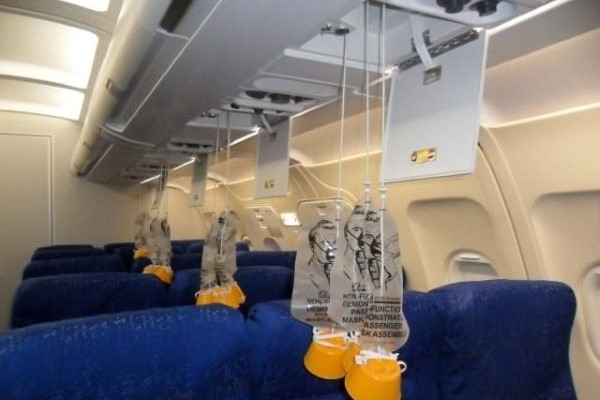
Within seconds, yellow oxygen masks fall from the ceiling.
Get the SkypropreAir Free Travel Pack
Plan smarter, choose a better seat and enjoy a more comfortable long-haul journey. Enter your details below to receive the Travel Pack.
Passengers gasp. Some scream. Others freeze in disbelief.
In that terrifying moment, one question overwhelms every other thought:
How long does the oxygen supply really last?
Most people assume the masks can provide oxygen for hours.
The truth is far more surprising.
And understanding it may completely change the way you view airline safety.
Related Reading: Why Most Passengers Ignore Emergency Exit Instructions
The Biggest Oxygen Mask Myth
One of the most common misconceptions among travelers is that the oxygen masks are designed to keep everyone breathing until the plane lands.
They are not.
The masks serve one critical purpose:
To keep passengers alive long enough for pilots to descend to a safe altitude.
That’s it.
The system isn’t intended to support passengers for the remainder of a flight.
Instead, it’s designed to bridge the gap between a sudden loss of cabin pressure and the aircraft reaching breathable air.
That distinction is what makes the entire system so effective.
Why Humans Cannot Breathe Normally at Cruising Altitude
Commercial aircraft routinely fly between 30,000 and 40,000 feet.
Outside the aircraft, the air contains oxygen, but the pressure is extremely low.
Without cabin pressurization, your body cannot absorb enough oxygen into the bloodstream to function normally.
At 35,000 feet, a person may have less than a minute of useful consciousness.
At higher altitudes, it can be even less.
That’s why decompression events demand immediate action.
Without supplemental oxygen, confusion, impaired judgment, unconsciousness, and eventually death can occur surprisingly quickly.
The oxygen masks are specifically designed to prevent this condition, known as hypoxia.
Related Reading: Why Airplane Cabin Pressure Feels Strange During Long Flights
Travel Safety Tip
Unexpected medical emergencies can happen anywhere in the world. Before your next trip, consider reviewing travel insurance options that include emergency medical coverage and evacuation benefits.
The Critical Seconds After the Masks Drop
When oxygen masks deploy, many passengers instinctively want to help others first.
Parents reach for children.
Couples reach for each other.
Friends look around in panic.
But airline safety instructions always say the same thing:
Put on your own mask first.
That advice isn’t arbitrary.
If you lose consciousness while helping someone else, you may become unable to help anyone.
Those few seconds could make the difference between remaining alert and becoming incapacitated.
That’s why flight attendants repeat this instruction before every flight.
It may sound simple, but it is based on decades of safety research and real-world emergencies.
Related Reading: How Emergency Exits Save Lives in Under 90 Seconds
The Answer Everyone Wants to Know
Here is the fact that surprises most passengers:
The oxygen masks typically provide oxygen for only about 12 to 22 minutes.
Yes.
Minutes.
Not hours.
Not until landing.
Just enough time to survive the emergency phase.
At first, that may sound alarming.
But once you understand how commercial aviation works, it becomes incredibly reassuring.
The oxygen system is not designed to keep you at cruising altitude.
It’s designed to keep you alive while pilots rapidly descend to an altitude where normal breathing is possible.
That’s why airlines don’t need massive oxygen supplies lasting several hours.
They only need enough oxygen to cover the descent.
Related Reading: What Pilots Know About Flying That Most Passengers Don’t
What Happens Inside the Cockpit During an Oxygen Emergency
While passengers are reaching for masks, pilots are already responding.
They immediately put on their own oxygen masks.
They assess the situation.
They communicate with air traffic control.
Then they begin an emergency descent.
Commercial aircraft are capable of descending rapidly while remaining within safe operating limits.
Within minutes, the aircraft can often reach altitudes below 10,000 feet.
At that altitude, the air pressure is sufficient for most people to breathe normally without supplemental oxygen.
The passenger oxygen supply is carefully calculated around this procedure.
The masks buy time.
The pilots use that time to solve the problem.
Planning Your Next Flight?
Compare aircraft types and seat configurations before booking. Choosing the right aircraft can dramatically improve comfort on long-haul journeys.
The Hidden Oxygen Factory Above Your Head
Many passengers assume the masks are connected to giant oxygen tanks.
In most commercial aircraft, that’s not actually true.
Passenger oxygen systems often rely on chemical oxygen generators.
When a passenger pulls down on the mask, a mechanism activates a chemical reaction.
That reaction produces oxygen continuously.
Once activated, it cannot be turned off.
Whether someone uses the mask or not, the oxygen generator continues operating until its supply is exhausted.
This design is reliable, lightweight, and highly effective during emergencies.
It’s one of the many hidden engineering solutions that make modern air travel remarkably safe.
Related Reading: The Safety Equipment Most Passengers Never Notice
Why the Oxygen Bag Sometimes Looks Empty
One of the most frightening moments for passengers can happen after they put on the mask.
They notice the bag isn’t inflating.
Panic begins.
They assume the system has failed.
In reality, oxygen may still be flowing perfectly.
The bags often inflate and deflate differently depending on breathing patterns and system operation.
That’s why airlines specifically advise passengers to continue breathing normally even if the bag does not appear fully inflated.
The visual appearance of the bag is not always an indication of performance.
The important thing is keeping the mask securely over your nose and mouth.
Related Reading: What Turbulence Really Feels Like From the Cockpit
What If the Aircraft Can’t Descend Quickly Enough?
This question highlights just how carefully aviation safety is planned.
Every flight route, cruising altitude, and emergency procedure is designed with decompression scenarios in mind.
Pilots know exactly where they can descend safely.
Even flights crossing mountain ranges or remote regions have specific emergency procedures built into their planning.
The oxygen duration isn’t random.
It’s based on extensive testing, regulatory requirements, and realistic emergency descent profiles.
Every commercial airline must meet strict standards regarding oxygen availability and emergency preparedness.
Long-Haul Comfort Resource
Before your next trip, check our guides on:
Real Emergencies Prove the System Works
Although decompression incidents are rare, aviation history has repeatedly demonstrated that oxygen systems save lives.
Passengers have survived sudden pressure loss because the masks deployed exactly as designed.
What looks frightening from a passenger’s perspective is actually evidence that multiple layers of safety are functioning correctly.
The masks aren’t proof something has gone wrong.
They’re proof the aircraft’s emergency systems are doing exactly what they were designed to do.
Related Reading: Why Airplanes Are Still the Safest Way to Travel
The Reassuring Truth Most Passengers Never Hear
The image of oxygen masks dropping from the ceiling has become one of aviation’s most powerful symbols of danger.
Movies have reinforced that fear for decades.
But the reality is very different.
Those masks are not expected to keep you alive indefinitely.
They are designed to provide exactly what is needed at exactly the right moment.
The oxygen supply lasts long enough for trained pilots to bring the aircraft from an environment humans cannot safely breathe in to one where they can.
Those precious 12 to 22 minutes represent decades of engineering, testing, regulation, and operational planning.
Most passengers never think about the system above their heads.
And hopefully, they’ll never need it.
But if those masks ever drop during your flight, remember this:
The countdown isn’t a sign of impending disaster.
It’s a carefully engineered safety buffer designed to bring everyone safely back to breathable air.
Frequently Asked Questions
How long do airplane oxygen masks typically last?
Most passenger oxygen systems provide oxygen for approximately 12 to 22 minutes, depending on aircraft type and system configuration.
Why don’t airlines provide oxygen for the entire flight?
The masks are only intended to keep passengers safe during an emergency descent. Once the aircraft reaches a breathable altitude, supplemental oxygen is generally no longer required.
Can the oxygen mask still work if the bag doesn’t inflate?
Yes. Oxygen may still be flowing normally even when the bag appears deflated. Always keep the mask securely over your nose and mouth and breathe normally.
Join the Discussion
If you discovered during a flight that your oxygen mask only had enough oxygen for about 15 minutes, would that knowledge increase your confidence in aviation safety—or make the situation feel even more unsettling? Why?