
The Safety Jacket Under Your Seat Most Passengers Never Think About
Imagine this.
The cabin lights are dim. The engines hum steadily somewhere beyond the wing. Most passengers are watching movies, scrolling through their phones, or trying unsuccessfully to sleep.
Beneath them, hidden in plain sight, sits a piece of equipment that could one day mean the difference between life and death.
Most people never touch it.
Many don’t even know exactly where it is.
Get the SkypropreAir Free Travel Pack
Plan smarter, choose a better seat and enjoy a more comfortable long-haul journey. Enter your details below to receive the Travel Pack.
Some have flown dozens of times without ever looking at it.
Yet before every flight, cabin crews carefully check that it remains there, ready for a situation everyone hopes will never happen.
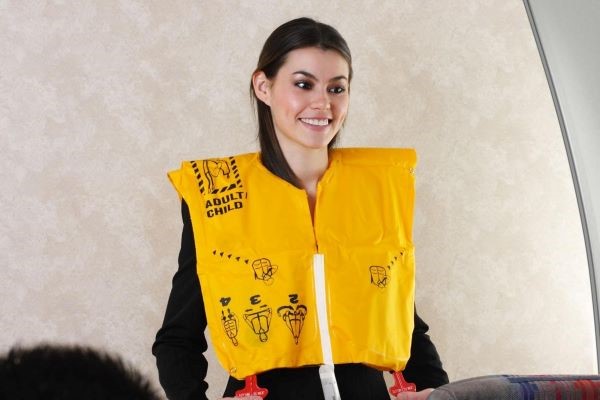
The yellow life jacket beneath your seat is perhaps the most overlooked safety device in commercial aviation. It rarely enters a passenger’s thoughts—until the moment it suddenly becomes the most important object on the aircraft.
Ironically, many travelers spend far more time worrying about turbulence than the equipment specifically designed to protect them during emergencies. If you’ve ever gripped your armrest during rough air, you may also enjoy reading The Hidden Reason Turbulence Feels More Terrifying Than It Really Is.
The Most Ignored Item On The Aircraft
Before takeoff, flight attendants perform a familiar ritual.
- Seat belts.
- Emergency exits.
- Oxygen masks.
- Life jackets.
Most passengers barely pay attention.
Many frequent travelers believe they’ve heard the briefing so many times that there’s nothing new to learn.
Yet psychologists say repeated exposure causes many people to mentally switch off. It’s the same phenomenon that influences passenger behavior during boarding, which we explored in The Boarding Process Is More Psychological Than Most Travelers Realise.
Ironically, the life jacket is often the part of the safety demonstration people ignore the most.
After all, what are the chances of needing it?
Extremely small.
Commercial aviation remains one of the safest forms of transport ever created. Yet safety procedures exist precisely because aviation professionals prepare for events that are unlikely but possible.
That yellow life vest isn’t there because airlines expect trouble.
It’s there because aviation plans for every scenario.
Travel Tip: Many frequent flyers carry a compact travel essentials kit containing a portable charger, sleep mask, earplugs, and cable organizer. These simple items can dramatically improve long-haul comfort.
Affiliate Recommendation: Compare the best travel comfort accessories before your next flight.
A Silent Guardian Beneath Your Feet
The life jacket remains completely invisible throughout the flight.
- Passengers rarely see it.
- They rarely think about it.
- They almost never check for it.
Yet every certified commercial aircraft operating over water must carry approved flotation equipment for passengers.
The life jacket sits folded inside a compact pouch, waiting silently beneath the seat.
Thousands of flights occur every day without it being touched.
- Year after year.
- Decade after decade.
Its greatest success is that it almost never needs to be used.
This hidden presence reflects a broader reality about aviation. Some of the most important systems on an aircraft remain completely invisible to passengers. The same is increasingly true inside modern airports, as discussed in The Future Airport May Know More About You Than You Think.
Why Flight Attendants Emphasize One Crucial Detail
There’s one instruction flight attendants repeat during nearly every safety briefing.
- Do not inflate the life jacket inside the aircraft.
- At first glance, it seems obvious.
- But in a real emergency, fear changes human behavior.
- People panic.
- They rush.
They make impulsive decisions.
An inflated life jacket inside a cabin could prevent a passenger from moving efficiently through exits or narrow aisles.
- In a water evacuation, every second matters.
- That’s why crews repeatedly emphasize waiting until outside the aircraft before inflation.
- The instruction sounds simple.
- In reality, it could save lives.
Many passengers don’t realize that flight attendants are trained primarily as safety professionals. Their emergency training is extensive and often surprises travelers. We explored this further in What Flight Attendants Notice About You Within Seconds of Boarding.
Travel Protection Recommendation: Smart travelers never assume emergencies only happen to other people. Comprehensive travel insurance can provide valuable protection against medical emergencies, delays, cancellations, and unexpected disruptions.
Affiliate Recommendation: SafetyWing Travel Insurance.
The Psychological Reason Passengers Ignore Safety Equipment
Human beings are remarkably skilled at filtering out information they believe they won’t need.
Psychologists call this “normalcy bias.”
It’s the tendency to assume things will continue as they always have.
Most flights are routine.
Most flights are safe.
Most flights land exactly as planned.
Because of this, passengers naturally tune out safety information.
Their brains classify it as background noise.
Ironically, the safer aviation becomes, the less attention many travelers pay to safety briefings.
The very success of modern aviation encourages complacency.
The same psychological forces also explain why many travelers feel unusually stressed during air travel despite overwhelming evidence that flying is extraordinarily safe. Read more in Why Modern Airplanes Feel More Stressful Than Older Ones.
What Happens During A Water Landing?
Hollywood has created countless dramatic images of aircraft emergencies.
Reality is very different.
Commercial pilots train extensively for emergency scenarios.
Cabin crews receive recurring emergency and evacuation training throughout their careers.
Aircraft are designed with multiple layers of safety systems.
In the extremely rare event of a water landing, passengers would receive crew instructions, evacuation commands, and guidance toward flotation equipment.
The life jacket becomes part of a carefully coordinated safety process.
It is not intended to solve every problem.
Instead, it provides additional survival support once passengers are outside the aircraft.
Long before passengers board, pilots have already completed extensive planning and contingency reviews. That preparation contributes significantly to The Hidden Mental Pressure Pilots Face Before Every Flight.
Save Money on Flights: Before booking your next trip, compare multiple airlines and booking options. Many travelers are surprised how much they can save by checking fare comparison platforms first.
Affiliate Recommendation: Aviasales Flight Search.
The Hidden Engineering Inside A Simple Yellow Vest
At first glance, airline life jackets appear surprisingly basic.
Yet every element serves a purpose.
Bright yellow coloring improves visibility.
Reflective materials help rescuers locate survivors.
Inflation chambers provide buoyancy.
Whistles allow passengers to attract attention.
Some versions include locator lights designed to activate in water.
These features may seem small individually.
Together, they form a survival tool engineered for one purpose: helping people remain visible and afloat until rescue arrives.
A remarkable amount of engineering is hidden inside something many passengers never bother to locate. Similar unseen technology exists throughout the travel experience, including many systems explored in The Creeping Airport Technology Many Passengers Barely Notice.
The Miracle Of Never Needing It
Commercial aviation’s extraordinary safety record means millions of passengers fly every day without ever experiencing a serious emergency.
Most life jackets complete their entire service life without inflation.
And that’s exactly what everyone wants.
The vest beneath your seat represents aviation’s philosophy of preparation.
- Not fear.
- Preparation.
- Pilots prepare.
- Engineers prepare.
- Maintenance crews prepare.
- Flight attendants prepare.
- Airlines prepare.
The life jacket is simply another example of an industry built around planning for the unexpected.
The same philosophy increasingly shapes airport security and passenger screening technologies. You can learn more in Facial Recognition at Airports: Convenience or Surveillance?
The Next Time You Board A Flight
The next time you settle into your seat, take a moment.
- Look beneath it.
- Find the life jacket.
- Read the safety card.
- Notice where the exits are.
- Not because you expect something to go wrong.
- Because awareness costs nothing.
The truth is that most passengers will never need the yellow vest hidden beneath their seat.
Most will never even touch it.
Yet knowing it’s there offers a quiet reminder of something reassuring.
Thousands of aviation professionals have spent decades thinking about your safety long before you stepped onto the aircraft.
And sometimes the most important safety equipment is the item nobody notices.
Until they do.
Plan Your Next Journey
- Compare flight prices with Aviasales
- Protect your trip with SafetyWing Travel Insurance
- Reserve airport hotels through Booking.com
- Arrange airport transfers and car rentals before departure
SkypropreAir recommends booking smarter, traveling safer, and understanding the hidden systems that make modern aviation possible.
Frequently Asked Questions
1. Is there always a life jacket under every airline seat?
Not always. Requirements depend on the aircraft type, route, and aviation regulations. Flights operating over significant bodies of water generally carry life jackets or equivalent flotation devices.
2. Why shouldn’t passengers inflate a life jacket inside the aircraft?
An inflated life jacket can restrict movement through aisles and exits, potentially slowing evacuation and creating additional hazards during an emergency.
3. Have airline life jackets ever saved lives?
Yes. Although water landings are extremely rare, life jackets have been used successfully in emergency evacuations and ditching incidents, helping passengers stay afloat until rescue teams arrived.