
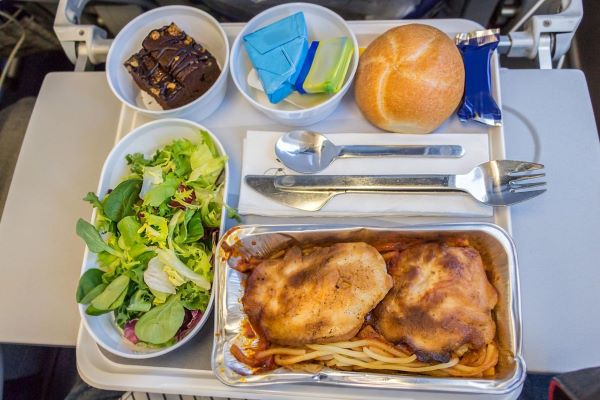
The Shocking Reason Airline Food Tastes Different at 35,000 Feet
Imagine settling into your seat for a long-haul flight. The aircraft climbs smoothly above the clouds. The seatbelt sign switches off. Soon, a flight attendant places a hot meal on your tray.
It looks appetizing.
The aroma seems promising.
But after the first bite, something feels off.
The chicken tastes bland. The vegetables seem dull. Even your favorite dessert somehow lacks its usual flavor.
Get the SkypropreAir Free Travel Pack
Plan smarter, choose a better seat and enjoy a more comfortable long-haul journey. Enter your details below to receive the Travel Pack.
Most passengers assume airline food is simply bad.
The truth is far more surprising.
What if the food isn’t the problem at all?
What if the real reason lies inside your body, changing the way you experience taste at 35,000 feet?
Your Taste Buds Are Fighting Against the Sky
The moment an aircraft reaches cruising altitude, your senses begin reacting to a completely different environment.
Although aircraft cabins are pressurized, they do not replicate conditions at ground level.
At the same time, cabin air becomes extremely dry.
In fact, humidity levels on many flights can be lower than those found in some deserts.
Your nose dries out.
Your mouth loses moisture.
Your sense of smell weakens.
Because smell and taste work together, food instantly becomes less flavorful.
Without realizing it, your body is already making every meal taste different before the first bite even reaches your tongue.
Related Reading: What Pilots Know About Flying That Most Passengers Don’t and The Hidden Technology Pilots Depend On Every Day.
The Science Airlines Don’t Advertise
Scientists have discovered that altitude significantly affects how humans perceive flavors.
Sweetness becomes weaker.
Saltiness becomes weaker.
As much as 30% of certain taste sensations can be reduced during flight.
Think of it like listening to music through partially blocked headphones.
The song hasn’t changed.
Your ability to hear it has.
The same thing happens with airline food.
The meal may be prepared exactly as intended, but your senses are no longer experiencing it the same way.
This is one of aviation’s most fascinating hidden realities.
The Strange Case of Tomato Juice
There is one mystery that has puzzled many travelers.
Why do so many passengers suddenly crave tomato juice on airplanes?
People who rarely touch tomato juice on the ground often order it in the sky.
The answer lies in a flavor known as umami.
Umami is the rich, savory taste found in tomatoes, mushrooms, aged cheeses, and slow-cooked meats.
Unlike sweetness and saltiness, umami remains remarkably strong at altitude.
When other flavors fade, umami stands out.
As a result, tomato juice often tastes richer and more satisfying during flight than it does on the ground.
What appears to be a strange passenger habit is actually a fascinating scientific phenomenon.
The Cabin Noise You Never Notice
Most people focus on the food itself.
Few realize that the aircraft’s engines are influencing their taste buds.
Even aboard modern aircraft such as the Boeing 787 Dreamliner and Airbus A350, passengers are surrounded by constant background noise.
Researchers have found that prolonged exposure to this noise changes how the brain processes flavor.
Sweet foods become less sweet.
Savory foods become more pronounced.
Incredibly, what you hear affects what you taste.
Your ears and your tongue are working together in ways most passengers never imagine.
Related Reading: What Pilots Know About Turbulence That Most Passengers Don’t.
Why Airlines Spend Millions on Menu Design
Designing an airline meal is far more complicated than cooking dinner in a restaurant.
Airlines understand that passengers lose some ability to detect flavor at altitude.
To compensate, catering teams often increase seasoning.
Chefs add stronger herbs.
Recipes are adjusted.
Ingredients rich in umami are frequently included because they retain flavor more effectively during flight.
Some airlines even work with food scientists to create meals specifically designed for high-altitude dining.
In other words, airline food is engineered for the sky.
Planning Your Next Flight?
Before booking, compare fares, aircraft types, and onboard experiences through our trusted travel partners to find the best value for your next journey.
Affiliate Recommendation: Flight Search Partner
Why Premium Cabin Meals Taste Better
Many travelers believe business-class meals taste better simply because they cost more.
There is some truth to that.
Higher-quality ingredients certainly help.
But comfort also plays a major role.
Passengers in premium cabins generally have more space, less stress, and better rest.
They are less dehydrated.
They are more relaxed.
Their overall experience is more pleasant.
When people feel comfortable, they often perceive food more positively.
This is one reason why a business-class meal can seem dramatically better than an economy-class meal, even when the ingredients are not vastly different.
Related Reading: Best Premium Economy Seats Ranked and Premium Economy: Is It Worth the Extra Cost?
Your Nose Is Doing Most of the Work
Many people assume taste comes primarily from the tongue.
The reality is quite different.
A large percentage of flavor actually comes from smell.
When cabin air dries out your nasal passages, aromas become weaker.
Without those aromas, food loses complexity.
It’s similar to eating while suffering from a cold.
The food is still there.
The flavor is not.
That grilled chicken might still be perfectly cooked, but much of the sensory experience has disappeared before it reaches your brain.
The Psychology Behind Every Bite
There is one final factor that many travelers overlook.
Expectation.
By the time meal service begins, passengers may already be tired from security checks, crowded airports, delays, gate changes, and long boarding processes.
Stress affects perception.
Fatigue affects perception.
Anxiety affects perception.
If someone already believes airline food will be disappointing, their brain may subconsciously search for evidence that confirms that belief.
The meal never gets a fair chance.
Sometimes the reputation of airline food is stronger than the food itself.
Related Reading: The Hidden Psychology Behind Our Fear of Flying.
New Aircraft Are Changing the Experience
Modern aircraft manufacturers have invested heavily in passenger comfort.
Aircraft such as the Airbus A350 and Boeing 787 maintain higher humidity levels and lower cabin altitude than many older aircraft.
Passengers often arrive feeling less dehydrated and less exhausted.
These improvements can subtly enhance taste perception during flight.
While airline food may never rival your favorite restaurant, advances in aircraft technology are helping close the gap.
Protect Every Journey
Long-haul travel comes with unexpected risks. Travel insurance can help protect you against delays, cancellations, lost baggage, and medical emergencies abroad.
Affiliate Recommendation: Travel Insurance Partner
The Surprising Truth Hidden on Every Tray Table
The next time an airline meal is placed in front of you, remember this:
The food may not be failing you.
Your senses are operating in one of the most unusual environments humans regularly experience.
Cabin pressure changes perception.
Dry air weakens smell.
Noise alters flavor.
Sweetness fades.
Saltiness declines.
Yet somehow, tomato juice becomes a superstar.
What looks like a simple meal is actually part of a remarkable interaction between biology, psychology, and aviation science.
The shocking truth is that airline food isn’t just battling your expectations.
It’s battling physics itself.
And once you understand that, you may never look at an airline meal the same way again.
Get the SkypropreAir Long-Haul Comfort Playbook
Want smarter seat selection strategies, airline reviews, aircraft comfort rankings, and insider travel tips?
Subscribe to the SkypropreAir Long-Haul Comfort Playbook and travel better on every flight.
Frequently Asked Questions
Why does food taste bland on airplanes?
Lower cabin pressure, dry air, and reduced humidity weaken your senses of smell and taste, making food seem less flavorful.
Why is tomato juice more popular during flights?
Tomato juice contains strong umami flavors that remain noticeable at altitude when sweetness and saltiness become less detectable.
Do newer airplanes improve the taste of food?
Modern aircraft like the Boeing 787 and Airbus A350 maintain higher humidity levels and lower cabin altitude, helping passengers retain more of their normal taste perception.
Join the Conversation
If airlines could magically serve restaurant-quality meals at 35,000 feet, would that completely change how people feel about flying—or do you think the experience of air travel itself will always affect how food tastes? Share your thoughts in the comments below.