
How Passengers Really React During Aircraft Emergencies
Imagine sitting comfortably at 35,000 feet. The cabin lights glow softly. A flight attendant pushes a beverage cart down the aisle. Children are sleeping. Travelers scroll through movies.
Then a sudden announcement breaks the calm.
“Cabin crew, prepare for landing.”
The words are short. The tone is serious.
Instantly, hundreds of hearts begin beating faster.
Get the SkypropreAir Free Travel Pack
Plan smarter, choose a better seat and enjoy a more comfortable long-haul journey. Enter your details below to receive the Travel Pack.
Most people believe they know how they would react during an aircraft emergency. They imagine staying calm, helping others, following instructions, and making rational decisions.
The reality is often very different.
What happens inside the minds of passengers during an aviation emergency reveals some of the most fascinating—and emotional—truths about human behavior.
The First Emotion Is Usually Disbelief
One of the most surprising findings from emergency psychology is that many people initially refuse to believe danger is real.
When pilots announce a technical problem or cabin crew begin emergency procedures, passengers frequently enter a state known as normalcy bias.
Their brains search for explanations that preserve normality.
“It’s probably nothing serious.”
“Aircraft are safe.”
“They’re just being cautious.”
This reaction helps reduce fear temporarily, but it can also delay action.
Investigators studying transportation emergencies have repeatedly found that people often spend precious seconds trying to confirm whether a threat is genuine instead of immediately responding.
That hesitation can matter.
Many travelers are surprised to learn that fear itself is not the greatest threat during an emergency—confusion is. Understanding how aircraft emergencies are managed can make flying feel significantly less intimidating.
Related Reading: Why Even Frequent Flyers Get Nervous During Severe Turbulence | The Hidden Reason Airplanes Are Safer Than Most People Realize
Travel Protection Recommendation: Frequent travelers should consider travel insurance that includes emergency medical coverage, trip interruption protection, and evacuation assistance. Peace of mind can be just as valuable as comfort.
The Cabin Suddenly Feels Smaller
As awareness grows, passengers become intensely aware of their surroundings.
The same cabin that felt spacious moments earlier can feel surprisingly confined.
People begin noticing every sound.
The hum of the engines.
The movement of the landing gear.
The expressions on flight attendants’ faces.
The reactions of nearby passengers.
This heightened awareness is part of the body’s survival response. Adrenaline sharpens attention and prepares individuals for potential danger.
Many survivors later describe this period as surreal, almost as if time slowed down.
Every second feels longer.
Every sound feels louder.
Every movement feels more significant.
Fear Spreads Faster Than Information
Humans naturally look to others when uncertainty appears.
In an aircraft emergency, passengers immediately begin scanning the cabin for clues.
If others appear calm, anxiety often decreases.
If panic becomes visible, fear can spread rapidly.
This phenomenon is known as social contagion.
People unconsciously mirror the emotions of those around them.
That is one reason flight attendants train extensively to maintain calm body language even under extreme pressure.
Passengers are watching them constantly.
A composed crew can help stabilize an entire cabin.
A nervous-looking crew member can unintentionally amplify anxiety.
This is why professional cabin crews often appear remarkably calm even during serious situations.
Their behavior becomes part of the safety system itself.
That calm voice you hear over the cabin speaker may be doing far more than delivering instructions—it may be preventing fear from spreading.
Related Reading: What Flight Attendants Notice About You Within Seconds of Boarding | The Hidden Mental Pressure Pilots Face Before Every Flight
Recommended Travel Essential: Noise-canceling headphones can help reduce stress from unfamiliar cabin sounds and create a calmer flying experience.
Many Passengers Forget Basic Instructions
One of the most misunderstood aspects of emergencies is how stress affects memory.
When fear surges, the brain shifts resources toward survival.
Unfortunately, this can reduce the ability to process new information.
Passengers may forget instructions given only moments earlier.
They may struggle to locate exits they previously noticed.
They may fail to hear announcements clearly.
This explains why airlines repeatedly emphasize safety briefings.
Many travelers ignore them because they believe they already know the information.
Yet during a genuine emergency, familiar instructions become far easier to recall than information being heard for the first time.
The safety briefing is not about routine compliance.
It is preparation for the moment when stress tries to overwhelm memory.
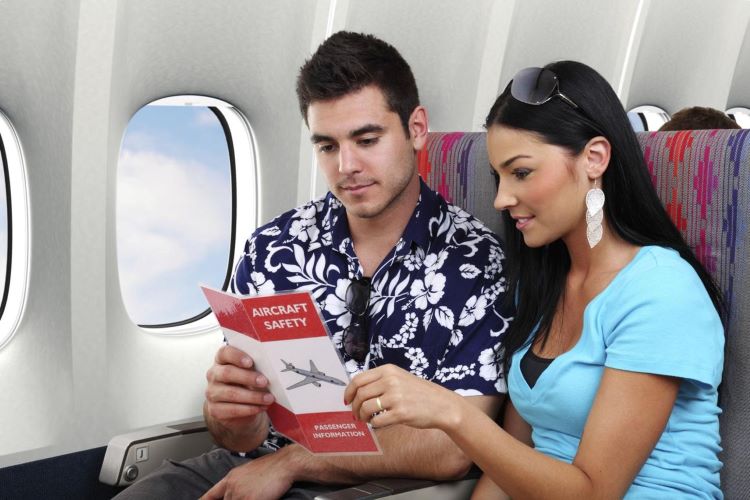
The safety card tucked into your seat pocket may be one of the most overlooked tools on the aircraft. Aviation experts consistently recommend reviewing it before every flight—even if you fly regularly.
Related Reading: The Hidden Reason Flight Attendants Ask Passengers to Review Emergency Exits | The Emergency Exit Secret Many Travelers Never Think About
People Often Search for Loved Ones First
Perhaps the most emotional reality of aircraft emergencies is that many passengers immediately think about family.
Survivor accounts frequently reveal the same pattern.
People reach for spouses.
Parents instinctively move toward children.
Friends check on one another.
Some passengers attempt phone calls if possible.
Others silently think about loved ones far away.
The survival instinct is powerful, but human connection is often equally powerful.
Many emergency situations show that people are not purely self-interested.
Instead, they frequently risk valuable time helping relatives, friends, or even complete strangers.
Acts of compassion often emerge alongside fear.
Panic Is Less Common Than Most Movies Suggest
Hollywood has created an image of aircraft emergencies filled with screaming passengers and total chaos.
Reality is usually different.
Research into transportation disasters consistently shows that full-scale panic is relatively rare.
Most people remain functional.
Many become frightened, but they still follow instructions.
They secure seatbelts.
They assume brace positions.
They listen to crew commands.
They help others when needed.
Fear is common.
Chaos is not.
The Evacuation Phase Creates the Greatest Risk
Ironically, the most dangerous moments often occur after an emergency landing rather than before it.
Passengers suddenly face a critical challenge:
Leave the aircraft as quickly as possible.
Many people attempt to retrieve personal belongings.
Despite repeated warnings, travelers often reach for backpacks, handbags, laptops, and suitcases.
Psychologists believe this occurs because possessions provide a sense of control during uncertainty.
Unfortunately, baggage retrieval slows evacuations and can create dangerous bottlenecks.
Every second counts.
Videos from real evacuations repeatedly show passengers attempting to retrieve carry-on bags despite crew instructions. Safety experts warn that a few seconds spent grabbing luggage could delay dozens of people behind you.
Related Reading: What Really Happens During an Airline Emergency Evacuation | The Safety Jacket Under Your Seat Most Passengers Never Think About
Travel Gear Recommendation: Keep passports, medications, and important documents in a compact travel wallet that can be accessed instantly without opening overhead bins.
Leadership Emerges Unexpectedly
Another fascinating aspect of emergencies is the emergence of spontaneous leaders.
These individuals are not necessarily pilots, police officers, or emergency responders.
Sometimes they are ordinary passengers.
They help others stand.
They guide people toward exits.
They repeat crew instructions.
They reassure frightened travelers.
Researchers have observed this phenomenon repeatedly during crises.
A calm voice can reduce fear.
A helping hand can save valuable time.
Aircraft emergencies often reveal strengths people never knew they possessed.
Afterward, The Emotional Impact Can Last for Years
For many survivors, the emergency does not truly end when the aircraft stops.
The emotional aftermath can continue long afterward.
Some people develop a renewed appreciation for life.
Others experience anxiety when flying again.
Many survivors describe becoming more attentive to safety procedures on future flights.
Near-death experiences often leave lasting emotional impressions.
The event may last only minutes.
Its influence can last decades.
Why Training Matters More Than Passengers Realize
When people watch a safety demonstration, it can feel repetitive.
After all, millions of flights operate safely every year.
Yet emergencies reveal why aviation invests so heavily in preparation.
Pilots train extensively in simulators.
Flight attendants repeatedly practice evacuation procedures.
Aircraft undergo rigorous maintenance and inspection programs.
The goal is not simply preventing emergencies.
The goal is ensuring that if an emergency occurs, every person on board has the best possible chance of reaching safety.
Modern aviation’s extraordinary safety record is built on preparation. Every emergency procedure, briefing, checklist, and training exercise exists because experts have spent decades learning how people react under pressure.
Related Reading: What Pilots Know About Turbulence That Most Passengers Don’t | The Hidden Reason You Must Put Your Own Oxygen Mask On First
Planning Your Next Trip? Compare flight deals, hotel options, travel insurance, and airport transfer services before booking to maximize both comfort and peace of mind.
Conclusion
The truth about aircraft emergencies is both reassuring and deeply human.
Passengers do experience fear.
They experience uncertainty.
But they also demonstrate resilience, cooperation, courage, and compassion.
Most people do not become irrational.
Most do not panic.
Instead, they rely on the training of aviation professionals, the support of those around them, and instincts shaped by millions of years of human survival.
In the most challenging moments imaginable, humanity often reveals its best qualities.
And that may be the most remarkable part of all.
Join the Conversation
Aircraft emergencies are incredibly rare, yet they reveal something fascinating about human nature: when people face uncertainty, some freeze, some follow, and some unexpectedly become leaders.
If you were on a flight facing a real emergency, do you think you would stay calm and help others—or would fear take over? Why?
Share your thoughts in the comments below. Your answer might reveal more about human behavior than you think.
FAQs
1. Do passengers usually panic during an aircraft emergency?
No. While fear is common, studies show that most passengers remain capable of following instructions and assisting others rather than descending into full panic.
2. Why are passengers told to leave their luggage behind during an evacuation?
Retrieving bags can slow evacuation, block aisles, damage evacuation slides, and significantly increase risk for everyone on board.
3. What is the first thing passengers should do during an aircraft emergency?
Listen carefully to crew instructions, keep seatbelts fastened when instructed, identify the nearest exit, and follow evacuation commands immediately if an evacuation becomes necessary.