
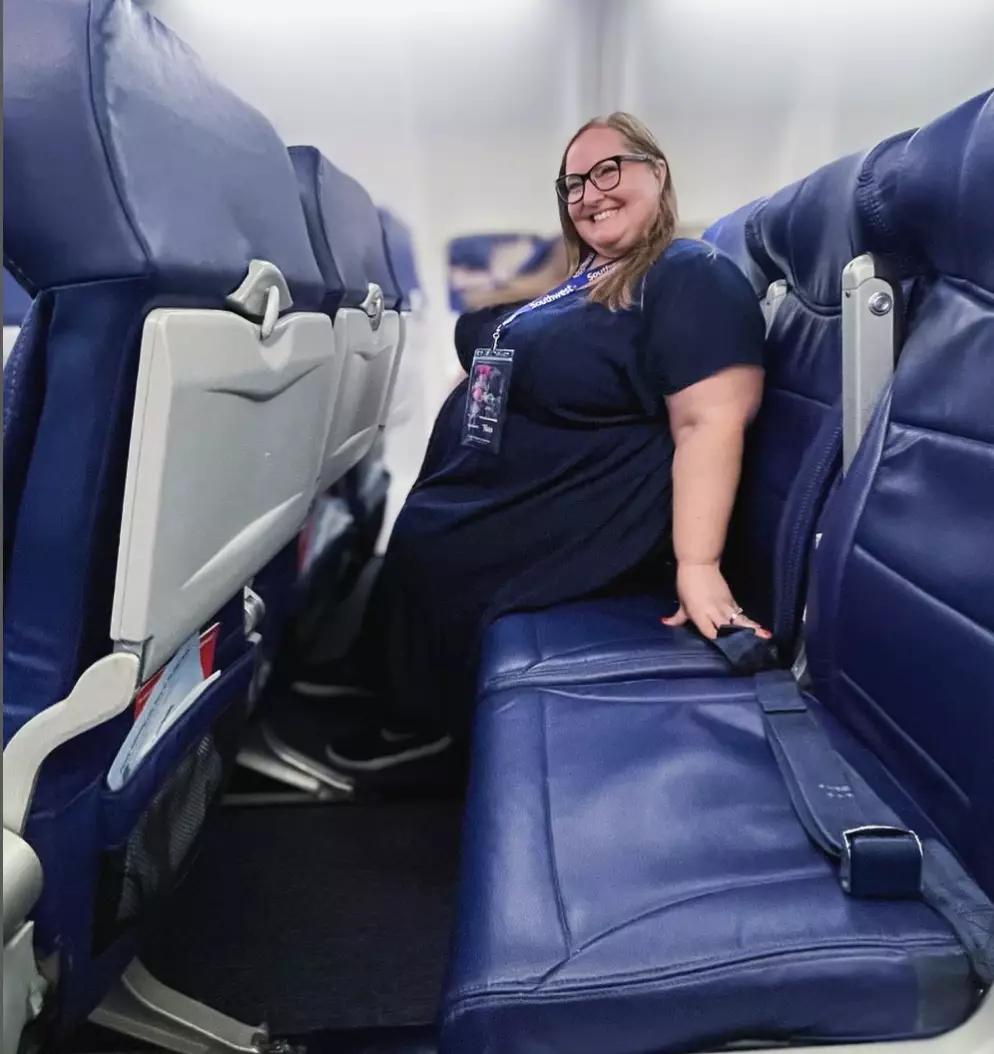
Are Larger Passengers Treated With Dignity? The Uncomfortable Truth About Airline Seating
Larger passengers on planes may board already worried about whether the seatbelt will fit, whether the armrest will lower and how the person beside them might react. Meanwhile, the neighbouring passenger may wonder whether they will have access to the full seat space they paid for.
Both passengers can experience anxiety and discomfort, but neither created the aircraft’s seating policy. Airlines know that passengers come in different shapes and sizes, yet too often they leave individuals to manage this sensitive situation themselves, in full view of a crowded cabin.
This raises an important question: are larger passengers treated with dignity, or has the aviation industry normalised a system that exposes them to avoidable embarrassment?
The Problem Begins With the Seat—not the Passenger
Airline seats were not designed to accommodate every passenger comfortably. Seat width varies between aircraft and airlines, but many economy seats are approximately 17 to 18 inches wide. On some aircraft, they may be narrower.
At the same time, airlines have fitted more seats into economy cabins to increase capacity and keep fares competitive. Passengers of many body types—not only larger travellers—now find the available space restrictive.
Get the SkypropreAir Free Travel Pack
Plan smarter, choose a better seat and enjoy a more comfortable long-haul journey. Enter your details below to receive the Travel Pack.
Yet when a larger passenger cannot fit comfortably within one seat, the individual often receives the blame. Other passengers may stare, complain or make hurtful remarks, while cabin crew may have to address the situation publicly.
This can turn a predictable seating problem into a deeply personal humiliation.
A passenger’s body should not become a public discussion at the boarding gate or inside a crowded cabin. Airlines sell the seats, determine their dimensions and establish the rules. They must therefore take greater responsibility for managing these situations fairly and discreetly.
The Quiet Anxiety Before Boarding
For many larger passengers, the discomfort begins long before they sit down.
They may worry about whether the seatbelt will fit, whether they will need an extender or whether the armrests can be lowered. Some deliberately board early to avoid struggling in front of other passengers. Others board late because they fear being watched as they walk down the aisle.
Requesting a seatbelt extender should be a routine safety matter. Yet when it is handed over publicly or announced across several rows, it can become an embarrassing experience.
The same anxiety surrounds purchasing a second seat. Airline policies are often unclear, inconsistent or difficult to find. A passenger may pay for an additional seat without knowing whether it will remain empty, whether both seats must be checked in separately or whether the cost will be refunded if the flight is not full.
Dignity means allowing people to prepare for their journey without fear of ridicule, confrontation or public embarrassment. Clear information and discreet assistance should be standard, not something passengers must hope to receive.
The Neighbouring Passenger’s Comfort Also Matters
Treating larger passengers with dignity does not mean ignoring the experience of the person seated beside them.
Every passenger should reasonably expect access to the seat space, armrest and legroom they purchased. If another traveller’s body extends significantly into that space, the neighbouring passenger may experience discomfort—particularly during a long-haul flight lasting eight, ten or even twelve hours.
The concern should be expressed without insulting or humiliating anyone. A passenger can raise a genuine seating problem while still treating the other person with respect.
Airlines should never leave two passengers to negotiate the situation between themselves. This can quickly create tension, embarrassment and resentment when neither passenger designed the seat or assigned the seating arrangement.
The larger passenger should not be shamed, and the neighbouring passenger should not be expected to surrender part of their paid space. The airline must take responsibility for finding a fair and discreet solution.
Airlines Already Know When a Problem Is Likely
Airlines know the exact width of every seat on every aircraft they operate. They also know which seats have fixed armrests, where seatbelt extenders may not be permitted and whether an empty seat is available before departure.
What airlines usually do not know is whether an individual passenger will fit safely and comfortably within a particular seat. Judging someone by appearance at the boarding gate would be inaccurate, humiliating and potentially discriminatory.
The better solution is to provide clear information during booking. Airlines should publish seat dimensions prominently and allow passengers to request confidential assistance without embarrassment or penalty.
Where additional space is required, staff should manage it privately before boarding whenever possible. Depending on availability and the airline’s policy, this could mean assigning an adjacent empty seat, offering a more suitable seat or arranging an additional seat under clear and reasonable terms.
The objective should not be to identify or single out larger bodies. It should be to identify seating needs early enough to protect everyone’s dignity, comfort and safety.
Have Economy Seats Become Too Restrictive?
Airlines often present this issue as though the passenger’s body size is the only problem. But the dimensions of the seat also matter.
Economy cabins are designed to fit as many seats as commercially practical. Some airlines use narrow seats and dense configurations that leave limited personal space, especially on long-haul flights.
The difference between 2-4-2 and 3-3-3 economy seating can significantly affect how spacious and comfortable a cabin feels.
The experience can vary considerably depending on the aircraft type, airline, cabin configuration and whether the seat has movable armrests.
Passengers can use our Best Seats on a Plane guide to compare seating factors and make a more informed choice before booking.
A passenger who fits reasonably comfortably in one cabin may struggle in another that is only slightly narrower.
Airlines are entitled to operate efficiently, but they should be honest about the consequences of compact cabin layouts. When seating cannot comfortably accommodate the range of passengers who routinely travel, it is unfair to place all responsibility on individuals after they board.
This is not simply a debate about body size. It is also a debate about how much personal space airlines believe an economy passenger deserves.
Is Buying a Second Seat a Fair Solution?
Some airlines require passengers who cannot sit within one seat with the armrests lowered to purchase a second seat. In principle, this can provide greater comfort for the larger passenger and protect the personal space of the person beside them.
In practice, however, these policies are often confusing and inconsistent.
A passenger may struggle to book two adjoining seats through the airline’s website. They may also be uncertain about how to check in, whether both boarding passes are required and what happens if the airline changes the aircraft or reallocates the additional seat.
There is also the question of cost. Requiring someone to pay twice for the same journey can feel punitive, particularly when the airline offers no guarantee that the second seat will remain available. Some airlines may refund the additional fare when empty seats remain after departure, but policies vary and passengers should check the exact terms before booking.
A fair second-seat policy should be easy to find, simple to use and consistently respected by airport and cabin staff. Where possible, airlines could offer the additional seat at a reduced price or refund its cost when the flight departs with spare capacity.
If airlines consider an additional seat necessary, they must ensure that purchasing one genuinely provides the space, certainty and dignity the passenger has paid for.
Dignity and Safety Must Work Together
This discussion is not only about comfort. Every passenger must be able to fasten an approved seatbelt, sit safely for take-off and landing and avoid obstructing another person’s access to the aisle or emergency exit.
A seatbelt extender is a normal piece of safety equipment, not a symbol of failure. Cabin crew should offer it quietly and without drawing unnecessary attention to the passenger. Travellers should also feel able to request one without shame.
Certain seats may have additional restrictions. For example, seats with fixed armrests may provide less usable width, while exit-row passengers must meet the airline’s safety requirements and be able to assist during an emergency. Exact rules and seat designs vary, so passengers who need additional space should check with the airline before travelling.
Safety concerns should be handled through clear procedures and respectful communication—not assumptions based solely on someone’s appearance.
A passenger should never be humiliated in the name of safety. Equally, dignity cannot require an airline to ignore a genuine safety risk. A responsible policy must protect both.
How Airline Staff Can Protect Everyone’s Dignity
When a seating concern arises, the response of airline staff matters enormously.
The conversation should take place quietly and, whenever possible, away from other passengers. Staff should use neutral language, explain the available options clearly and avoid discussing anyone’s body in a crowded cabin.
They should never ask the larger passenger and the neighbouring passenger to resolve the problem between themselves. Nor should they automatically move the person who raises the concern, as though that passenger has caused the difficulty.
Depending on seat availability, staff may be able to reseat one or both passengers, provide an adjacent empty seat or offer another suitable arrangement. If the flight is full and no safe solution exists, the airline should explain the next steps respectfully and provide appropriate assistance under its policy.
Cabin crew should receive training that helps them distinguish between a genuine space or safety concern and insulting behaviour directed at someone because of their appearance.
A difficult conversation does not have to become a degrading one. Privacy, calm communication and consistent procedures can protect every passenger involved.
What Larger Passengers Can Do Before Flying
Airlines must improve their policies, but careful preparation can help larger passengers reduce uncertainty and avoid difficult situations at the airport.
Before booking, check the seat width and cabin configuration for the specific aircraft operating the flight.
Our comparison of the best airlines for long-haul economy can also help travellers identify airlines that place greater emphasis on economy-class comfort.
Remember that aircraft substitutions can happen, so treat published measurements as a guide rather than a guarantee.
It may also help to:
- Read the airline’s additional-seat policy. Check whether a second seat must be booked by telephone, how it should be named and whether any refund may be available.
- Contact the airline privately. Ask about suitable seats, movable armrests, seatbelt extenders and any restrictions that could affect your journey.
- Choose seats carefully. Fixed-armrest seats, including many bulkhead and exit-row seats, may offer less usable space despite appearing attractive on the seat map.
- Our guide to the most comfortable economy seats by aircraft type can help passengers compare their options before selecting a flight.
- Arrive early. This gives airport staff more time to discuss alternatives before the aircraft becomes fully boarded.
- Speak to the crew discreetly. If the assigned seat is unsuitable, raise the issue early rather than waiting until another passenger complains.
These preparations should not be interpreted as an admission of fault. They are practical ways to reduce uncertainty within an airline system that is not always designed around different body types.
No passenger should have to approach a flight expecting humiliation. Clear preparation can help—but airlines must create the conditions in which asking for assistance feels safe and ordinary.
What Airlines Should Change
Treating larger passengers with dignity requires more than asking cabin crew to be polite. Airlines need policies that prevent avoidable conflicts before passengers reach their seats.
Meaningful improvements could include:
- Publish accurate seat dimensions. Seat width, usable width between armrests and information about fixed armrests should be easy to find during booking.
- Create a discreet assistance option. Passengers should be able to discuss additional space requirements privately without having to explain themselves repeatedly.
- Simplify second-seat bookings. An additional seat should be easy to reserve online, protected during aircraft changes and clearly identified so it is not reassigned.
- Offer fairer pricing. Airlines could provide additional seats at a reduced fare or refund some of the cost when the aircraft departs with empty seats.
- Train customer-facing staff. Airport agents and cabin crew need consistent guidance on handling seating concerns calmly, privately and respectfully.
- Protect neighbouring passengers’ space. Anyone who cannot use the full seat they purchased should be offered a practical solution without being encouraged to blame or shame the person beside them.
- Provide some wider-seat options. Airlines could make a limited number of wider economy seats available without forcing passengers to purchase a significantly more expensive premium cabin.
None of these measures would solve every case. However, they would replace uncertainty and confrontation with clearer expectations and practical choices.
Larger passengers are not an unexpected disruption to air travel. Airlines carry people of different sizes every day, and their policies should reflect that reality.
Are Larger Passengers on Planes Treated With Dignity?
Sometimes they are—but too often, their dignity depends on the understanding of individual staff members rather than a clear and compassionate airline policy.
A larger passenger may be expected to discuss a deeply personal matter at a busy check-in desk, request a seatbelt extender in public or discover only after boarding that the seat is unsuitable. At the same time, the neighbouring passenger may be left without the full space they purchased and feel uncomfortable raising the issue.
This arrangement serves no one well.
The answer is not to shame larger passengers, ignore neighbouring passengers or expect cabin crew to improvise after everyone has boarded. The answer is transparent seat information, discreet assistance, fair additional-seat policies and staff trained to resolve concerns respectfully.
Airlines cannot accommodate every passenger perfectly in every cabin. However, they can stop treating body-size-related seating problems as unexpected events.
Every passenger deserves safety, personal space and respectful treatment. True dignity begins when airlines design policies that protect all three.
Frequently Asked Questions
Do larger passengers have to purchase a second airline seat?
It depends on the airline’s policy and whether the passenger can sit safely within one seat. Requirements vary, so travellers should check directly with the airline before booking.
Can an airline remove a passenger who does not fit in one seat?
An airline may refuse carriage or require alternative arrangements if it believes a passenger cannot be seated safely and no suitable seat is available. How this is handled depends on the airline’s policy and applicable law.
After the existing answer, add:
Passengers whose seating needs relate to a disability or reduced mobility can also review the EU rights for travellers with disabilities or reduced mobility.
Link the bold words to this official European Union page:
EU rights for travellers with disabilities or reduced mobility
Are seatbelt extenders available on every flight?
Airlines generally carry approved seatbelt extenders, but passengers should ask cabin crew for one rather than bringing and using an unapproved personal extender. Restrictions may apply in certain seats.
Are exit-row seats suitable for larger passengers?
Not always. Many exit-row seats have fixed armrests that reduce usable width. Passengers seated there must also satisfy the airline’s emergency-exit requirements.
What should a passenger do if someone occupies part of their seat?
Raise the concern discreetly with a crew member and avoid confronting or insulting the neighbouring passenger. The airline should assess the seating arrangements and find a fair solution where possible.
Which airline seats may provide more space?
Seat dimensions vary by airline, aircraft and cabin configuration. Premium economy, business class and some specially selected economy seats may offer more width, but passengers should verify the actual seat measurements before paying.
Continue Exploring
Choosing the right aircraft, airline and seat can make a significant difference to personal space and comfort.
Explore these SkypropreAir guides next:
- Best Seats on a Plane: How to Choose the Right Seat
- Best Airlines for Long-Haul Economy
- Most Comfortable Seats in Economy, Ranked by Aircraft Type
- 2-4-2 vs 3-3-3 Economy Seating: Which Is More Comfortable?
- Long-Haul Flight Survival Guide