
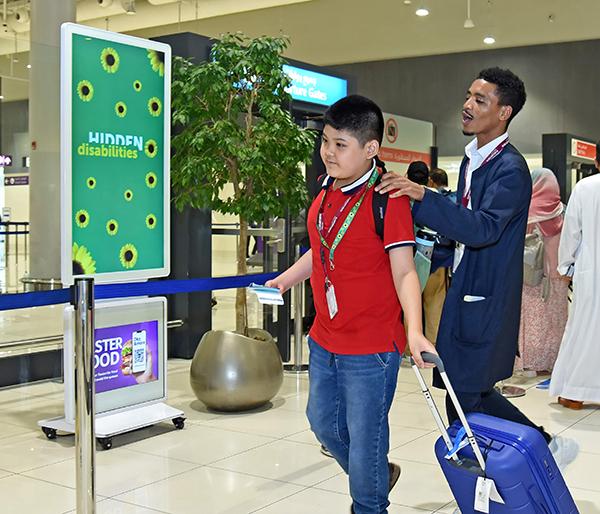
What Support Is Available for Passengers With Invisible Disabilities?
For many passengers, asking for help at an airport is not as simple as pointing to a visible injury or using a wheelchair. Their disability may not be immediately apparent but the challenges they experience can be very real.
Autism, dementia, epilepsy, diabetes, hearing loss, chronic pain, anxiety disorders and learning disabilities are among the many conditions that may be invisible to airline and airport staff. Crowded terminals, loud announcements, security procedures, unexpected delays and sudden changes can make flying particularly stressful or disorientating.
Fortunately, support for passengers with invisible disabilities is becoming more widely available. Depending on the airport, airline and country, passengers may be able to request special assistance, additional time, priority boarding, quieter waiting areas, help navigating the terminal or support from trained staff.
However, these services are not always clearly explained. Many passengers do not know what assistance they can request, when they should request it or whether they must provide medical evidence.
This guide explains the support available to passengers with invisible disabilities, how to arrange it before travelling and what to do when the assistance provided does not meet their needs.
Get the SkypropreAir Free Travel Pack
Plan smarter, choose a better seat and enjoy a more comfortable long-haul journey. Enter your details below to receive the Travel Pack.
What Is an Invisible Disability?
An invisible disability, also called a hidden or non-visible disability—is a physical, neurological, sensory or mental health condition that may not be immediately apparent to other people.
A passenger may appear independent while still experiencing serious difficulties with communication, concentration, mobility, memory, pain, fatigue or sensory overload. Because there may be no visible indication of the condition, airport staff and fellow passengers can mistakenly assume that the person does not need assistance.
Invisible disabilities can include:
- Autism and other neurodevelopmental conditions
- Dementia and memory-related conditions
- Epilepsy
- Diabetes
- Hearing or partial sight loss
- Chronic pain and fatigue
- Multiple sclerosis
- Crohn’s disease and other bowel conditions
- Anxiety disorders and post-traumatic stress disorder
- Learning and communication disabilities
Every passenger’s experience is different. Two people with the same diagnosis may require completely different forms of support. Assistance should therefore be based on the passenger’s individual needs not assumptions about their condition or how they appear.
Why Air Travel Can Be Particularly Challenging
Airports and aircraft can be demanding environments for passengers with invisible disabilities. A journey may involve crowds, bright lighting, loud announcements, long queues, unfamiliar instructions and several changes of routine, all within a limited period.
Security screening can be especially stressful. A passenger may find it difficult to understand verbal instructions, tolerate physical contact, remove certain items quickly or explain medical equipment and medication. Someone who appears uncooperative may actually be confused, anxious, overwhelmed or unable to communicate their needs.
Unexpected gate changes, delays and cancellations can create further difficulties. Passengers with autism, dementia or anxiety may depend on familiar routines and clear information. When plans change suddenly, their distress may escalate quickly.
The aircraft introduces additional challenges, including confined seating, engine noise, unfamiliar sensations, limited personal space and restricted movement. A passenger may also struggle to recognise when they need food, medication, the toilet or help from a crew member.
These difficulties are not always visible. This is why patience, clear communication and appropriate assistance can make the difference between a manageable journey and an overwhelming one.
Careful preparation can reduce some of these pressures, particularly when combined with the practical advice in our long-haul flight survival guide.
1. Support for Passengers With Invisible Disabilities Before the Flight
Passengers with invisible disabilities can contact their airline or airport to explain the support they may require. Assistance is not limited to passengers with visible physical disabilities or those who use wheelchairs.
The request can usually be made while booking the ticket, through the airline’s website or by contacting its special-assistance team. Passengers should make the request as early as possible—preferably at least 48 hours before departure, although staff should still make reasonable efforts to help when less notice is provided.
The passenger should describe the practical assistance they need rather than simply naming their condition. For example, they might request:
- Help navigating the airport
- Clear and repeated instructions
- Additional time at security
- A quieter place to wait
- Priority or pre-boarding
- Help reaching the departure gate
- Assistance during connections
- Support with unexpected changes
- Permission for a companion to remain with them
Passengers should confirm that the assistance request has been added to their booking and keep a written or digital copy of the confirmation. Because the airline and airport may provide different parts of the service, it is sensible to check the arrangements with both organisations before travelling.
2. The DPNA Special-Service Code
Airlines use special-service request codes to record the assistance a passenger needs. One important code for travellers with an intellectual, developmental or cognitive disability is DPNA, meaning “disabled passenger needing assistance.”
When appropriate, this code can be added to the booking so airline and airport teams know that the passenger may require individual support. This could include help understanding instructions, navigating the terminal, coping with changes or completing different stages of the journey.
However, adding DPNA does not automatically tell staff exactly what the passenger needs. Invisible disabilities affect people differently, so the passenger or their companion should clearly explain the required assistance when making the booking.
Not every invisible disability or assistance request will be recorded using DPNA. Different codes may apply to hearing, vision, mobility or medical needs. Passengers should therefore avoid selecting a code without explanation and instead contact the airline’s special-assistance team.
Before travelling, confirm that the correct request appears on the booking and explain the passenger’s needs again at the airport assistance desk. A code can alert staff, but a clear conversation remains essential.
3. The Hidden Disabilities Sunflower Lanyard
The Hidden Disabilities Sunflower is a discreet way for someone to indicate that they have a non-visible disability and may need additional help, understanding or time.
Passengers may wear a green lanyard decorated with sunflowers or carry another official Sunflower product. Many participating airports, airlines and transport organisations train their staff to recognise the symbol.
Wearing the Sunflower may encourage staff to:
- Speak clearly and patiently
- Allow the passenger additional time
- Offer help with directions
- Repeat or simplify instructions
- Recognise signs of anxiety or sensory overload
- Ask what assistance the passenger needs
The Sunflower is voluntary. Passengers do not have to wear it, and they should not be pressured to disclose their diagnosis publicly.
It is also important to understand its limitations. The lanyard does not automatically provide fast-track security, priority boarding, a seat upgrade or exemption from safety and security procedures. It is a communication aid—not a substitute for booking formal assistance.
Recognition also varies between airports and airlines. Passengers should check whether the organisations involved in their journey participate in the programme and request any essential assistance separately before travelling.
4. Support at Check-In and Security
Check-in and security can be among the most stressful parts of the journey for passengers with invisible disabilities. Airports may provide assistance from an agreed meeting point, check-in desk or special-assistance reception area.
A trained staff member may help the passenger check in, understand instructions, move through the terminal and reach security. Some airports also provide quieter security lanes or allow additional time, although these services vary and must often be arranged in advance.
Passengers can explain if they have difficulty with:
- Waiting in crowded queues
- Understanding several instructions at once
- Tolerating noise, touch or physical searches
- Removing shoes, belts or other personal items
- Separating from a companion
- Communicating verbally when anxious
- Handling medication or medical equipment
Security requirements still apply to every passenger. However, staff may be able to adjust how the screening is conducted without compromising safety. This could include giving one instruction at a time, allowing a companion to remain nearby or conducting a search in a private area when available.
Medication should normally remain in its original packaging and be carried in hand luggage where possible. Passengers travelling with liquid medicines, needles or medical devices should check the relevant airline and airport security requirements before departure.
5. Quiet Spaces and Sensory Support
Busy terminals can expose passengers to constant announcements, bright lights, crowds and unfamiliar activity. For someone with autism, anxiety, dementia, post-traumatic stress disorder or another sensory or cognitive condition, this environment may become overwhelming.
Some airports provide sensory rooms, quiet areas or low-stimulation spaces where passengers can wait away from the busiest parts of the terminal. These facilities may include softer lighting, comfortable seating, reduced noise and sensory equipment.
Other forms of support may include:
- Visual guides explaining the airport journey
- Familiarisation visits before the travel date
- Sensory maps identifying noisy or crowded areas
- Ear defenders or sensory packs
- Clearly marked assistance points
- Staff trained in recognising sensory overload
- Designated quiet routes through the terminal
Facilities vary considerably between airports. A quiet room may require advance booking, have limited opening hours or be located far from the departure gate. Passengers should check the airport’s accessibility information before travelling rather than assuming that a suitable space will be available.
Bringing familiar items—such as noise-cancelling headphones, sunglasses, a communication card or a small comfort object—can provide additional reassurance throughout the journey.
6. Priority Boarding and Seating Support
Some passengers with invisible disabilities may benefit from boarding before the main passenger groups. Pre-boarding can provide additional time to find the seat, organise personal belongings, meet the cabin crew and become familiar with the aircraft before the aisle becomes crowded.
However, pre-boarding may not suit everyone. A passenger who finds it difficult to remain seated in a confined space may prefer to board later and spend less time on the aircraft before departure. The best choice depends on the passenger’s individual needs.
Passengers may also request suitable seating. This could include:
- A seat near a travelling companion
- An aisle seat for easier access to the toilet or cabin crew
- A window seat to reduce interruptions
- A seat closer to the front for a quicker exit
- A location away from particularly busy areas
- Seating that accommodates an assistance dog
Airlines must keep exit rows available for passengers who can understand instructions and perform the required emergency duties. A passenger who cannot meet those safety requirements may be moved to another seat.
Special assistance does not automatically provide a free upgrade or extra-legroom seat. Nevertheless, passengers should explain why a particular seat is important and ask what reasonable accommodation the airline can provide. Any seating arrangement should be confirmed before the day of departure whenever possible.
Passengers can also consult our guide to the best seats on a plane before discussing their seating needs with the airline.
7. Support During the Flight
Cabin crew can provide reasonable assistance during the flight, but they need to understand what the passenger requires. When boarding, the passenger or their companion should briefly explain any important communication, sensory, cognitive or medical needs.
Depending on the circumstances, cabin crew may be able to:
- Explain safety information more clearly
- Repeat or simplify instructions
- Check on the passenger during the flight
- Provide advance notice of turbulence, meals or landing when possible
- Help the passenger locate the toilet
- Assist with opening food and drink packaging
- Respond appropriately to anxiety, confusion or sensory distress
- Help communicate changes caused by delays or diversions
Cabin crew cannot provide personal care, administer medication, feed a passenger, lift them or supervise them continuously. A passenger who requires this level of help may need to travel with a companion or personal assistant.
Passengers should keep essential medication, communication aids, identification and emergency information within easy reach rather than placing them in checked baggage. A communication card explaining the passenger’s condition, triggers and preferred form of assistance can also be valuable if speaking becomes difficult.
The crew’s ability to help may be limited during take-off, landing or turbulence, when everyone must follow safety instructions and remain seated. Planning ahead remains essential, even when onboard support has been requested.
Passengers should also understand why it is safer to keep your seat belt fastened, even when the sign is switched off.”
8. Assistance During Connections and on Arrival
Connecting flights can be particularly difficult for passengers who struggle with navigation, time pressure, crowds or unexpected changes. Assistance may be available to guide the passenger between gates, through transfer security and towards the next departure point.
When requesting support, passengers should explain if they need:
- To be met at the aircraft door
- Guidance through the terminal
- Help understanding gate information
- Assistance during security or immigration checks
- Access to a quiet waiting area
- Support reaching the next flight
- Help collecting baggage on arrival
- Guidance to the terminal exit or an agreed meeting point
Connection assistance should be added to the entire booking—not only the first flight. Where separate tickets or different airlines are involved, the passenger may need to contact each airline and airport individually.
Airports can be large, and assistance teams may serve several passengers at once. Travellers should allow a generous connection time rather than choosing the shortest available transfer.
On arrival, assistance may continue through immigration, baggage reclaim and customs. However, the exact finishing point varies by airport. Passengers should confirm in advance whether staff can accompany them to the arrivals hall, public transport area or another agreed location.
9. Travelling With a Companion or Assistance Dog
Some passengers with invisible disabilities can travel independently with appropriate airport and airline support. Others may need a companion to help with communication, medication, personal care, decision-making or emotional regulation.
Airlines may require a passenger to travel with a companion in limited circumstances, particularly when the passenger cannot understand or respond to safety instructions, manage essential personal needs or evacuate independently during an emergency. A disability alone should not automatically lead to this requirement.
When a companion is necessary, passengers should ask the airline to seat them together. The airline’s policy on seat-selection charges and companion fares may vary, so this should be clarified before booking.
Passengers who travel with a recognised assistance dog should contact the airline well in advance. Requirements may include identification, training evidence, health documents and destination-specific animal-entry paperwork. Rules differ between airlines and countries, especially on international routes.
An emotional-support animal is not automatically treated as a trained assistance dog. Many airlines no longer accept emotional-support animals under the same conditions and may require them to travel according to the standard pet policy.
Passengers should confirm every stage of the journey, including connecting and return flights—because approval from one airline or airport does not necessarily apply to another.
10. Passenger Rights and Reasonable Assistance
The legal protections available to passengers with invisible disabilities depend on where the journey takes place. However, a disability does not have to be immediately visible for a passenger to qualify for protection or assistance.
Within the European Union, passengers with disabilities or reduced mobility are generally entitled to assistance at airports and on board flights without an additional charge. Passengers are normally advised to provide at least 48 hours’ notice so the required support can be properly arranged.
In the United Kingdom, similar protections require airlines and airports to provide appropriate assistance to passengers whose disability or reduced mobility affects their journey.
For flights to, from or within the United States, the Air Carrier Access Act prohibits disability-based discrimination. Passengers have rights relating to information, assistance, seating, accessibility and the handling of complaints.
These protections do not guarantee every requested service. Assistance may be limited by legitimate safety requirements, aircraft design or the nature of the service being requested. Nevertheless, decisions should be based on the passenger’s actual needs and relevant safety considerations—not simply on the fact that their disability is invisible.
Passengers should check the rules applying to their departure country, destination and airline. They should also keep confirmation of assistance requests and copies of any relevant correspondence in case a problem arises during the journey.
11. What to Do if Assistance Is Refused or Fails
Even when assistance has been booked, communication failures can occur. The request may not appear correctly on the reservation, staff may misunderstand the passenger’s needs or the promised support may not be available at the expected time.
If a problem occurs, the passenger or their companion should calmly explain what was requested and show any written confirmation. Ask to speak with the airline’s special-assistance representative or the airport’s accessibility team rather than repeatedly explaining the situation to different staff members.
If the issue is not resolved:
- Record the date, time, flight number and location
- Note the names or roles of the staff involved
- Keep booking confirmations and assistance records
- Take photographs when appropriate and permitted
- Request written reasons for any refusal
- Submit a formal complaint to the airline or airport
For flights involving the United States, passengers can ask for the airline’s Complaint Resolution Official, who is trained to deal with disability-related concerns.
If the airline or airport does not resolve the complaint, the passenger may escalate it to the appropriate national enforcement body, aviation regulator or dispute-resolution service.
A complaint should explain the passenger’s disability-related needs, the assistance requested, what actually happened and how the failure affected the journey. Clear evidence can make it easier for the relevant organisation to investigate and prevent the same problem from happening again.
12. A Practical Checklist Before Travelling
Effective support for passengers with invisible disabilities begins with careful preparation and clear communication.
Passengers with invisible disabilities and anyone supporting them, can use this checklist to prepare for the journey:
- Contact the airline and airport as early as possible
- Describe the assistance required, not only the diagnosis
- Request that the appropriate assistance code be added to the booking
- Confirm support for every flight and connection
- Ask where and when to meet the assistance team
- Check whether the airport recognises the Sunflower lanyard
- Research quiet rooms, sensory facilities and accessible routes
- Select a seat suited to the passenger’s individual needs
- Allow extra time for check-in, security and connections
- Keep medication and communication aids in hand luggage
- Carry copies of prescriptions and relevant medical documents
- Prepare a communication card with essential information
- Bring familiar items such as headphones or sensory aids
- Save assistance confirmations and emergency contact details
- Explain important needs to the cabin crew after boarding
Passengers should also prepare for possible delays or last-minute changes. Carrying extra medication where permitted, snacks, charging equipment and a written alternative plan can reduce stress if the journey does not proceed as expected.
The most important step is to communicate specific needs clearly. “I have an invisible disability” alerts staff, but “I need one instruction at a time and help finding my gate” tells them how to provide meaningful support.
For additional planning advice, visit our Long-Haul Comfort Master Guide before booking your journey.
How Airlines and Airports Could Improve
Although awareness of invisible disabilities is growing, the quality of support remains inconsistent. A passenger may receive excellent assistance at one airport but encounter confusion or disbelief at the next.
Airlines and airports could improve the experience by:
- Making assistance information easier to find on their websites
- Allowing passengers to explain specific needs during booking
- Training all customer-facing staff—not only assistance teams
- Improving recognition of the Hidden Disabilities Sunflower
- Providing more quiet rooms and sensory-friendly spaces
- Offering clearer information during delays and gate changes
- Keeping companions and dependent passengers seated together
- Sharing assistance information reliably between airports and airlines
- Involving people with lived experience when designing services
- Responding to distress with patience rather than judgement
Staff should never assume that a passenger is being difficult simply because they do not respond in an expected way. Repeated questions, limited eye contact, confusion, unusual movements or an inability to follow rapid instructions may indicate that the person needs a different form of communication.
True accessibility is not achieved by offering assistance in principle. It is achieved when the right support reaches the passenger at the moment it is needed and when that support preserves the person’s dignity, independence and right to travel.
Consistent support for passengers with invisible disabilities requires cooperation between airlines, airports and assistance providers.
Final Thoughts
Invisible does not mean insignificant. A passenger may look calm and independent while using considerable effort to manage anxiety, pain, sensory overload, confusion or communication difficulties.
The right support can transform the journey. Clear instructions, additional time, a suitable seat, a quieter waiting area or a patient member of staff may be all that is needed to help someone travel safely and confidently.
Passengers should request assistance early, describe their practical needs clearly and confirm arrangements before departure. The Hidden Disabilities Sunflower can help signal that understanding may be required, but essential support should still be booked directly with the airline or airport.
Air travel becomes genuinely accessible when passengers do not have to prove their disability through appearance before they are treated with patience and dignity. Airlines and airports must recognise that every passenger’s needs are different and that inclusion should extend to disabilities that cannot be seen.
Ultimately, support for passengers with invisible disabilities should protect their safety, independence and dignity throughout the journey.
Frequently Asked Questions
Do passengers have to prove that they have an invisible disability?
Requirements vary depending on the airline, destination and type of assistance requested. Passengers are not normally required to provide medical evidence for basic airport assistance, but documentation may be needed for certain medical equipment, medication, assistance dogs or fitness-to-fly concerns.
Does a Sunflower lanyard guarantee priority boarding?
No. The Sunflower indicates that the wearer has a non-visible disability and may need help, patience or additional time. It does not automatically guarantee priority boarding, fast-track security or other specific services. Essential assistance should be requested separately.
Is special assistance free?
In many jurisdictions, including the European Union, airport and airline assistance for passengers with disabilities or reduced mobility is provided without an additional charge. However, services such as preferred seating or extra legroom may still involve a fee unless the applicable rules or airline policy require otherwise.
How early should assistance be requested?
Passengers should request assistance as soon as their travel plans are confirmed. Airlines and airports commonly recommend giving at least 48 hours’ notice, although reasonable efforts should still be made when a request is submitted later.
Can someone with an invisible disability travel alone?
Yes, many passengers with invisible disabilities travel independently. A companion may be necessary if the passenger requires personal care, cannot understand essential safety instructions or needs continuous assistance that airline and airport staff are not expected to provide.