
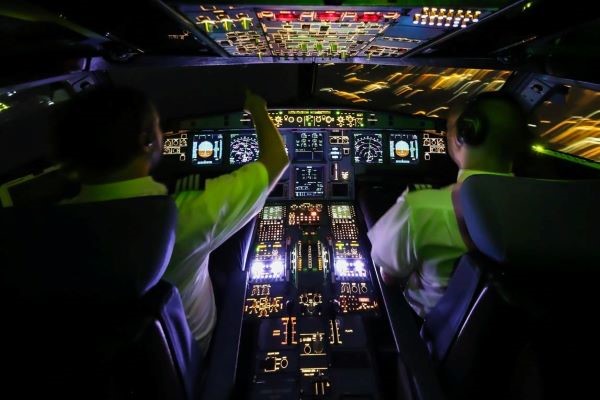
Can Pilots Really Sleep During Long Flights?
Imagine you’re flying across the Atlantic in the middle of the night. The cabin is dark. Most passengers are asleep. The engines hum steadily in the background while the aircraft cruises silently at 38,000 feet.
Then a thought suddenly enters your mind.
What if the pilots are asleep too?
For a moment, your stomach tightens.
Who is flying the aircraft?
Get the SkypropreAir Free Travel Pack
Plan smarter, choose a better seat and enjoy a more comfortable long-haul journey. Enter your details below to receive the Travel Pack.
Who is watching the instruments?
What happens if something goes wrong?
The answer surprises many travelers: yes, pilots can sleep during certain long-haul flights. In fact, under the right circumstances, airlines want them to.
Far from being a safety risk, controlled pilot rest is one of the many reasons modern aviation remains one of the safest forms of transportation ever created.
- Related Reading: Why Pilots Rarely Worry About Turbulence
The Secret Most Passengers Never Hear
Many people assume airline pilots stay awake from takeoff to landing.
It sounds logical.
After all, they are responsible for hundreds of passengers and a multi-million-dollar aircraft.
But modern long-haul flights often last 10, 12, or even 15 hours. Some ultra-long-haul routes can stretch close to an entire day.
Expecting pilots to remain fully alert for such long periods would actually create a greater safety risk.
Instead, airlines use sophisticated fatigue-management systems designed to ensure pilots remain mentally sharp throughout a flight.
One of the most effective tools is controlled in-flight rest.
Why Fatigue Is One of Aviation’s Biggest Concerns
When passengers think about aviation dangers, they usually think about turbulence, storms, or mechanical failures.
The aviation industry worries about something else.
Fatigue.
A tired brain processes information more slowly.
Decision-making suffers.
Reaction times increase.
Situational awareness declines.
This is why regulators and airlines treat fatigue management so seriously.
The goal is not to prove pilots can work endlessly.
The goal is to ensure they never have to.
Yes, Pilots Can Sleep—But Not On Every Flight
Pilot rest is generally reserved for long-haul operations.
On shorter flights, pilots typically remain awake throughout the journey because there isn’t enough flight time to justify rotating crew members.
Long-haul flights are different.
Many carry additional pilots beyond the standard two-person crew.
A flight may have three or four qualified pilots onboard.
This allows one pilot to rest while other qualified pilots continue operating the flight.
At no point is the cockpit left unattended.
That is one of the most important safety principles in commercial aviation.
Planning Your Next Long-Haul Journey?
Compare fares across hundreds of airlines and find some of the world’s most comfortable long-haul routes.
Find Cheap Flights with Aviasales
The Hidden Bedrooms Most Passengers Never See
One of aviation’s best-kept secrets is that some aircraft contain dedicated crew rest compartments.
Most travelers never realize these hidden spaces exist.
They may be located above the passenger cabin, below the main deck, or behind secure doors.
Inside are sleeping bunks specifically designed for pilots and cabin crew.

These rest areas typically include:
-
Comfortable sleeping bunks
-
Reading lights
-
Privacy curtains
-
Climate controls
-
Emergency communication systems
The goal is simple: allow pilots to obtain meaningful rest so they can return to duty refreshed and alert.
Long-Haul Comfort Essentials
Many frequent flyers improve their sleep with neck pillows, eye masks, compression socks, and noise-cancelling headphones.
- See Our Recommended Long-Haul Travel Essentials
- You May Also Enjoy: The Truth About Sitting in an Exit Row Seat
Who Flies the Aircraft While a Pilot Sleeps?
This is where many passenger fears begin.
Hollywood often creates the impression that an aircraft is constantly being hand-flown by the pilots.
Modern aviation is far more sophisticated.
When one pilot rests, another qualified pilot remains on duty.
Additional crew members are onboard specifically for this purpose.
Air traffic control remains in contact with the flight.
Navigation systems continue operating normally.
Multiple layers of oversight remain active.
The aircraft never becomes pilotless.
What Happens If Something Unexpected Occurs?
Passengers often wonder what happens if turbulence develops or weather conditions change while a pilot is resting.
The answer is reassuring.
Resting pilots can be recalled immediately.
Crew rest facilities are connected to communication systems that allow active pilots to contact resting crew members whenever necessary.
If conditions become more demanding, additional pilots can quickly return to the flight deck.
This process is planned, regulated, and practiced.
Nothing about it is improvised.
The Technology Helping Pilots Stay Safe
Modern aircraft are equipped with advanced flight management systems and autopilot technology.
Contrary to popular belief, autopilot does not replace pilots.
Instead, it helps reduce workload during lengthy cruise portions of the flight.
Pilots continuously monitor aircraft systems, weather, fuel consumption, navigation, and communications.
Automation allows them to focus on managing the overall operation safely and efficiently.
This partnership between human expertise and technology is one of the reasons commercial aviation has achieved such remarkable safety levels.
Related Guide: How Long Does the Oxygen Supply Really Last?
Why Sleeping Pilots Can Actually Make Flights Safer
This may be the most surprising part of all.
A well-rested pilot is safer than an exhausted pilot.
That simple fact drives many aviation safety policies.
Controlled rest helps reduce fatigue.
Reduced fatigue improves concentration.
Improved concentration improves decision-making.
Better decisions enhance safety.
The objective is not to keep pilots awake for as many hours as possible.
The objective is to ensure they are fully alert when their skills are needed most.
The Moments Pilots Cannot Afford To Be Tired
The cruise phase of a flight is generally the least demanding.
The most critical moments happen elsewhere.
Takeoff.
Approach.
Landing.
Severe weather.
Unexpected operational challenges.
These situations demand maximum concentration.
By allowing pilots to rest during quieter cruise periods, airlines help ensure peak alertness during the phases where human performance matters most.
The Reality Behind the Fear
The idea of a sleeping pilot can initially sound alarming.
Yet the reality tells a very different story.
Pilot rest is not a loophole.
It is not a shortcut.
It is not a sign that nobody is paying attention.
It is a carefully managed safety procedure supported by regulations, training, technology, and decades of operational experience.
Protect Your Next Trip
Flight disruptions, medical emergencies, and lost baggage can happen unexpectedly.
Travel insurance can provide valuable protection and peace of mind during long-haul journeys.
Compare Travel Insurance Options with SafetyWing
Further Reading: How Emergency Exits Save Lives in Under 90 Seconds
The next time you’re flying across an ocean and staring out into the darkness beyond your window, remember this:
If one pilot is asleep, another qualified pilot remains fully alert.
And when that resting pilot returns to duty, the entire flight benefits from having a refreshed, focused professional at the controls.
That is not a weakness in the system.
It is one of the reasons the system works so well.
Frequently Asked Questions
Are both pilots allowed to sleep at the same time?
No. Commercial aviation regulations require qualified pilots to remain on duty. The cockpit is never intentionally left unattended.
How long do pilots sleep during long-haul flights?
The duration varies depending on flight length, crew size, airline procedures, and regulatory requirements. Rest periods are carefully planned and monitored.
Do pilots sleep during takeoff or landing?
No. Pilots must be fully alert during critical phases of flight such as takeoff, approach, and landing. Rest periods occur during the cruise phase of long-haul flights.
What Do You Think?
If the captain announced before takeoff that one pilot would be taking a scheduled rest break during the flight, would that increase your confidence because fatigue is being managed professionally—or would it make you feel less comfortable knowing a pilot might be asleep while you’re in the air?
Share your thoughts in the comments. Your answer might reveal more about how we perceive safety than about aviation itself.