

The Travel Pillow Mistake Most Passengers Make
You settle into your seat. The cabin lights dim. The engines hum steadily beneath your feet. Around you, dozens of passengers pull out travel pillows, adjust them around their necks, and prepare for what they hope will be hours of restful sleep.
Yet several hours later, many of those same travelers wake up with stiff necks, aching shoulders, headaches, and the feeling that they barely slept at all.
The surprising truth is that most passengers are making the same travel pillow mistake—and they don’t even realize it.
The travel pillow has become one of the most recognizable accessories in aviation. Millions of people carry one through airports every year, convinced it is the secret to sleeping comfortably on a flight. But what if the way most people use it is actually making their journey more uncomfortable?
The answer may change the way you fly forever.
Get the SkypropreAir Free Travel Pack
Plan smarter, choose a better seat and enjoy a more comfortable long-haul journey. Enter your details below to receive the Travel Pack.
The Problem Isn’t the Pillow—It’s How You Wear It
Walk through any airport terminal and you’ll see the same thing.
Passengers wearing U-shaped travel pillows with the opening positioned under their chin and the thick cushion supporting the back of their neck.
It feels natural because that’s how most product photos display them.
Unfortunately, this setup often creates the exact problem travelers are trying to avoid.
When you’re sitting upright in an aircraft seat, your head naturally falls forward while you sleep. Gravity pulls your chin toward your chest. The muscles in your neck struggle to resist this movement, leading to strain and discomfort.
A pillow positioned behind your neck does very little to stop your head from falling forward.
Instead of supporting the area that needs support most, it leaves your chin unsupported.
Why Your Head Keeps Falling Forward
Human anatomy wasn’t designed for sleeping while sitting upright.
When we sleep in a bed, the mattress supports our entire body. The neck remains relatively aligned with the spine.
Airplane seats create a completely different situation.
Even on long-haul flights, economy seats force passengers into a semi-upright position. As muscles relax during sleep, the head begins to tilt.
Every sudden drop of the chin creates a micro-awakening.
You may not fully wake up, but your sleep quality deteriorates.
This is one reason passengers often feel exhausted after supposedly sleeping for several hours during a flight.
The pillow didn’t fail because it was poorly made.
It failed because it wasn’t positioned to support the direction in which the head naturally moves.
Related Reading: The Ultimate Long-Haul Flight Survival Guide
The Counterintuitive Solution
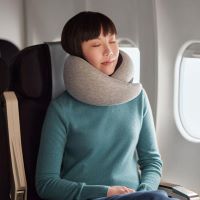
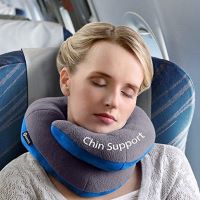
Many travel experts and frequent flyers have discovered a simple trick.
Turn the pillow around.
Instead of placing the opening beneath your chin, place the thicker part of the pillow under your chin and jawline.
This configuration supports the head from the front rather than the back.
The result is often dramatic.
The chin remains elevated. The neck stays in a more natural position. The head has less room to drop forward.
While it may look unusual, many experienced travelers report significantly better sleep using this method.
Sometimes the most effective solution isn’t buying a new travel accessory—it’s using your existing one differently.
Why Airlines Can’t Solve This Problem For You
Passengers often blame airline seats for poor sleep.
And while seat design certainly plays a role, airlines face major limitations.
Aircraft cabins must balance comfort, safety, weight, and capacity.
Adding larger headrests, deeper recline angles, or more supportive sleeping features for every passenger would reduce seating capacity and increase operating costs.
As a result, travelers must take personal responsibility for optimizing their comfort.
Small decisions can have an outsized impact.
Seat selection matters.
Cabin temperature matters.
Hydration matters.
And surprisingly, travel pillow positioning matters more than many people realize.
Related Reading: The Best Economy Seats for Tall Passengers and The Truth About Sitting in an Exit Row Seat
The Hidden Cost of Neck Pain
Neck discomfort is often dismissed as a minor inconvenience.
But its effects can linger long after landing.
A poor sleeping position during an overnight flight can contribute to headaches, shoulder tension, reduced concentration, and general fatigue.
For business travelers, this can affect performance during important meetings.
For vacationers, it can reduce enjoyment during the first days of a trip.
Many travelers spend hundreds or even thousands of dollars upgrading flights while overlooking a comfort issue that could be improved with a simple adjustment.
Sometimes the smallest changes deliver the biggest improvements.
Travel Comfort Recommendation
Before your next flight, consider building a complete comfort kit that includes a travel pillow, sleep mask, compression socks, reusable water bottle, and portable charger.
CTA: Compare the best travel comfort accessories before your next long-haul flight.
The Travel Pillow Industry Keeps Growing
The global travel accessories market continues to expand because passengers are actively searching for better ways to stay comfortable in the air.
Manufacturers now offer memory foam designs, inflatable models, wraparound support systems, and advanced ergonomic shapes.
Yet many travelers remain dissatisfied.
Why?
Because even the most expensive pillow cannot compensate for poor positioning.
A premium pillow used incorrectly may perform worse than a basic pillow used properly.
Comfort isn’t just about the product.
It’s about how the product interacts with the human body.
Other Travel Pillow Mistakes Passengers Make
Wearing the Pillow Too Loosely
If the pillow shifts during sleep, support disappears exactly when it’s needed most.
Choosing a Pillow That’s Too Large
Oversized pillows can force the neck into unnatural angles.
Ignoring Seat Position
A pillow works best when combined with proper seat recline and headrest adjustment.
Expecting the Pillow to Do All the Work
True comfort comes from combining multiple factors, including hydration, clothing, posture, and sleep timing.
Many passengers focus entirely on the pillow while overlooking everything else.
Related Reading: Why Airplane Cabin Air Feels So Strange
What Frequent Flyers Know
Passengers who fly long-haul routes regularly often develop personal comfort systems.
They know which seats offer the best support.
They know how to layer clothing for changing cabin temperatures.
They know when to sleep and when to stay awake to minimize jet lag.
And many understand that comfort comes from managing small details rather than relying on a single gadget.
The travel pillow is only one piece of the puzzle.
But when used correctly, it can become one of the most effective tools for improving the journey.
Frequent Flyer Essentials
Many experienced travelers combine a travel pillow with noise-canceling headphones, sleep masks, hydration tablets, compression socks, and power banks.
CTA: Discover the travel products frequent flyers use to arrive feeling refreshed instead of exhausted.
Related Reading: The Science of Jet Lag and How to Beat It
The Future of In-Flight Sleep
Aircraft manufacturers continue exploring new approaches to passenger comfort.
Advanced seat designs, improved headrests, and innovative sleeping solutions are already appearing in premium cabins.
But for the foreseeable future, most travelers will still rely on portable accessories to improve sleep.
The good news?
You don’t need futuristic technology to sleep better on your next flight.
You simply need to avoid the mistake millions of passengers continue making.
Related Reading: The Most Comfortable Aircraft for Long Flights Ranked
Planning Your Next Flight?
The aircraft you fly can influence your comfort more than many passengers realize.
CTA: Compare flight options, aircraft types, and seat maps before booking your next trip.
The Bottom Line
The biggest travel pillow mistake isn’t buying the wrong pillow.
It’s wearing it the wrong way.
Most passengers place the pillow behind their neck when their head actually needs support from the front.
By repositioning the pillow to support the chin and jaw, travelers can often reduce neck strain, prevent head-dropping, and improve sleep quality dramatically.
The next time you board a flight, look around the cabin.
You’ll probably see dozens of passengers wearing their travel pillows exactly the same way.
Hours later, many of them will wake up tired, stiff, and uncomfortable.
But you’ll know something they don’t.
Sometimes better travel comfort isn’t about spending more money.
It’s about using what you already have more intelligently.
Frequently Asked Questions
1. Should I wear my travel pillow backwards on every flight?
Not necessarily. Comfort varies from person to person, but many travelers find that supporting the chin provides better sleep in upright airline seats.
2. Are memory foam travel pillows better than inflatable pillows?
Memory foam generally provides better support, while inflatable pillows are easier to pack and carry.
3. Can a travel pillow completely prevent neck pain?
No. Sleep quality also depends on seat position, hydration, cabin conditions, flight duration, and overall posture.
Join the Conversation
You may have spent years using a travel pillow the same way as everyone else. If one common passenger habit is secretly making air travel more uncomfortable, what do you think it is—and are travelers sometimes blaming airlines for problems they could solve themselves?