
What Happens If You Ignore a Deployed Oxygen Mask?
Imagine settling into your seat at 37,000 feet.
The cabin lights are dim. Most passengers are asleep. A movie plays quietly on the screen in front of you.
Then suddenly, a loud chime breaks the silence.
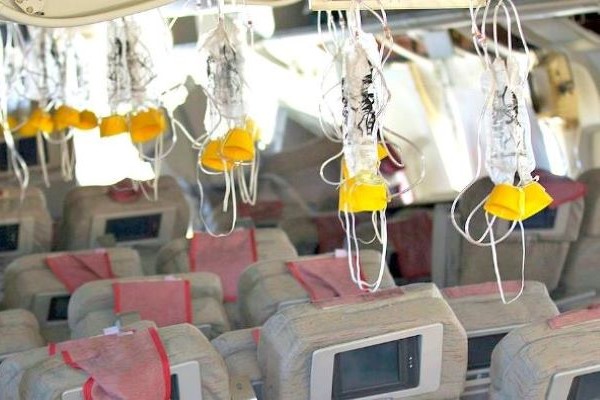
Without warning, yellow oxygen masks fall from the ceiling.
Some passengers grab them immediately.
Get the SkypropreAir Free Travel Pack
Plan smarter, choose a better seat and enjoy a more comfortable long-haul journey. Enter your details below to receive the Travel Pack.
Others freeze.
A few stare at the dangling masks, wondering if the situation is really serious.
That hesitation might be the most dangerous decision they make all flight.
Most people believe they would know if they were running out of oxygen.
The terrifying truth is that by the time you realize something is wrong, your brain may already be losing the ability to think clearly.
The Invisible Danger Above the Clouds
Commercial airliners routinely cruise between 35,000 and 40,000 feet.
At those altitudes, humans cannot survive for long without cabin pressurization.
The air is simply too thin.
That is why aircraft are carefully pressurized throughout the flight.
If that pressure is lost unexpectedly, oxygen masks automatically deploy to provide passengers with a temporary oxygen supply while pilots descend to a safer altitude.
Many travelers assume the masks are simply an extra precaution.
They are not.
They are emergency survival equipment.
This is one of the reasons aviation remains remarkably safe despite operating in an environment naturally hostile to human life. If you enjoyed this article, read The Hidden Reason Airplanes Are Safer Than Most People Realize.
Your Brain Can Trick You Into Thinking You’re Fine
One of the most dangerous aspects of oxygen deprivation is something called hypoxia.
Hypoxia occurs when your body is not receiving enough oxygen.
The symptoms often begin subtly.
You may feel:
-
Slightly dizzy
-
Relaxed
-
Unusually happy
-
Sleepy
-
Less focused
The frightening part is that many people don’t feel alarmed.
In fact, some people feel completely normal.
That’s what makes hypoxia so dangerous.
Your judgment becomes impaired before you recognize the threat.
The very organ needed to identify danger—your brain—is the first thing oxygen deprivation affects.
This disconnect between reality and perception is surprisingly similar to what many passengers experience during turbulence. Read The Hidden Reason Turbulence Feels More Terrifying Than It Really Is.
Photo: Aircraft Flying at High Altitude Above the Clouds
The Clock Starts Ticking Faster Than Most People Realize
Aviation experts use a term called “Time of Useful Consciousness.”
This refers to how long a person can continue functioning effectively without sufficient oxygen.
At high cruising altitudes, that time may be measured in seconds rather than minutes.
Not enough time to debate.
Not enough time to wait for someone else to react first.
Not enough time to see whether the emergency “looks serious.”
A passenger can still be awake and looking around while their decision-making ability rapidly deteriorates.
The danger is almost completely invisible.
Travel Smart
Frequent travelers should consider comprehensive travel insurance and emergency medical coverage before every trip. Unexpected situations rarely announce themselves in advance.
What Actually Happens If You Ignore the Mask?
The process is frighteningly simple.
First comes oxygen deprivation.
Then reduced concentration.
Then confusion.
Then poor judgment.
Then loss of coordination.
Then unconsciousness.
The progression may occur faster than most passengers would ever expect.
The oxygen mask’s purpose is straightforward.
It keeps your brain supplied with oxygen until pilots can bring the aircraft down to an altitude where the surrounding air becomes breathable again.
Ignoring that oxygen supply removes the safety bridge designed specifically for that emergency.
To learn more about emergency procedures, read What Really Happens During an Airline Emergency Evacuation.
Why Flight Attendants Sound So Serious
Many passengers tune out safety briefings.
Some continue texting.
Others keep reading.
A few never look up at all.
But when flight attendants discuss oxygen masks, every word matters.
When they say:
“Put your own mask on first before assisting others.”
They are not being cold.
They are acknowledging biology.
If you lose consciousness while helping someone else, neither of you may receive assistance in time.
The fastest way to protect your family is first ensuring you remain capable of helping them.
For more aviation safety insights, read:
-
The Hidden Reason You Must Put Your Own Oxygen Mask On First
-
The Hidden Reason Flight Attendants Ask Passengers to Review Emergency Exit.
The Difficult Decision Every Parent Fears
Imagine sitting beside your child.
Oxygen masks suddenly drop.
Your instinct will likely be to help them first.
Most parents feel exactly the same way.
But aviation experts consistently advise the opposite.
Secure your own mask.
Then assist your child.
Why?
Because an oxygen-deprived adult may become confused or unconscious before successfully helping anyone.
The instruction feels counterintuitive.
Yet it is one of the most important lessons in aviation safety.
Booking Your Next Flight?
Comparing seat maps before booking can significantly improve comfort, especially on long-haul routes. A small investment in a better seat can make a surprisingly large difference.
What Pilots Are Doing While You’re Reaching for Your Mask
The moment masks deploy in the passenger cabin, pilots are already responding.
Inside the cockpit, they immediately put on oxygen masks of their own.
They begin emergency descent procedures.
They communicate with air traffic control.
They follow rehearsed checklists practiced repeatedly during training.
The objective is simple:
Descend to an altitude where everyone can breathe safely again.
The oxygen system is designed to keep passengers protected during that descent.
Curious about cockpit operations? Read:
Why Most Oxygen Mask Emergencies End Safely
The reassuring reality is that oxygen mask deployments are extremely rare.
Even rarer are situations that result in serious injury.
Modern commercial aviation is built around multiple layers of protection.
Aircraft systems.
Crew training.
Emergency procedures.
Safety equipment.
Every layer exists to manage unlikely situations before they become dangerous.
The oxygen mask hanging above your seat is evidence of that philosophy.
It is not there because disaster is expected.
It is there because aviation prepares for possibilities.
That same safety-first mindset also explains the design of emergency exits and life jackets. Read The Emergency Exit Secret Many Travelers Never Think About and The Safety Jacket Under Your Seat Most Passengers Never Think About.
The Most Important Decision May Take Only Seconds
If an oxygen mask ever falls in front of you, don’t wait.
Don’t look around for reassurance.
Don’t assume someone else knows more than you do.
Don’t waste precious seconds trying to decide whether it’s necessary.
Pull the mask toward you.
Place it over your nose and mouth.
Secure it.
Breathe normally.
That simple action may be the most important decision you ever make on an aircraft.
Because at 37,000 feet, oxygen isn’t just comfort.
It’s time.
And time is often the one thing you have far less of than you realize.
Frequently Asked Questions
1. Can you lose consciousness if you ignore an oxygen mask?
Yes. Oxygen deprivation can rapidly impair judgment and eventually lead to unconsciousness, particularly at high cruising altitudes.
2. Does the oxygen start flowing immediately when the mask drops?
Yes. Passenger oxygen systems activate automatically, although the bag may not visibly inflate the entire time.
3. Why should adults put on their own mask before helping children?
Because an oxygen-deprived adult may become incapacitated before assisting anyone. Securing your own oxygen first ensures you can help others effectively.
Join the Discussion
Imagine you are traveling with your spouse, child, or elderly parent when oxygen masks suddenly drop from the ceiling. Would your instinct be strong enough to put on your own mask first as instructed, or would you immediately help them first—even knowing that choice could endanger both of you? Tell us your honest answer in the comments below.