
Why You Should Never Sit in the Last Row on a Long Flight
The Seat That Looks Normal… Until It Isn’t
At first glance, the last row looks just like any other seat.
Same design. Same layout. Same price.
But once the flight begins…
Everything changes.
-
People start gathering near you
Get the SkypropreAir Free Travel Pack
Plan smarter, choose a better seat and enjoy a more comfortable long-haul journey. Enter your details below to receive the Travel Pack.
-
Noise levels rise
-
Movement never stops
-
And your comfort slowly disappears
This is why experienced travellers avoid the last row — especially on long-haul flights.
The Biggest Problem: No Recline (Or Very Limited)
Most last-row seats have restricted or no recline.
Why?
Because there’s usually a wall, galley, or lavatory directly behind.
What this means for you:
-
You’re stuck in an upright position
-
Your body can’t relax naturally
-
Sleeping becomes significantly harder
On a short flight, it’s manageable.
On an 8+ hour flight, it’s exhausting.
If you’ve struggled to sleep on planes before, this explains why:
The Truth About Sleeping on Planes (Why It’s So Hard)
The Constant Traffic Problem
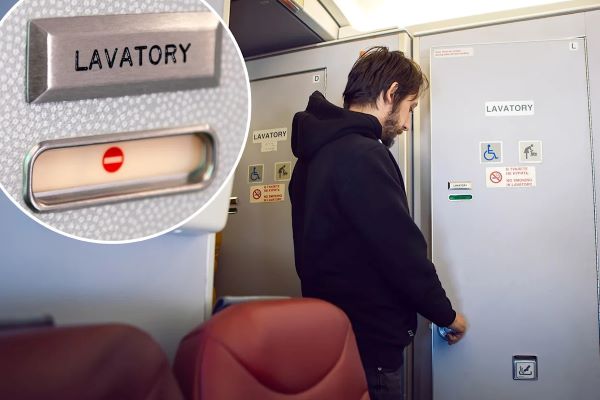
The last row is usually close to the toilets.
And that creates a problem most people underestimate:
You’re sitting in a high-traffic zone.
Expect:
-
People standing beside you
-
Conversations happening near your seat
-
Continuous movement in the aisle
Your space never feels “settled.”
This alone can make the seat feel more cramped than it actually is.
If you’ve ever felt this psychological pressure:
Why Economy Seats Feel So Cramped (It’s Not What You Think)
Noise: The Silent Comfort Killer
Another hidden issue:
Noise concentration in the rear cabin.
You’re close to:
-
Lavatory doors
-
Galley activity
-
Crew preparation areas
This means:
-
More interruptions
-
Harder sleep cycles
-
Increased fatigue
Even if you manage to relax, something will likely wake you.
The Recline Domino Effect (It Gets Worse)
Here’s where things really break down.
In the last row:
-
You can’t recline properly
-
The person in front of you can
Result: You feel even more compressed.
This creates a one-sided discomfort situation.
If this happens, here’s how to manage it:
How to Handle the Person in Front Reclining Their Seat
The Psychological Impact No One Talks About
This is where the last row becomes truly difficult:
It doesn’t just affect your body — it affects your mindset.
You feel:
-
Less in control
-
More exposed
-
Constantly interrupted
And that amplifies discomfort.
The same seat in a quieter area? Much more tolerable.
Are There Any Advantages at All?
To be fair, the last row does have a few small benefits:
-
Sometimes closer access to toilets
-
Occasionally quicker exit (depending on aircraft)
-
Less worry about disturbing people behind you
But on long-haul flights, these benefits rarely outweigh the downsides.
Aircraft Type Can Make It Slightly Better (But Not Enough)
On modern aircraft like:
-
Airbus A350
-
Boeing 787 Dreamliner
You may notice:
-
Better cabin airflow
-
Improved lighting
-
Slightly reduced noise
But even on these aircraft, the last row remains one of the least comfortable areas.
If you want to choose better aircraft overall:
Best Aircraft for Long Flights Ranked
Quick tip: When booking, checking aircraft type on platforms like Aviasales can help you avoid not just bad seats — but entire uncomfortable cabin layouts.
The Smart Traveller’s Move (Avoiding It Completely)
Most people don’t realise they’re booking the last row.
Here’s how to avoid it:
-
Always check the seat map before selecting
-
Avoid rows at the very back of the aircraft
-
Be cautious with “free” seat assignments
If you want better comfort overall:
Best Seats for Tall Passengers
Booking Smarter = Flying Better
Comfort doesn’t start on the plane.
It starts when you book.
Using tools like Aviasales helps you:
-
Compare seat layouts
-
Identify aircraft types
-
Avoid poor seating zones
And for long-haul trips:
Many frequent travellers rely on SafetyWing for flexible travel coverage — especially useful when discomfort, delays, or disruptions affect your journey.
Chudi’s Perspective
The last row isn’t just a bad seat — it’s a bad environment.
Noise. movement. lack of recline.
That combination turns a normal flight into a tiring experience.
The smartest travellers don’t take chances.
They avoid it completely.
Final Verdict
You should avoid the last row because of:
-
Limited or no recline
-
Constant passenger traffic
-
Increased noise levels
-
Reduced comfort and control
On long-haul flights, this seat can quietly ruin your experience.
FAQs
1. Is the last row always bad on a plane?
Not always — but on long-haul flights, it’s one of the least comfortable options.
2. Why don’t the last row seats recline?
Because of walls, galleys, or toilets behind them, limiting seat movement.
3. How can I avoid the last row when booking?
Check seat maps carefully and avoid selecting the final rows of the aircraft.