
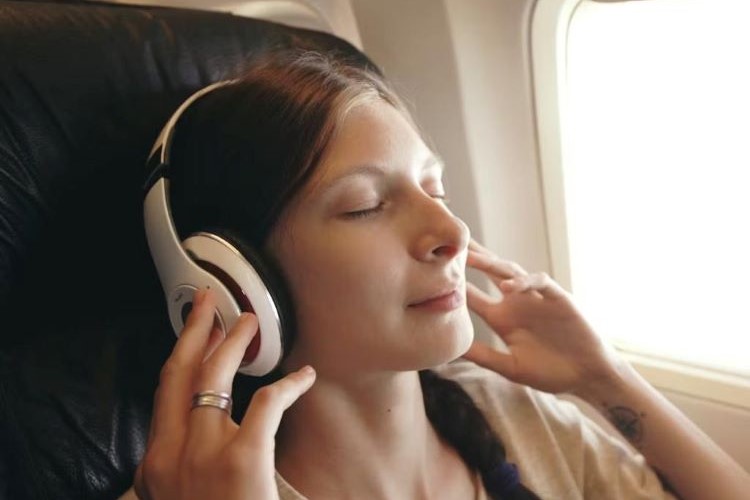
Why Frequent Flyers Never Travel Without Noise-Cancelling Headphones
The Sound You Don’t Notice Is Quietly Draining You
You finally settle into your seat.
The boarding chaos is over. Your carry-on is tucked away. The aircraft pushes back from the gate, and you tell yourself you’ll finally get some rest.
Then it begins.
A constant roar fills the cabin.
The engines.
Get the SkypropreAir Free Travel Pack
Plan smarter, choose a better seat and enjoy a more comfortable long-haul journey. Enter your details below to receive the Travel Pack.
The ventilation system.
The chatter from nearby passengers.
The crying baby a few rows behind.
The clatter of meal carts.
Hours later, you step off the aircraft feeling strangely exhausted—even if you managed to sleep for part of the flight.
Most travelers blame jet lag.
Experienced frequent flyers know something different.
One of the biggest hidden causes of travel fatigue isn’t the flight itself.
It’s the relentless wall of noise surrounding you from takeoff until landing.
That’s why seasoned business travelers, airline crews, and aviation enthusiasts rarely board a plane without one essential item: noise-cancelling headphones.
Related: The Science Behind Jet Lag That Most Passengers Never Learn
The Airplane Is Much Louder Than You Think
Commercial aircraft are surprisingly noisy environments.
Cabin noise typically ranges between 75 and 85 decibels, depending on the aircraft type, seat location, and phase of flight.
That might not sound extreme.
But exposure to continuous noise for six, eight, or even twelve hours places a constant demand on your brain.
Unlike sudden loud sounds, continuous background noise is mentally exhausting because your brain never stops processing it.
Even when you believe you’ve “tuned it out,” your nervous system is still working.
It’s like trying to read an entire book while someone quietly runs a vacuum cleaner beside you.
Eventually, your concentration fades.
Travel Smarter and Save Money
Planning your next flight? Compare fares from hundreds of airlines in one place and find the best deals before you book.
- Search cheap flights with Aviasales
Your Brain Never Truly Gets to Relax
One of the biggest misconceptions about flying is that resting means closing your eyes.
Not exactly.
True mental recovery requires your brain to reduce the amount of sensory information it processes.
Aircraft cabins do the opposite.
Every announcement…
Every engine vibration…
Every conversation nearby…
Every clink of cups and trays…
All of it keeps your brain partially alert.
Neuroscientists sometimes refer to this as cognitive load—the amount of mental effort required simply to process your surroundings.
The noisier the environment, the harder your brain works.
Noise-cancelling headphones dramatically reduce this invisible workload.
Many travelers notice they arrive feeling calmer without realizing why.
Related: Why Cabin Pressure Makes Some People Feel Exhausted
The Secret Isn’t Louder Music
Many first-time users assume noise-cancelling headphones simply play music louder.
That’s not how they work.
Modern Active Noise Cancellation (ANC) uses tiny microphones to detect incoming low-frequency sounds—especially engine noise.
The headphones instantly generate an opposite sound wave.
The two waves effectively cancel each other out before reaching your ears.
The result isn’t total silence.
Instead, the loud, exhausting background rumble largely disappears.
Suddenly the cabin feels peaceful.
Many travelers describe it as someone turning down the world’s volume.
Long-Haul Flights Become Surprisingly Less Stressful
Ask experienced long-haul travelers what changed their flying experience the most.
Many won’t mention premium seats.
Or airport lounges.
Or priority boarding.
They’ll mention noise-cancelling headphones.
Without the constant engine roar, everything becomes easier.
Reading.
Watching movies.
Listening to podcasts.
Working on a laptop.
Simply thinking.
Instead of constantly fighting the cabin environment, your brain can finally relax.
Related: What It’s Really Like Flying on the Boeing 787 Dreamliner
Better Sleep Starts With Less Noise
Sleeping on an airplane is already difficult.
Limited space.
Changing cabin temperatures.
Dry air.
Occasional turbulence.
Background conversations.
Noise adds another obstacle.
While noise-cancelling headphones won’t eliminate every disturbance, they significantly reduce continuous low-frequency sounds that make falling asleep harder.
Pair them with a comfortable sleep mask and neck pillow, and many travelers find they sleep longer and wake up feeling noticeably more refreshed.
For overnight flights, this can completely change the travel experience.
Don’t Forget Travel Insurance
Even the best-planned trip can be disrupted by flight delays, lost baggage, or unexpected medical emergencies.
Protect your journey with flexible travel insurance from SafetyWing, trusted by travelers and digital nomads worldwide.
- Get a SafetyWing travel insurance quote before your next flight
Your Movies Suddenly Sound Better
Aircraft entertainment systems have improved dramatically.
Yet many passengers still struggle to hear dialogue.
The reason isn’t poor headphones.
It’s background cabin noise.
Without noise cancellation, travelers often increase the volume.
Then announcements interrupt.
Then they increase it again.
Noise-cancelling headphones reduce the surrounding noise instead.
This allows you to listen comfortably at much lower volumes while hearing dialogue more clearly.
Your ears—and your hearing—benefit.
They Reduce Travel Fatigue More Than Most People Realize
Travel fatigue isn’t caused by one thing.
It’s the accumulation of dozens of small stressors.
Early alarms.
Security queues.
Walking long terminals.
Cabin pressure.
Dry air.
Dehydration.
Poor sleep.
Constant background noise.
Remove just one of those stressors, and the overall experience improves.
Frequent flyers understand this principle.
They don’t chase perfection.
They eliminate unnecessary discomfort wherever possible.
Noise cancellation is one of the simplest ways to do that.
Related: Why Airplane Cabins Make Your Nose So Dry
Not Every Aircraft Is Equally Noisy
Aircraft design makes a surprising difference.
Newer aircraft like the Boeing 787 Dreamliner and Airbus A350 feature quieter cabins thanks to improved engine technology, advanced insulation, and aerodynamic refinements.
Older aircraft may produce noticeably more cabin noise.
Seat location matters too.
Passengers seated near the wings or engines generally experience more low-frequency engine noise than those toward the front of the cabin.
This is another reason experienced travelers often combine careful seat selection with quality headphones.
The two strategies work together.
Related: The Quietest Seat on Every Major Aircraft
Business Travelers Depend on Them for Productivity
For many professionals, flying isn’t downtime.
It’s office time.
Presentations are reviewed.
Reports are edited.
Emails are answered.
Meetings are prepared.
Noise is the enemy of concentration.
Noise-cancelling headphones create a personal workspace, even inside a crowded cabin filled with hundreds of strangers.
That extra focus can make several hours of flying surprisingly productive.
They’re Useful Long Before You Board
One overlooked advantage is that they aren’t just for the aircraft.
Busy airports are full of constant stimulation.
Departure announcements.
Rolling suitcases.
Crowded restaurants.
Construction work.
Children playing.
Gate changes.
Wearing noise-cancelling headphones in the terminal creates a small bubble of calm before the journey even begins.
For anxious flyers, this reduced sensory overload can significantly lower stress before takeoff.
Related: 25 Things to Do at the Airport Instead of Staring at the Departure Board
Do You Need the Most Expensive Pair?
Not necessarily.
Premium models usually provide:
-
Better noise cancellation
-
Longer battery life
-
Greater comfort on long flights
-
Superior sound quality
-
Multi-device connectivity
However, many mid-range headphones now offer impressive active noise cancellation at much lower prices.
Comfort should be your biggest priority.
If headphones become uncomfortable after two hours, they won’t help on a ten-hour flight.
Frequent travelers often recommend trying several models before committing.
Ready to Experience a Quieter Flight?
A great pair of noise-cancelling headphones is even more valuable when paired with the right flight.
Compare routes, aircraft types, and ticket prices before you book.
- Find your next flight with Aviasales
The Best Investment May Be the One You Don’t Notice
Great travel gear often disappears into the background.
A comfortable neck pillow.
Reliable luggage.
Compression socks.
A refillable water bottle.
Noise-cancelling headphones belong in the same category.
You won’t notice them because of what they add.
You’ll notice them because of what they remove.
The endless roar.
The constant mental strain.
The invisible fatigue.
For millions of frequent flyers, that’s why they never leave home without them.
Once you’ve experienced a long-haul flight in relative quiet, going back to ordinary headphones feels surprisingly difficult.
Sometimes the biggest upgrade to your journey isn’t flying in a better seat.
It’s simply giving your brain a chance to enjoy a little peace at 38,000 feet.
Frequently Asked Questions
1. Are noise-cancelling headphones worth buying if I only fly a few times a year?
Yes. Even occasional travelers often notice a significant reduction in fatigue, better in-flight entertainment, and improved comfort on flights longer than three or four hours. They’re also useful for commuting, working remotely, and studying in noisy environments.
2. Do noise-cancelling headphones completely block airplane noise?
No. They are most effective at reducing continuous low-frequency sounds like engine noise and cabin ventilation. Sudden sounds such as announcements or conversations may still be heard, but usually at a much lower level.
3. Are noise-cancelling earbuds as good as over-ear headphones for flying?
Premium ANC earbuds have improved significantly and are excellent for portability. However, over-ear headphones generally provide stronger noise cancellation, greater comfort during long-haul flights, and longer battery life, making them the preferred choice for frequent flyers.
Join the Conversation
What’s one travel accessory you now refuse to fly without—and did it completely change your flying experience?
Share your answer in the comments below. Your recommendation might help another traveler enjoy a quieter, more comfortable journey.