
The Cleanest and Dirtiest Places on an Airplane: What Most Passengers Never Think About
You settle into your seat.
Your tray table clicks into place.
You adjust the air vent, reach for the seat-back pocket, and place your phone inside before relaxing for the next eight hours.
Everything looks spotless.
The cabin smells fresh.
Get the SkypropreAir Free Travel Pack
Plan smarter, choose a better seat and enjoy a more comfortable long-haul journey. Enter your details below to receive the Travel Pack.
The crew welcome everyone with warm smiles.
It feels clean.
But appearances can be deceiving.
Long before your flight departed, thousands of hands may have touched the exact same surfaces you’re about to eat from, rest your head against, or place your belongings on.
Even more surprising?
Some of the places passengers fear the most are actually among the cleanest parts of the aircraft.
Others—places almost everyone touches without thinking—can quietly collect far more bacteria than you would ever imagine.
Knowing where germs really hide won’t make you afraid of flying.
It will simply make you a smarter traveler.
The Truth About Aircraft Cleaning
Commercial aircraft undergo cleaning after nearly every flight.
However, not every cleaning is the same.
During quick turnarounds—sometimes less than 45 minutes—cleaning crews focus on visible cleanliness.
They remove rubbish.
Vacuum obvious debris.
Replace headrest covers where required.
Wipe visible stains.
The aircraft must be ready for its next departure quickly.
Deep cleaning is usually performed less frequently depending on airline schedules, aircraft utilization, and maintenance programs.
That means some frequently touched surfaces may be disinfected multiple times daily, while others receive only light attention between flights.
The result isn’t necessarily a dirty airplane.
It simply means some hidden hotspots are easy to overlook.
Related Reading: Why Airplane Cabins Make Your Nose So Dry
Related Reading: Why Cabin Pressure Makes Some People Feel Exhausted
The Dirtiest Place May Be Sitting Right in Front of You
Most passengers assume the lavatory contains the highest concentration of germs.
Research has repeatedly pointed somewhere else.
The tray table.
It becomes a dining table.
A laptop desk.
A changing table for babies.
A place for passengers to rest their heads.
Children play on it.
Passengers cough over it.
Food is placed directly on it.
Yet many travelers never wipe it before use.
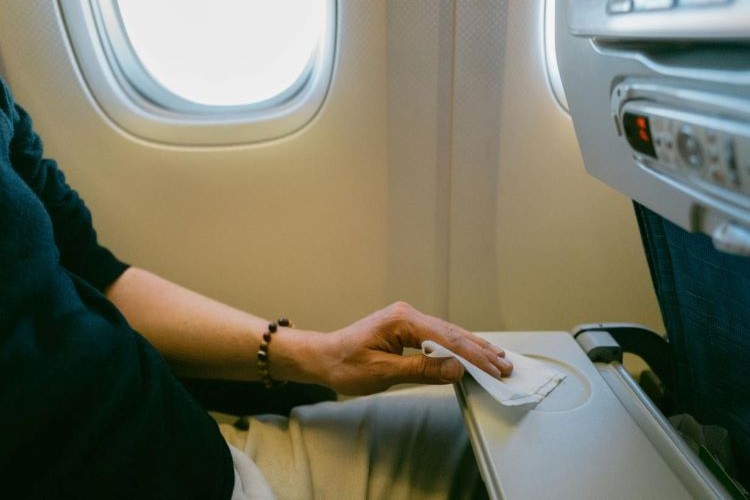
Even though airlines clean tray tables, they are among the highest-touch surfaces throughout every flight.
A small pack of disinfectant wipes can dramatically reduce exposure before meals.
Travel Smarter
Before your next trip, compare fares using Aviasales to find cheaper flights while spending the savings on travel essentials that make your journey healthier and more comfortable.
Seat Belt Buckles Are Constantly Touched
Think about how many people buckle and unbuckle that seat belt every day.
Every passenger.
Every flight.
Unlike armrests or seats, buckles are rarely cleaned during the flight itself.
Hands that have handled luggage, airport security bins, escalator rails, passports, and mobile phones all eventually reach the same buckle.
It’s one of the simplest places to disinfect before settling in.
Seat-Back Pockets Can Hold More Than Magazines
Passengers often place personal belongings inside the pocket ahead.
Phones.
Tablets.
Books.
Water bottles.
Children’s toys.
Unfortunately, not everything left inside belongs there.
Cleaning crews occasionally discover tissues, food wrappers, used napkins, chewing gum, and other forgotten items.
While pockets are checked during cleaning, their fabric and narrow spaces make thorough sanitization more difficult than wiping hard surfaces.
Avoid placing food directly inside the pocket.
Using a small travel organizer for electronics is a much cleaner alternative.
Related Reading: Can a Sleep Mask Really Improve Sleep on Flights?
The Lavatory Isn’t Always the Worst Offender
This may surprise many travelers.
Aircraft lavatories are cleaned frequently throughout the day and monitored closely by cabin crew.
Because passengers expect them to be dirty, they also tend to wash their hands immediately afterward.
Ironically, many passengers are more cautious inside the lavatory than anywhere else onboard.
The biggest risk isn’t necessarily being inside the lavatory.
It’s touching the door latch while leaving.
Using a paper towel to open the door before disposing of it can reduce contact with shared surfaces.
The Air Vent Above Your Head Is Often Forgotten
Nearly every passenger adjusts the overhead air nozzle.
Some rotate it constantly during the flight.
Others close and reopen it several times.
Despite being touched repeatedly, air vents are often overlooked because they aren’t obvious cleaning priorities during rapid aircraft turnarounds.
A quick wipe before adjusting it isn’t a bad habit.
Touch Screens Can Collect Countless Fingerprints
Modern aircraft increasingly feature seat-back entertainment systems with touch screens.
Hundreds of fingers may touch the same screen throughout the day.
Unlike your smartphone, which you probably clean regularly, aircraft screens depend entirely on airline cleaning schedules.
If your aircraft uses touch-screen entertainment, consider cleaning your hands before eating.
Armrests Quietly Collect Germs All Day
Passengers naturally rest their hands on armrests for hours.
Many also grip them during turbulence or while standing up.
Armrests receive continuous contact throughout every flight.
Window-seat passengers touch one side.
Aisle passengers grip the other.
Middle-seat passengers often use both.
A disinfectant wipe takes only seconds.
Related Reading: The Airplane Seat Mistake Almost Everyone Makes
Surprisingly, Cabin Air Is Much Cleaner Than Most People Think
Here’s the good news.
Many travelers worry about breathing recycled air.
Modern commercial aircraft use sophisticated HEPA filtration systems capable of removing the overwhelming majority of airborne bacteria, viruses, and microscopic particles.
Cabin air is completely refreshed every few minutes by mixing fresh outside air with filtered recirculated air.
In many situations, aircraft cabin air is cleaner than the air inside offices, shopping centres, or busy public buildings.
The greater risk usually comes from touching contaminated surfaces—not from breathing the air.
If you’ve ever wondered why some flights leave you feeling more drained than others, the answer often lies elsewhere.
Related Reading: Why Some Flights Feel Much More Turbulent Than Others
The Cleanest Places on an Airplane Might Surprise You
Some areas receive exceptional attention.
Cockpit
Only authorized personnel enter.
Strict operational procedures help maintain cleanliness.
Food and drink handling is carefully managed.
Galley Preparation Areas
Cabin crews prepare hundreds of meals here.
Food safety standards require regular cleaning and sanitation throughout the journey.
These areas receive far more attention than many passenger touchpoints.
Freshly Replaced Headrest Covers
Many airlines replace disposable antimacassars between flights.
While the seat itself remains the same, the fabric touching your head may actually be brand new.
Filtered Cabin Air
Perhaps the cleanest “place” onboard isn’t a surface at all.
It’s the air you’re breathing.
Advanced filtration systems continuously remove contaminants, helping keep airborne particles remarkably low.
Protecting Yourself Doesn’t Require Being Paranoid
Fortunately, staying healthy during air travel doesn’t require wearing gloves or avoiding every surface.
A few practical habits go a long way.
-
Wipe your tray table before eating.
-
Clean the seat belt buckle and armrests.
-
Wash your hands after using the lavatory.
-
Use hand sanitizer before meals.
-
Avoid touching your face unnecessarily.
-
Store personal belongings in a travel pouch instead of the seat pocket.
-
Keep your phone clean, as it often transfers germs back to your hands.
These small actions take less than two minutes but can significantly reduce exposure to common bacteria.
- Protect Every Trip
Even healthy travelers can face unexpected medical issues, lost baggage, or trip interruptions. Before flying internationally, consider protecting your journey with SafetyWing Travel Insurance, a flexible option trusted by digital nomads and frequent travelers worldwide.
Should You Be Worried?
Not really.
Millions of passengers fly safely every day without becoming ill.
Aircraft are maintained under strict hygiene standards, and airlines continue improving cleaning procedures.
The purpose of understanding where germs accumulate isn’t to create fear.
It’s to replace assumptions with facts.
Many passengers spend an entire flight worrying about the lavatory while eating from an untouched tray table.
Others panic about recycled air without realizing the cabin filtration system is among the most advanced ventilation systems found in public transportation.
Knowledge changes behavior.
And smart habits make every journey a little safer and far more comfortable.
The next time you board an aircraft, you’ll probably still admire the window view, settle into your seat, and look forward to your destination.
You’ll simply reach for a disinfectant wipe before opening your meal.
Sometimes, the smallest travel habits make the biggest difference.
Frequently Asked Questions
1. What is the dirtiest surface on an airplane?
The tray table consistently ranks among the most frequently touched surfaces and is often considered one of the dirtiest areas because passengers eat, work, and place personal items on it throughout the day.
2. Is airplane cabin air dirty?
No. Modern commercial aircraft use HEPA filtration systems that remove the vast majority of airborne bacteria, viruses, and particles. Cabin air is refreshed every few minutes and is generally cleaner than many indoor public spaces.
3. Should I disinfect my airplane seat before every flight?
While it’s not essential, wiping high-touch surfaces such as the tray table, armrests, seat belt buckle, and entertainment screen is a simple precaution that can reduce contact with germs and improve peace of mind.
Join the Conversation
What is the first thing you touch when you board an airplane—and after reading this article, is there anything you’ll start cleaning before every flight? Share your thoughts in the comments below.