
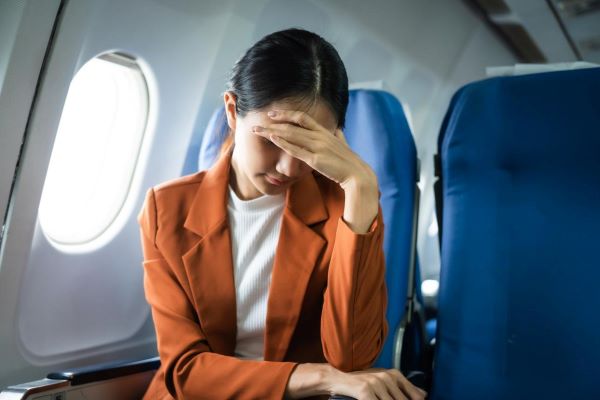
Why Airplane Cabins Make Your Nose So Dry
A Tiny Irritation That Can Ruin an Entire Flight
You settle into your seat expecting a smooth journey.
The engines roar to life. The cabin lights dim. A movie begins. Everything seems comfortable—until your nose starts to feel strangely tight.
Within an hour, breathing feels different. Your nostrils sting. Your lips crack. You find yourself swallowing constantly because your throat feels like sandpaper.
By the time you land, your nose is so dry that it almost hurts.
Many passengers assume they’re catching a cold or reacting to recycled air.
Get the SkypropreAir Free Travel Pack
Plan smarter, choose a better seat and enjoy a more comfortable long-haul journey. Enter your details below to receive the Travel Pack.
The real reason is far more surprising—and it has everything to do with the environment inside modern aircraft.
Understanding why this happens can make your next long-haul journey dramatically more comfortable.
The Air Inside an Airplane Is Much Drier Than Most People Realize
The biggest culprit isn’t the cabin pressure.
It’s the humidity.
Most homes maintain indoor humidity between 30% and 60%.
Many aircraft cabins, however, operate at humidity levels below 20%, and on some long-haul flights, humidity can fall close to 10%.
That’s drier than many deserts.
Every breath you take pulls moisture from the delicate tissues lining your nose, throat, and mouth.
Unlike your home, there’s simply very little moisture available for your body to replace what it loses.
If you’ve ever wondered why flying leaves you feeling exhausted, you may also enjoy our guide on Why Airplane Cabins Feel So Cold and The Truth About Cabin Air Quality in 2026, where we explain how the cabin environment affects your comfort far beyond what most travelers realize.
Your Nose Was Designed to Stay Moist
Your nose isn’t just for smelling.
It constantly performs several important jobs:
-
Warming incoming air
-
Humidifying every breath
-
Filtering dust and particles
-
Trapping bacteria and viruses
All of these functions rely on a thin layer of moisture covering the nasal passages.
When cabin air becomes extremely dry, that protective layer begins to disappear.
The tissues become irritated.
Tiny blood vessels become exposed.
For some travelers, this leads to soreness or even small nosebleeds.
Why It Feels Worse on Long Flights
The drying effect is cumulative.
During the first hour, you may notice very little.
By hour four, moisture loss becomes much more noticeable.
After eight or ten hours, your nasal passages may have lost enough moisture that breathing simply feels uncomfortable.
This explains why many passengers feel perfectly fine on short domestic flights but struggle during overnight international journeys.
The longer you remain in the dry environment, the more pronounced the symptoms become.
Planning a long-haul trip?
Before you book, compare fares with Aviasales to find the best flight options and schedules. Sometimes choosing a shorter connection or a newer aircraft can significantly improve your overall comfort.
- Compare flight prices with Aviasales
Cabin Pressure Makes the Problem Even More Noticeable
Aircraft cabins are pressurized for safety—but not to sea-level conditions.
Instead, most commercial aircraft maintain an equivalent cabin altitude of roughly 6,000–8,000 feet.
At these altitudes:
-
Air pressure is lower.
-
Oxygen availability decreases slightly.
-
Moisture evaporates more quickly from exposed tissues.
Your nose works harder to condition every breath.
Combined with extremely low humidity, the result is a dry, irritated feeling many travelers mistake for illness.
For a deeper explanation, read Why Airplane Cabins Feel Different Than You Expect and Why Flying Feels More Exhausting Than It Used To.
Why Some Passengers Barely Notice While Others Suffer
Not everyone experiences dry noses equally.
Several factors increase susceptibility.
You may notice more dryness if you:
-
Already have allergies.
-
Recently recovered from a cold.
-
Use medications that cause dryness.
-
Wear contact lenses.
-
Have sensitive sinuses.
-
Are naturally prone to dehydration.
Age also plays a role.
Older adults often produce less natural moisture, making airplane cabins feel even harsher.
The Recycled Air Myth
One of aviation’s biggest misconceptions is that recycled air causes dryness.
It doesn’t.
Modern aircraft continuously mix filtered recirculated air with fresh outside air.
The air itself is remarkably clean thanks to advanced filtration systems.
The real issue isn’t cleanliness.
It’s moisture.
Cold outside air at cruising altitude contains almost no water vapor.
Even after it’s compressed and warmed before entering the cabin, it remains extremely dry.
That’s the hidden reason passengers feel dehydrated despite breathing clean air.
Your Body Is Losing Water Even If You Don’t Notice
Dry air increases what’s called insensible water loss.
You lose moisture through:
-
Every breath you exhale
-
Your skin
-
Your eyes
-
Your nasal passages
Because the process happens gradually, most travelers don’t realize how much water they’re losing until symptoms appear.
Dry lips.
Scratchy throat.
Headaches.
Fatigue.
And, of course, an uncomfortably dry nose.
If you travel internationally, don’t forget that unexpected illnesses can happen anywhere. Many experienced travelers protect themselves with SafetyWing Travel Insurance, especially for long trips and multi-country journeys.
- Protect your journey with SafetyWing Travel Insurance
Why Sleeping Can Make It Worse
Many travelers fall asleep with their mouths slightly open.
This increases moisture loss dramatically.
Instead of breathing primarily through your nose, dry cabin air flows directly across your mouth and throat for hours.
When you wake up, both your throat and nasal passages may feel painfully dry.
Passengers who snore or suffer from mild sleep apnea often experience even greater discomfort.
You may also enjoy reading Can a Sleep Mask Really Improve Sleep on Flights? and The Travel Pillow Mistake Most Passengers Make, where we explore other factors that affect in-flight rest.
Small Habits That Can Make a Big Difference
Fortunately, you don’t need expensive gadgets to protect your nose.
Simple strategies work remarkably well.
Drink water regularly throughout the flight instead of waiting until you’re thirsty.
Limit alcohol and excessive caffeine, both of which can contribute to dehydration.
Apply a saline nasal spray before boarding and again during longer flights if needed.
A small amount of petroleum-free nasal moisturizing gel can also help maintain comfort.
Breathing through your nose whenever possible allows it to warm and humidify incoming air more effectively than mouth breathing.
Newer Aircraft Are Becoming More Comfortable
Not every airplane feels equally dry.
Newer aircraft such as the Boeing 787 Dreamliner and Airbus A350 use advanced composite materials that allow airlines to maintain slightly higher cabin humidity while also operating at lower cabin altitudes.
Passengers often report arriving with fewer symptoms of dehydration, less nasal irritation, and reduced fatigue compared with older aircraft.
While no commercial aircraft feels exactly like home, newer cabin technology has noticeably improved passenger comfort.
For aircraft comparisons, don’t miss Why the Boeing 787 Dreamliner Feels More Comfortable and Airbus A350 vs Boeing 787: Which Aircraft Is Better for Long Flights?
The Hidden Link Between Dry Noses and Jet Lag
Dryness doesn’t directly cause jet lag.
But it can make jet lag feel much worse.
Poor sleep.
Interrupted breathing.
Frequent waking to drink water.
Sore nasal passages.
These combine to leave passengers feeling more exhausted after landing.
Reducing dryness can improve sleep quality, making it easier for your body to adjust to a new time zone.
Sometimes the difference between arriving refreshed and arriving miserable begins with something as simple as protecting your nose.
Final Thoughts
A dry nose might seem like one of the smallest inconveniences of flying.
Yet it reflects one of aviation’s biggest environmental challenges.
Modern aircraft carry passengers safely through air that is cleaner than many people imagine—but far drier than the human body was designed to tolerate.
Fortunately, understanding the science gives travelers an advantage.
With proper hydration, simple nasal care, and smart preparation, that uncomfortable burning sensation doesn’t have to be part of your next journey.
Sometimes, the smallest travel discomforts have the simplest solutions.
Frequently Asked Questions
Why does my nose feel dry only on airplanes and not in other indoor places?
Aircraft cabins have exceptionally low humidity—often below 20%—which is much drier than most homes, offices, hotels, or shopping centers. That dry air rapidly pulls moisture from your nasal passages.
Can a dry nose during a flight cause a nosebleed?
Yes. Extremely dry cabin air can dry out the delicate lining of your nose, making tiny blood vessels more likely to crack and bleed, particularly during long-haul flights or if you already suffer from allergies.
What’s the best way to prevent a dry nose on long flights?
Stay hydrated throughout your journey, avoid excessive alcohol and caffeine, use a saline nasal spray before and during the flight if needed, and breathe through your nose whenever possible. Choosing newer aircraft like the Boeing 787 or Airbus A350 may also help because they generally maintain higher cabin humidity.
Join the Conversation
Have you ever stepped off a flight feeling like your nose, throat, and skin had completely dried out? What simple trick has made the biggest difference to your comfort on long-haul flights? Share your experience in the comments—your tip could help another traveler arrive feeling far more refreshed.