
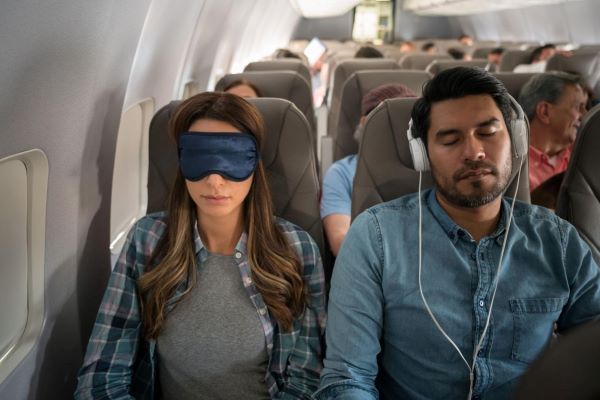
The End of Bad Sleep on Flights? The Truth About Smart Seats in 2026
For decades, sleeping on planes has felt like a battle. Now, airlines think they’ve finally solved it.
If you’ve ever landed after an 8-hour flight feeling worse than when you boarded… you’re not alone.
Neck pain.
Broken sleep.
That strange “half-rested but still exhausted” feeling.
For years, airlines have improved food, screens, even Wi-Fi.
But one thing barely changed:
Your ability to sleep.
Get the SkypropreAir Free Travel Pack
Plan smarter, choose a better seat and enjoy a more comfortable long-haul journey. Enter your details below to receive the Travel Pack.
Until now.
Because in 2026, a new kind of seat is emerging — one designed not just to support you…
…but to adapt to you.
Why Sleeping on Planes Has Always Been So Difficult
Let’s break the real problem down.
Sleeping on planes fails for three reasons:
1. Static Seat Design
Airplane seats don’t adapt.
Your body does all the adjusting.
2. Poor Neck Support
Your head naturally falls forward or sideways → waking you up repeatedly.
3. Constant Micro-Disturbances
Turbulence, movement, noise — your body never fully settles.
This is exactly why we explored better solutions in:
What Smart Seats Are Trying to Fix
Smart seats — especially biometric headrests — aim to solve this differently.
Instead of forcing your body to adapt…
The seat adapts to your body.
Using subtle sensors, these seats can:
-
Detect when your head tilts
-
Identify restless vs deep sleep
-
Adjust headrest angle automatically
-
Stabilise your position mid-sleep
The result?
Fewer wake-ups.
Better posture.
More consistent rest.
Chudi’s Perspective
This is the first serious shift from:
“Endure the flight” → to → “Recover during the flight”
And that’s massive.
Because long-haul comfort isn’t about luxury.
It’s about how you feel when you land.
The Truth Most People Won’t Say
Smart seats are not a magic solution.
They fix one major problem — posture and support.
But they don’t fix everything.
You’ll still deal with:
-
Cabin noise
-
Light exposure
-
Flight timing issues
-
Internal body clock disruption
So while smart seats improve sleep quality…
They don’t eliminate fatigue completely.
Where This Will Actually Matter Most
Not all flights benefit equally.
Smart seating will have the biggest impact on:
Overnight Long-Haul Flights
Where sleep quality directly affects arrival condition
Economy & Premium Economy
Where poor seat design has always been the biggest issue
Aircraft likely to benefit first:
-
Airbus A350
-
Boeing 787
These already optimise:
-
Cabin pressure
-
Humidity
-
Lighting
Smart seating simply completes the system.
What You Should Do Right Now (Before This Becomes Standard)
Here’s the reality:
Smart seats are still emerging.
So if you want better sleep today, focus on what already works.
Choose the Right Aircraft
A350 and 787 still lead in comfort
Compare aircraft before booking using Aviasales
Pick Smart Flight Times
Overnight flights only work if you can actually sleep
Optimize Seat Position
Window seats = less disturbance
Avoid high-traffic zones
Protect Your Trip
Especially on long-haul routes where fatigue impacts your plans
Stay covered with SafetyWing
The Bigger Shift: Flights That Help You Recover
For years, flying has been about getting from A to B.
Now, it’s becoming something else:
A space where your body is actively supported.
Smart seats are just the beginning.
In the near future, expect:
-
Seats that adjust continuously
-
Cabins that sync with your sleep cycle
-
Flights designed around human biology
FAQs
1. Will smart seats completely fix sleep on planes?
No — but they can significantly improve posture and reduce sleep interruptions.
2. When will these seats become common?
Expect gradual rollout starting with premium cabins, then long-haul economy over time.
3. Are these seats worth it?
For long-haul travellers, especially in economy — potentially yes. This could be one of the biggest comfort upgrades in years.
Final Thought
For the first time in decades, airlines may finally be solving the real problem of flying.
Not entertainment.
Not food.
Not even price.
Sleep.
And if they get this right…
Bad sleep on planes might finally become a thing of the past.