
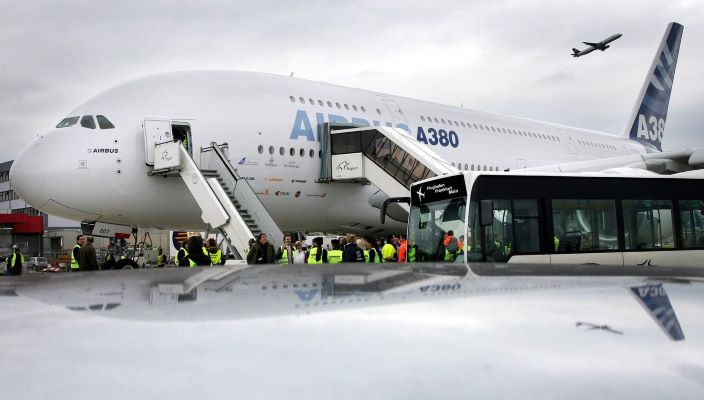
What It’s Really Like Flying on the Airbus A380
The giant aircraft that changed what passengers expect from long-haul travel.
Imagine standing at the gate and watching an aircraft so enormous that it makes every other plane nearby look small.
Passengers stop and stare.
Phones come out.
Conversations pause.
Get the SkypropreAir Free Travel Pack
Plan smarter, choose a better seat and enjoy a more comfortable long-haul journey. Enter your details below to receive the Travel Pack.
Then comes the realization: I’m about to fly on that.
The Airbus A380 isn’t just another airplane. It is the largest passenger aircraft ever built, a double-deck giant designed to carry hundreds of people across oceans and continents in remarkable comfort.
But what is it really like once the cabin doors close and the journey begins?
The answer explains why many travelers actively search for A380 flights even when cheaper alternatives exist.
The First Impression Feels More Like Entering a Building Than an Aircraft
The moment you step onboard, something feels different.
Most aircraft feel narrow and busy.
The A380 feels spacious.
The wide aisles, high ceilings, and enormous cabin create an immediate sense of openness. Even travelers seated in economy often notice that the aircraft feels less cramped than expected.
The size is difficult to appreciate until you’re actually inside.
For many passengers, this is the moment excitement turns into genuine amazement.
If you’re planning a long-haul trip, you may also enjoy reading SkypropreAir’s guides on Best Seats by Aircraft Type and The Truth About Sitting in an Exit Row Seat before choosing your seat.
The Quiet Is Almost Unbelievable
One of the biggest surprises is the noise level.
Or rather, the lack of it.
Considering the aircraft has four enormous engines, many passengers expect a loud and powerful cabin environment.
Instead, the A380 is widely regarded as one of the quietest aircraft in commercial aviation.
Conversations are easier.
Movies sound better.
Sleeping becomes less difficult.
Many first-time passengers actually look out the window during takeoff because they cannot believe how smooth and quiet the experience feels.
This quiet atmosphere contributes significantly to the aircraft’s reputation for comfort.
Take-off Feels Surprisingly Gentle
A fully loaded A380 can weigh more than half a million kilograms.
You would expect an aggressive take-off.
Instead, the aircraft often feels remarkably smooth.
The acceleration is powerful but controlled.
As the aircraft lifts from the runway, passengers frequently describe the sensation as a gentle climb rather than a dramatic launch.
For nervous flyers, this characteristic can be especially reassuring.
The aircraft’s size absorbs much of the vibration and movement that people often associate with flying.
That doesn’t mean you won’t feel take-off.
It simply feels more refined.
Why Long Flights Feel Easier on the A380
A twelve-hour flight will never feel short.
But many travellers report feeling noticeably less exhausted after flying on an A380 compared with other aircraft.
Several factors contribute to this.
The quieter cabin reduces fatigue.
The spacious interior creates a calmer atmosphere.
The aircraft often feels more stable during cruise.
Together, these characteristics make long-haul travel feel less draining.
Before your next long-haul flight, check SkypropreAir’s guides on Why Airplane Air Makes You Feel So Dry and The Truth About Airline Meal Quality in 2026 to prepare for the realities of spending many hours in the air.
Travel Deal Placement
Planning to experience the Airbus A380 for yourself?
Compare fares across multiple airlines using Aviasales before booking. Popular A380 routes often connect London, Dubai, Singapore, Sydney, Los Angeles, and New York, and small date changes can sometimes save hundreds of dollars.
Economy Class Is Better Than Many Expect
Let’s address the question most travellers ask.
Is economy class on the A380 actually good?
The answer depends partly on the airline.
However, the aircraft itself provides several advantages.
The wider cabin creates a more spacious feeling.
The higher ceiling makes the environment feel less confined.
Passengers have more room to move around during long flights.
Many travelers who dread spending ten or more hours in economy are surprised by how manageable the experience feels.
It may not be luxury travel.
But it often feels less stressful than economy on many other aircraft.
The Upper Deck Feels Like a Secret World
One of the most fascinating features of the A380 is its upper deck.
Many travelers assume only first-class passengers can go upstairs.
That isn’t always true.
Several airlines place premium economy and business-class cabins on the upper deck.
Yet premium surroundings do not always guarantee consistent service. Our analysis of an Emirates Business Class complaint examines why the passenger experience depends on more than the seat.
The atmosphere is noticeably quieter.
The passenger numbers are smaller.
The cabin feels more exclusive.
For aviation enthusiasts, securing an upper-deck seat is often considered one of the best experiences in commercial flying.
Turbulence Feels Different
No aircraft can eliminate turbulence.
If the air is rough, every plane will move.
However, the A380’s massive size helps soften many bumps.
Passengers often describe turbulence as feeling more like gentle rolling than sharp jolts.
Pilots frequently compare the aircraft’s movement to a large ship moving across ocean waves.
You still feel the motion.
But it often feels more controlled and predictable.
If turbulence makes you anxious, SkypropreAir’s guide Why Pilots Rarely Worry About Turbulence explains why flight crews usually remain calm even during bumpy flights.
The Downsides Nobody Mentions
The Airbus A380 is not perfect.
Its greatest strength can also create challenges.
Boarding takes longer.
Deplaning takes longer.
Immigration queues can be larger when hundreds of passengers arrive simultaneously.
Airports require specialized gates and equipment to handle the aircraft.
Because of these operational costs, fewer airlines operate the A380 today than a decade ago.
That means opportunities to fly on one are becoming increasingly special.
Why Travelers Never Forget Their First A380 Flight
Ask frequent flyers about the most memorable aircraft they’ve ever flown.
One name appears again and again.
The Airbus A380.
Not because it’s the newest aircraft.
Not because it’s the fastest.
But because it changes the entire feeling of flying.
The quiet cabin.
The smooth ride.
The spacious interior.
The sensation of crossing oceans in what feels like a flying hotel.
Even travelers who know little about aviation often remember their first A380 journey years later.
That says everything.
Travel Insurance Placement
Long-haul international travel comes with risks, including delays, cancellations, missed connections, and unexpected medical situations.
Before boarding your next A380 flight, consider SafetyWing travel insurance for added peace of mind during international travel.
Final Verdict: Is the Airbus A380 Worth the Hype?
Absolutely.
The Airbus A380 remains one of the most comfortable aircraft ever built.
From its quiet cabin and smooth takeoff to its spacious design and impressive stability, it delivers an experience that many travelers believe modern aviation struggles to match.
It doesn’t make a twelve-hour flight feel short.
But it can make it feel significantly easier.
And in today’s increasingly crowded travel environment, that’s a remarkable achievement.
The Airbus A380 may not dominate the skies forever, but for those fortunate enough to fly on one, it remains one of aviation’s greatest experiences.
Frequently Asked Questions
Is the Airbus A380 smoother than other airplanes?
Many passengers believe so. Its enormous size and weight often make turbulence feel less severe compared to smaller aircraft.
Which airlines still operate the Airbus A380?
Major operators include Emirates, Singapore Airlines, British Airways, Qantas, Lufthansa, and Qatar Airways.
Is it worth paying extra for an upper-deck seat?
For many travelers, yes. Upper-deck cabins are typically quieter and feel more exclusive, especially in premium economy and business class.
Join the Discussion
The Airbus A380 is often called the greatest passenger aircraft ever built. If airlines eventually retire every A380, do you think air travel will become less comfortable—or have newer aircraft like the A350 and Boeing 787 already surpassed the giant?
Share your thoughts in the comments below. This debate could shape the future of long-haul travel.