
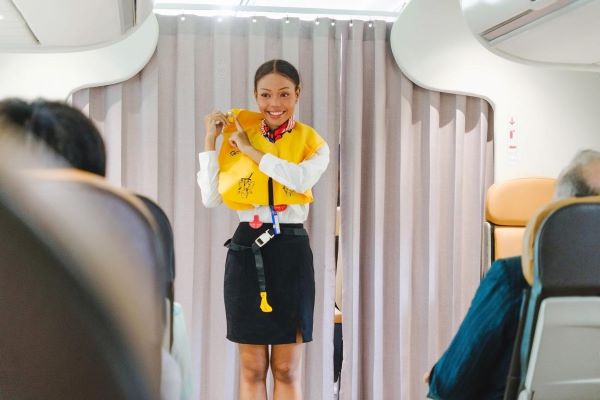
The Most Common Mistake Passengers Make With Life Jackets
Imagine this.
The cabin lights suddenly dim. The aircraft is descending lower than expected. Flight attendants are moving quickly, their faces calm but serious. Then comes the announcement every passenger hopes never to hear.
“Ladies and gentlemen, prepare for a possible emergency landing.”
Your pulse quickens.
You glance beneath your seat and notice something you’ve ignored on every flight you’ve ever taken.
Get the SkypropreAir Free Travel Pack
Plan smarter, choose a better seat and enjoy a more comfortable long-haul journey. Enter your details below to receive the Travel Pack.
The life jacket.
At that moment, one simple mistake could determine whether you escape safely or put yourself in even greater danger.
The shocking truth is that the most common life jacket mistake isn’t forgetting where it is.
It’s using it at the wrong time.
If you’ve ever wondered why passengers often ignore critical safety information, check out our guide on Why Most Passengers Ignore Emergency Exit Instructions.
The Mistake That Could Trap You Inside the Aircraft
Most passengers assume that if an aircraft lands on water, they should inflate their life jacket immediately.
It sounds sensible.
After all, the purpose of a life jacket is to help you float.
But inflating it inside the aircraft can be extremely dangerous.
As water enters the cabin, an inflated life jacket can force a passenger upward against the ceiling. Instead of moving toward an exit, they may find themselves trapped by the very equipment designed to save them.
That is why flight attendants repeatedly emphasize one instruction:
Put the life jacket on inside the aircraft. Inflate it only after you have exited the aircraft.
It sounds like a small detail.
In an emergency, it can be a life-saving one.
Many travelers make similar assumptions about safety equipment. Our article What Happens If You Ignore a Deployed Oxygen Mask? explains another common mistake passengers make during emergencies.
Why Human Instincts Can Work Against Us
When people are frightened, they naturally want to act immediately.
Psychologists call this an “action bias.”
Doing something feels safer than waiting.
In a water evacuation, many passengers would instinctively pull the inflation tabs the moment they put on the life jacket.
Unfortunately, instinct and safety are not always the same thing.
Aviation procedures are carefully designed around decades of research, testing, and real-world incidents. The safest action is often the opposite of what panic tells us to do.
The correct sequence is simple:
-
Put on the life jacket.
-
Leave the aircraft.
-
Inflate the life jacket outside.
Following those three steps can dramatically improve your chances of escaping safely.
Travel Protection Tip
Unexpected situations can happen on any journey. Many experienced travelers use SafetyWing Travel Insurance to help protect against medical emergencies, travel disruptions, and unexpected expenses while abroad.
The Hidden Engineering Behind Airline Life Jackets
Most passengers never examine the life jacket stored beneath their seat.
Yet it represents decades of safety innovation.
Modern airline life jackets typically include:
-
Inflation chambers
-
Manual inflation tabs
-
Oral inflation tubes
-
Reflective panels
-
Water-activated emergency lights
Each feature serves a specific purpose after evacuation.
The life jacket is only one part of a larger aviation safety system. To learn how multiple layers of protection work together, read The Safety Layers Protecting Every Commercial Flight.
You may also enjoy The Hidden Technology Pilots Depend On Every Day to see how technology supports flight safety long before an emergency ever occurs.
The Safety Briefing Most Passengers Ignore
Look around during your next flight.
You’ll probably see passengers checking messages, watching videos, sleeping, or chatting.
Very few are paying close attention to the life jacket demonstration.
Ironically, those two minutes may contain the most important information they receive during the entire journey.
Many passengers believe they already know what to do.
Research consistently shows that people remember far less from safety demonstrations than they think they do.
Confidence is not the same as preparedness.
This is why experienced travelers still watch the briefing, even after hundreds of flights.
The smartest passengers never assume they know everything.
What Hollywood Gets Wrong
Movies love dramatic aircraft emergency scenes.
Passengers panic.
People scream.
Life jackets are inflated instantly.
Reality is very different.
Commercial airline crews receive extensive emergency training throughout their careers. They practice evacuation procedures repeatedly and learn how to guide passengers under intense pressure.
When a flight attendant tells passengers not to inflate their life jackets inside the cabin, that instruction is based on proven survival principles.
It isn’t a suggestion.
It’s a safety command.
Curious about what happens behind the scenes before a flight even leaves the runway? Read What Happens in the Cockpit During Takeoff?.
You may also enjoy Could AI Ever Replace Flight Attendants? to understand why trained cabin crews remain irreplaceable during emergencies.
Every Second Matters During an Evacuation
Aircraft manufacturers and airlines conduct extensive evacuation testing.
Large passenger aircraft must demonstrate that occupants can evacuate rapidly under emergency conditions.
That speed depends on passengers following instructions.
A single mistake can create delays.
An inflated life jacket inside the cabin can restrict movement, block aisles, and slow access to exits.
In an emergency, seconds matter.
That is why aviation professionals place so much emphasis on preparation rather than reaction.
Flight Booking Tip
Before booking your next journey, compare aircraft types, seat layouts, and fares using Aviasales. Choosing the right aircraft can significantly improve your comfort and travel experience.
What Smart Travelers Do Before Every Flight
The most experienced travelers share a few simple habits.
Before takeoff, they:
-
Locate the nearest emergency exits.
-
Count the rows between their seat and the exit.
-
Identify where the life jacket is stored.
-
Review the safety card.
-
Listen carefully to the safety briefing.
Many also educate themselves about aviation safety.
If you’d like to become a more informed traveler, explore:
These insights can help transform anxiety into confidence.
The Final Lesson
The next time a flight attendant demonstrates a life jacket, resist the temptation to tune out.
Because the biggest mistake passengers make isn’t forgetting where the life jacket is stored.
It’s believing they already know how to use it.
In aviation, survival often comes down to details.
And one of the most important details is remarkably simple:
Put the life jacket on.
Leave the aircraft.
Then inflate it.
That tiny difference could one day save your life.
Frequently Asked Questions
1. Why shouldn’t I inflate my life jacket inside the aircraft?
An inflated life jacket can trap you against the ceiling of a flooding cabin, making it difficult to reach an exit.
2. Where is the life jacket located on most commercial aircraft?
Most airlines store life jackets beneath passenger seats, although some aircraft use alternative storage locations explained during the safety briefing.
3. What happens if my life jacket doesn’t inflate?
Most airline life jackets include oral inflation tubes that allow passengers to manually inflate them after evacuation.
Join the Discussion
If your aircraft had to make an emergency water landing tomorrow, do you honestly think you would remember the correct life jacket procedure, or would panic take over? Share your thoughts in the comments below.