
The Debate Over AI-Powered Airline Cabins Is Just Beginning (And It Could Change Flying Forever)
A New Kind of Cabin Is Emerging
For years, airline cabins evolved slowly — thinner seats, better screens, slightly faster Wi-Fi. But now, something more disruptive is taking shape.
Artificial intelligence is entering the cabin.
Not as a gimmick, but as a system designed to quietly shape your entire flight experience — from the moment you sit down to the moment you land.
And the industry is split.
Some airlines see AI as the key to finally fixing the long-haul experience. Others worry it could make flying feel overly engineered, even intrusive.
Get the SkypropreAir Free Travel Pack
Plan smarter, choose a better seat and enjoy a more comfortable long-haul journey. Enter your details below to receive the Travel Pack.
What AI-Powered Cabins Actually Do
The next generation of airline cabins won’t just react — they’ll anticipate.
We’re already seeing early versions of this shift:
-
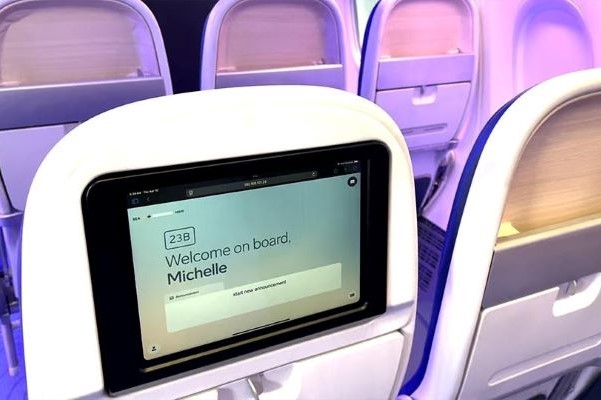
Seatback screens recommending movies based on your past choices
-
Cabin lighting adjusting automatically to reduce jet lag
-
Digital menus suggesting meals based on your preferences
-
Real-time updates about connections, delays, and gate changes
-
Smart systems helping crew respond faster to passenger needs
This builds on what we explored in “The Hidden Science Behind Cabin Fatigue” — where small environmental changes (light, noise, pressure) already affect how you feel after a flight. Why Flying Suddenly Feels More Exhausting
The difference now? AI connects all these elements into one continuous experience.
Why Airlines Are Investing Heavily in AI
Let’s be honest — this isn’t just about comfort.
It’s also about revenue.
AI allows airlines to:
-
Offer upgrades at the exact moment you’re most likely to accept
-
Suggest food, drinks, and shopping in a more targeted way
-
Personalize offers based on your travel behavior
In other words, the cabin is quietly becoming a data-driven marketplace.
This ties directly into another trend we covered in “Why Airlines Want You Uncomfortable” — where discomfort often nudges passengers toward paid upgrades.
AI simply makes that system smarter.
The Comfort vs Privacy Trade-Off
Here’s where the debate gets real.
To personalize your experience, AI systems need data.
Potentially including:
-
What you watch
-
How long you sleep
-
How often you move
-
What you buy onboard
Some future concepts even explore reading emotional cues to adjust service in real time.
That raises an uncomfortable question:
How much personalization is too much?
This concern overlaps with emerging discussions around onboard tech in articles like:
Smart Seats or Privacy Invasion?
The Dirtiest Spots on a Plane (And Why They Matter More Than You Think)
Because once technology enters the cabin environment deeply, it changes how passengers relate to the space itself.
Not All Airlines Are Taking the Same Approach
Interestingly, the industry isn’t moving in one direction.
There are two clear camps forming:
1. The “Hyper-Connected Cabin” Approach
-
Full seatback systems
-
AI-driven personalization
-
Integrated entertainment + commerce
2. The “Minimalist Cabin” Approach
-
Fewer built-in screens
-
Reliance on personal devices
-
Simpler, less intrusive experience
This mirrors what we’ve seen in “Premium Economy Is A Trap” — where more features don’t always mean a better experience.
Sometimes, simplicity wins.
What This Means for Long-Haul Comfort
If done well, AI could genuinely improve flying:
-
Less decision fatigue
-
Smoother service
-
Better timing for meals and sleep
-
More intuitive inflight experience
But if overdone, it could have the opposite effect:
-
Too many prompts
-
Too much screen interaction
-
A feeling of being constantly monitored
And that’s the key tension.
Because as we explored in “How To Fly Comfortably Without Business Class”, comfort often comes from reducing friction — not adding more layers.
A Smarter Way to Use AI (Without Losing Comfort)
The smartest airlines will likely take a hybrid approach:
-
Use AI in the background, not the foreground
-
Keep passenger control front and center
-
Enhance — not replace — human service
Passengers don’t want a flying algorithm.
They want a smoother journey.
Smart Travel Tip
If you’re booking flights where cabin experience actually matters (long-haul especially), it’s worth comparing aircraft types, seat layouts, and onboard features — not just ticket price.
You can check routes, aircraft types, and seat options easily using Aviasales — helpful if you want to avoid older cabins or choose newer, more comfortable aircraft.
And if you’re traveling long-haul or internationally, having flexible medical coverage matters more than ever with increasingly complex travel tech ecosystems. Many frequent travelers quietly rely on SafetyWing for simple, no-fuss coverage while moving between countries.
The Bottom Line
AI-powered airline cabins are no longer theoretical — they’re already being tested and rolled out.
The real question isn’t whether they’ll become standard.
It’s how far airlines will take them.
Because the future of flying won’t just be shaped by technology.
It will be shaped by how comfortable passengers feel using it.
FAQs
What is an AI-powered airline cabin?
An AI-powered cabin uses artificial intelligence to personalize and automate inflight experiences like entertainment, lighting, service timing, and shopping.
Will AI replace flight attendants?
No. Most airlines are positioning AI as a support tool to help crew deliver better service — not replace them.
Are AI cabins good or bad for passengers?
They can improve comfort and convenience, but concerns around privacy and over-automation mean the balance will be critical.