
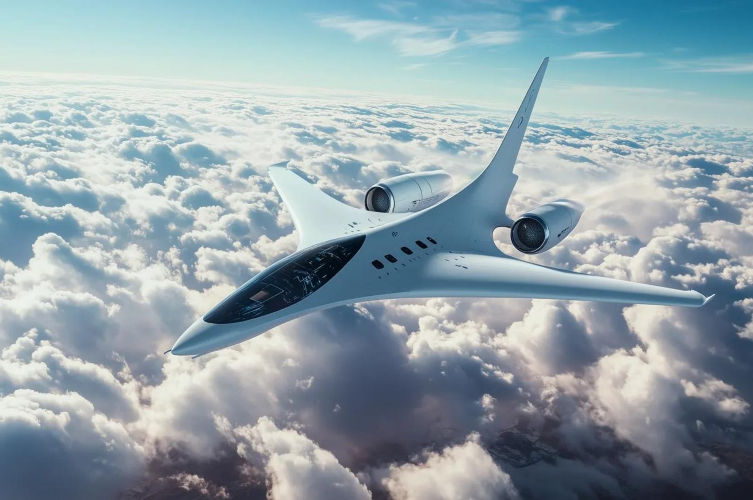
Future Airplanes Could End Turbulence as We Know It
The Day Air Travel Finally Becomes Smooth
Imagine sitting comfortably at 38,000 feet.
The seatbelt sign is off.
Coffee sits untouched on your tray table.
Children are asleep.
Nobody is gripping the armrest.
Get the SkypropreAir Free Travel Pack
Plan smarter, choose a better seat and enjoy a more comfortable long-haul journey. Enter your details below to receive the Travel Pack.
Then the aircraft enters an area where today’s airplanes would normally begin to shake violently.
But this time…
Nothing happens.
The airplane quietly senses the invisible disturbance several kilometers ahead, predicts exactly how the air will behave, adjusts its wings before reaching it, and glides through almost as if the turbulence never existed.
It sounds like science fiction.
Yet engineers, aerospace companies, and researchers are already developing technologies that could dramatically reduce turbulence long before it reaches passengers.
While turbulence will never disappear entirely—because the atmosphere itself is constantly changing—the future of aviation may make today’s bumpy flights feel like relics of another era.
Here’s how tomorrow’s aircraft could change flying forever.
Why Turbulence Still Defeats Modern Aircraft
Modern airliners are incredibly sophisticated.
They navigate oceans automatically.
They land in poor visibility.
They communicate with satellites across continents.
Yet turbulence remains one of aviation’s greatest everyday challenges.
That’s because turbulence is often invisible.
Pilots cannot see most clear-air turbulence.
Weather radar excels at detecting rain, thunderstorms, and moisture, but it struggles to detect the invisible air currents responsible for many unexpected bumps.
As a result, crews often rely on reports from aircraft ahead or weather forecasts rather than direct detection.
The good news?
That limitation is beginning to disappear.
Related Reading: Why Some Passengers Suddenly Panic Mid-Flight—Even If They’ve Flown Before and The Hidden Science Behind Aircraft Oxygen Masks.
The Rise of Aircraft That Can See Invisible Air
One of aviation’s most exciting developments involves forward-looking turbulence detection.
Researchers are developing laser-based systems known as LIDAR (Light Detection and Ranging).
Instead of detecting water droplets like traditional radar, LIDAR measures tiny movements in the air itself.
This allows an aircraft to identify turbulence several miles ahead.
That extra warning provides onboard computers enough time to prepare.
Rather than reacting after entering rough air, future aircraft could respond before passengers feel anything.
Think of it as giving an airplane the ability to “see” invisible air.
Planning a Long-Haul Flight?
The smoothest experience begins long before boarding. Compare airlines, routes, and fares before you book to increase your chances of flying on newer aircraft equipped with the latest passenger-comfort technology.
- Compare flight options through SkypropreAir’s recommended flight search partner before booking.
Artificial Intelligence Could Become Every Pilot’s Silent Co-Pilot
Artificial intelligence is becoming increasingly important in aviation.
Future aircraft will analyze enormous amounts of atmospheric information in real time.
AI systems could combine:
-
Weather forecasts
-
Satellite observations
-
Flight data from thousands of nearby aircraft
-
Wind patterns
-
Historical turbulence records
Within seconds, onboard computers could calculate the smoothest possible route through changing atmospheric conditions.
Instead of avoiding only large storm systems, aircraft may continuously weave through tiny pockets of rough air that humans could never identify quickly enough.
The result?
Flights that remain remarkably smooth even when conditions outside are constantly changing.
Wings That Change Shape While Flying
Today’s wings already flex.
Watch an airliner during takeoff, and you’ll notice the wings bending upward under tremendous lift.
Future aircraft may go much further.
Engineers are experimenting with morphing wings.
These wings can subtly change shape during flight.
Tiny adjustments in wing curvature could compensate for changing airflow before passengers even notice movement.
Unlike conventional flaps, future morphing structures may operate continuously, making thousands of microscopic adjustments every minute.
The airplane would effectively adapt itself to the atmosphere in real time.
You may also enjoy: The Most Dangerous Phase of Every Flight to understand how modern aircraft are engineered to manage the highest-risk moments safely.
Thousands of Sensors Working Together Like a Nervous System
Imagine an aircraft covered with intelligent sensors.
Each one measures:
-
Air pressure
-
Wind direction
-
Wing vibration
-
Structural loads
-
Temperature
-
Air density
Combined together, these sensors create a digital nervous system.
Every second, the aircraft understands precisely how the surrounding atmosphere is changing.
If a sudden gust develops on one wing, computers can instantly adjust flight controls before passengers experience a sharp movement.
The airplane becomes less reactive…
And far more predictive.
Smarter Flight Controls Could Eliminate Many Cabin Jolts
Today’s fly-by-wire aircraft already rely on computers to help stabilize flight.
Future flight control systems could become dramatically faster.
Instead of making large corrections after turbulence occurs, they could make hundreds of tiny corrections every second.
Many of these adjustments would be almost impossible for passengers to notice.
To those inside the cabin, the aircraft would simply feel calmer.
Travel Smarter
Even on the smoothest aircraft, unexpected delays or weather disruptions can happen.
Protect your trip with comprehensive travel insurance before you fly.
- Compare SkypropreAir’s recommended travel insurance options before your next journey.
Connected Aircraft Could Share Turbulence Instantly
Every airplane experiences different atmospheric conditions.
What if every aircraft shared that information instantly?
This vision is becoming increasingly realistic.
Future fleets could continuously exchange real-time turbulence data through satellite networks.
An aircraft flying over the Atlantic might detect rough air.
Within seconds, dozens of following aircraft could receive updated routes before reaching the same area.
Instead of relying mainly on voice reports, entire airline fleets could operate using constantly updated atmospheric maps.
Flying would become a collaborative effort.
Passengers May Notice Comfort Improvements Before They Notice New Technology
Interestingly, the biggest changes may not be visible.
Future cabins could include smarter seating systems designed to reduce how passengers feel vertical movement.
Improved cabin pressurization, quieter interiors, and active vibration control may further reduce the sensation of turbulence.
Even when the aircraft encounters rough air, passengers may perceive far less movement than they do today.
The flight doesn’t necessarily become turbulence-free.
It simply feels smoother.
Related Reading: Why the Sound of Airplane Engines Feels Comforting to Some People explores another fascinating aspect of how aircraft influence passenger comfort.
Climate Change Makes These Innovations More Important Than Ever
Scientists expect some regions to experience more frequent clear-air turbulence as global temperatures influence atmospheric circulation.
That doesn’t mean flying is becoming unsafe.
Commercial aircraft are built to withstand forces far greater than the turbulence encountered during normal operations.
However, increasing turbulence could mean greater discomfort, more injuries to unrestrained passengers, and additional operational costs.
That’s why airlines and manufacturers are investing heavily in technologies that improve turbulence prediction and mitigation.
The smoother the flight…
The safer and more efficient it becomes.
Will Turbulence Ever Completely Disappear?
Probably not.
The atmosphere is one of the most complex systems on Earth.
No technology can eliminate every sudden gust, thunderstorm, or mountain wave.
Nature will always remain unpredictable.
But future aircraft may reduce the frequency and intensity of turbulence that passengers actually experience.
Instead of unexpected jolts, many flights could feel remarkably stable from departure to arrival.
The difference could be as dramatic as comparing early automobiles with today’s luxury electric vehicles.
Both travel the same roads.
One simply delivers a much smoother journey.
The Future of Flying Is Becoming More Comfortable Than Ever
Every generation of aviation has solved problems that once seemed impossible.
Jet engines made global travel practical.
Fly-by-wire computers improved safety.
Composite materials reduced fuel consumption.
Now engineers are focused on something passengers have wanted for decades:
A smoother flight.
Future aircraft won’t change the weather.
But they may become intelligent enough to anticipate it, adapt to it, and quietly protect passengers from much of what currently makes flying uncomfortable.
The day may come when children ask why people used to fear turbulence.
And today’s travelers will smile…
Because they’ll remember what flying used to feel like.
Ready for Your Next Adventure?
Whether you’re planning a weekend getaway or an intercontinental journey, choosing modern aircraft can significantly improve your comfort.
- Search for flights through SkypropreAir’s trusted booking partner and experience the newest generation of airliners.
Frequently Asked Questions
Will future airplanes completely eliminate turbulence?
No. Turbulence is a natural feature of Earth’s atmosphere and can never be removed entirely. However, new technologies could dramatically reduce how often passengers experience significant turbulence.
How does AI help reduce turbulence?
Artificial intelligence can process weather data, satellite information, and reports from other aircraft in real time to identify smoother flight paths and anticipate atmospheric changes.
Are today’s airplanes already safe in turbulence?
Yes. Commercial aircraft are designed and certified to withstand forces much stronger than the turbulence encountered during normal airline operations. Wearing your seatbelt while seated remains the best protection against unexpected bumps.
Explore More from SkypropreAir
-
The Hidden Science Behind Aircraft Oxygen Masks
-
The Most Dangerous Phase of Every Flight
-
Why Some Passengers Suddenly Panic Mid-Flight—Even If They’ve Flown Before
-
What Happens During an Aircraft Evacuation at Night
-
How Radar Really Tracks Airplanes Across the World
-
Why Flight Attendants Sit on Their Hands During Takeoff