
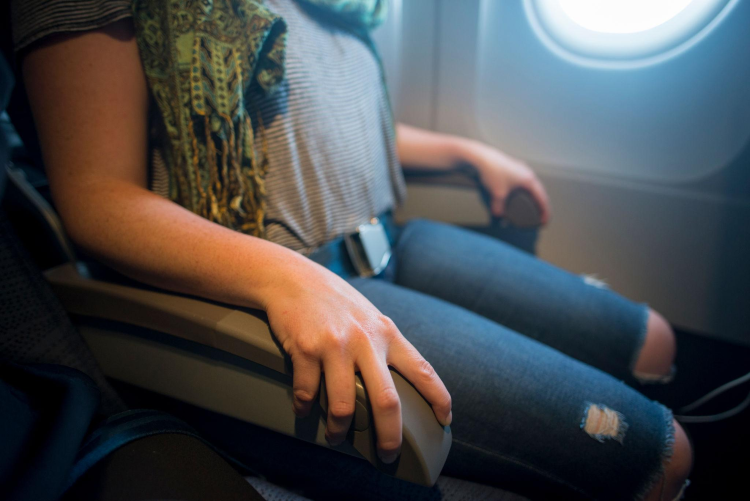
Why Some Passengers Suddenly Panic Mid-Flight — Even If They’ve Flown Before
Everything Was Fine… Until It Wasn’t.
The seatbelt sign was off.
The engines hummed with their familiar rhythm.
Passengers watched movies, slept, or stared peacefully through the windows at clouds drifting thousands of feet below.
Then, without warning, one traveler sat upright.
Their heart raced.
Get the SkypropreAir Free Travel Pack
Plan smarter, choose a better seat and enjoy a more comfortable long-haul journey. Enter your details below to receive the Travel Pack.
Their breathing became shallow.
Their hands trembled.
A terrifying thought exploded into their mind:
“Something is wrong. I have to get off this airplane.”
But there wasn’t an emergency.
The aircraft wasn’t malfunctioning.
No one else appeared alarmed.
So why did their body suddenly react as though they were in mortal danger?
Surprisingly, this happens more often than most people realize—and many of those affected aren’t first-time flyers.
Some have flown hundreds of times before.
The answer lies not in the aircraft, but in the remarkable way the human brain responds to stress, confinement, and uncertainty.
Your Brain Doesn’t Know You’re Safe
Modern commercial aircraft are among the safest forms of transportation.
Yet your brain wasn’t designed for cruising peacefully at 38,000 feet.
Deep inside the brain, the amygdala constantly scans for danger.
It reacts much faster than the logical parts of your mind.
If it believes you’re trapped or threatened, it can activate the body’s emergency survival system—even when there is no actual danger.
That sudden surge of adrenaline can produce:
-
Rapid heartbeat
-
Sweating
-
Chest tightness
-
Dizziness
-
Tingling hands
-
Nausea
-
A feeling of impending doom
These sensations feel frighteningly real.
Ironically, they convince many passengers that something catastrophic is happening, when in reality they are experiencing a panic attack.
Related Reading: The Emotional Side of Flying Alone Most People Never Talk About
Why It Can Happen After Years of Comfortable Flying
One of the biggest myths about flight anxiety is that it only affects nervous travelers.
In reality, panic can appear unexpectedly after dozens—or even hundreds—of uneventful flights.
Several factors can quietly lower your emotional resilience before boarding:
-
Poor sleep
-
Emotional stress
-
Work pressure
-
Family problems
-
Financial worries
-
Excess caffeine
-
Alcohol withdrawal
-
Certain medications
-
Hormonal changes
-
Recent illness
The flight simply becomes the setting where accumulated stress finally surfaces.
Many passengers wrongly blame the airplane when the real trigger began days earlier.
Comfort Tip
Long-haul travelers often reduce stress by preparing well before departure. A quality neck pillow, sleep mask, and noise-canceling headphones can help create a calmer cabin environment.
Planning a long flight? Check today’s best prices on premium travel accessories before your next trip.
The Strange Psychology of Being Unable to Leave
On the ground, most situations offer an escape.
You can leave a meeting.
Walk outside.
Drive home.
A commercial aircraft offers none of those options.
Once airborne, passengers know they cannot simply step outside if they become uncomfortable.
Psychologists call this the loss of perceived control.
Even if passengers never consciously think about it, their subconscious recognizes the lack of escape.
For individuals already under stress, that realization alone can trigger panic.
Ironically, the aircraft itself isn’t the threat.
Feeling trapped is.
Related Reading: Why Flight Attendants Sit on Their Hands During Takeoff
Small Physical Sensations Can Spiral Into Terror
Cabin air is extremely dry.
Humidity is often below 20%.
The cabin is also pressurized to an altitude equivalent to approximately 6,000–8,000 feet above sea level.
For healthy passengers these conditions are completely safe.
However, they can cause subtle sensations like:
-
Dry throat
-
Mild breathlessness
-
Faster heartbeat
-
Fatigue
-
Lightheadedness
Normally these changes go unnoticed.
But someone already feeling anxious may interpret them as signs of danger.
The body releases even more adrenaline.
The cycle intensifies.
Related Reading: The Hidden Science Behind Aircraft Oxygen Masks
Travel Protection
Peace of mind begins before takeoff.
Unexpected medical emergencies, delays, or interruptions can increase anxiety during international travel.
Compare affordable travel insurance plans before your next journey with SafetyWing.
Turbulence Usually Isn’t the Real Trigger
Many panic episodes begin during turbulence.
Yet turbulence itself rarely threatens a modern commercial aircraft.
Instead, turbulence creates uncertainty.
Humans naturally dislike uncertainty because our brains crave predictability.
Every unexpected bump encourages anxious thoughts.
“What if something breaks?”
“Why are we shaking?”
“Should I be worried?”
Meanwhile, pilots remain calm because aircraft are engineered and certified to withstand forces far greater than normal turbulence.
Watching the cabin crew is often reassuring.
If they appear calm, that’s usually because the situation is routine.
Related Reading: The Most Dangerous Phase of Every Flight
When the Mind Misinterprets Normal Flight Sounds
Aircraft produce hundreds of unfamiliar sounds.
Landing gear retracting.
Hydraulic pumps.
Flaps moving.
Engine power changing.
Air-conditioning packs.
Wing flexing.
To aviation professionals these are perfectly normal.
To anxious passengers they can sound alarming.
Knowledge removes uncertainty.
Understanding what these sounds mean is one of the easiest ways to reduce unnecessary fear.
Planning Your Next Trip?
Choosing the right flight can significantly improve your comfort.
Compare airfare from hundreds of airlines with Aviasales and find the best long-haul deals before you book.
Why Panic Feels So Convincing
Perhaps the most frightening part of a panic attack is how real it feels.
Many passengers believe:
“I’m having a heart attack.”
“I can’t breathe.”
“I’m going to collapse.”
“I’m dying.”
In reality, medical assessments often show that the heart and lungs are functioning normally.
The body’s emergency alarm has simply become overactive.
This is why experienced flight attendants remain calm.
They recognize panic attacks regularly.
They provide reassurance.
They monitor the passenger.
And they know the symptoms usually pass.
Why Flight Crews Stay Remarkably Calm
Cabin crew receive extensive training to handle both medical emergencies and emotional distress.
They learn how to:
-
Recognize panic attacks
-
Assess symptoms
-
Communicate with pilots
-
Access onboard medical equipment
-
Reassure anxious passengers
-
Decide when additional medical assistance is needed
Their calm confidence often becomes the strongest reassurance available to frightened passengers.
Can Panic Be Prevented?
Often, yes.
Simple preparation makes an enormous difference.
Passengers who sleep well, stay hydrated, avoid excessive caffeine, arrive at the airport early, and understand what to expect generally report a more relaxed journey.
Many frequent travelers also use:
-
Guided breathing
-
Meditation apps
-
Music
-
Movies
-
Reading
-
Comfortable travel clothing
For those with recurring flight anxiety, healthcare professionals may recommend cognitive behavioral therapy (CBT), which has helped many people manage anxiety more effectively.
The Sky Isn’t the Enemy
The remarkable truth is that many passengers who experience panic attacks continue flying successfully afterward.
The panic wasn’t proof the airplane was unsafe.
It was proof that the brain’s ancient survival system briefly misread the situation.
Commercial aviation remains one of the safest ways to travel because of extraordinary engineering, highly trained crews, strict regulations, and multiple layers of safety.
The better we understand our minds, the less power fear has over us.
Sometimes the greatest challenge during a flight isn’t outside the window.
It’s inside our own thoughts.
Final Thoughts
Fear can arrive without warning—even on a flight you’ve taken many times before.
But panic doesn’t mean danger.
It means your brain has temporarily mistaken safety for threat.
Understanding why that happens can transform your next journey from one filled with uncertainty into one guided by confidence.
The sky has not changed.
Only your interpretation of it has.
Continue Reading
If you enjoyed this article, you may also like:
Frequently Asked Questions
Why would someone suddenly develop a fear of flying after years of traveling?
Life stress, health changes, anxiety disorders, or a previous frightening experience can trigger flight anxiety later in life, even after years of comfortable flying.
Can turbulence cause panic attacks?
Yes. Turbulence itself is rarely dangerous, but it can increase uncertainty, which may trigger anxiety or panic in susceptible passengers.
Should I tell a flight attendant if I’m having a panic attack?
Absolutely. Flight attendants are trained to recognize panic attacks, offer reassurance, monitor your condition, and assist you until you feel better.