
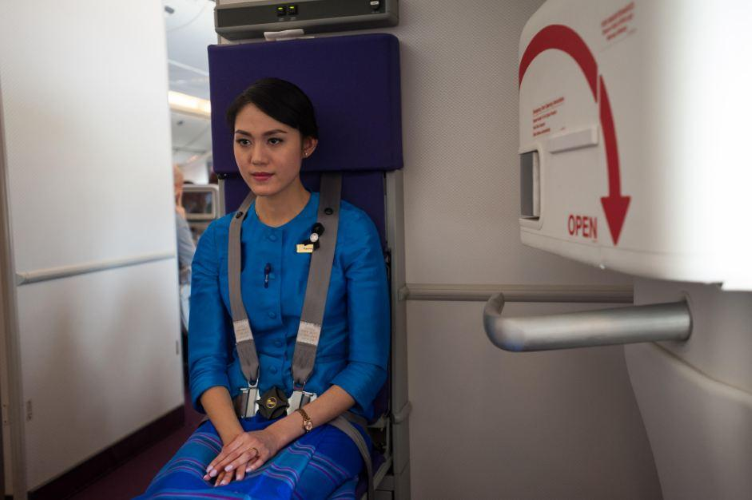
Why Flight Attendants Sit on Their Hands During Takeoff
You’ve Seen It Hundreds of Times… But Almost Nobody Knows Why
The aircraft begins accelerating down the runway.
Engines roar.
Passengers glance out the windows, scroll through their phones, or grip the armrests.
Meanwhile, something unusual is happening inside the cabin.
Flight attendants suddenly stop moving.
Get the SkypropreAir Free Travel Pack
Plan smarter, choose a better seat and enjoy a more comfortable long-haul journey. Enter your details below to receive the Travel Pack.
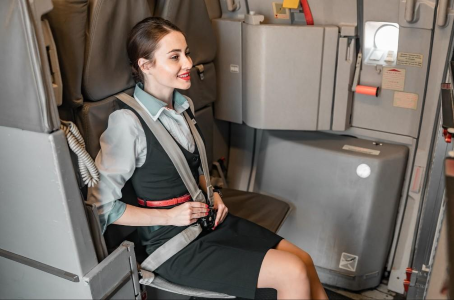
They buckle into their jump seats.
Then, just before takeoff, many quietly place their hands beneath their thighs.
It looks strange.
Some passengers think it’s simply a comfortable way to sit.
Others assume they’re trying to keep their hands warm.
The truth is far more fascinating.
This simple gesture is actually part of a carefully rehearsed safety procedure developed through decades of aviation research, accident investigations, and crew training.
Those few seconds before liftoff are among the most critical moments of any flight.
If you’ve ever wondered why takeoff is considered one of aviation’s riskiest phases, be sure to read our guide on Why Passenger Planes Fly at 35,000 Feet Instead of 10,000 to understand the science behind modern commercial aviation.
Takeoff Is One of Aviation’s Most Critical Moments
Commercial flying is incredibly safe.
But aviation experts know that if something does go wrong, it is statistically more likely to happen during takeoff or landing than while cruising at 35,000 feet.
During takeoff:
-
Engines are producing maximum thrust.
-
The aircraft is accelerating rapidly.
-
Pilots have only seconds to react.
-
Decisions must be immediate.
If an emergency occurs, passengers naturally look to the cabin crew.
That means flight attendants must be physically capable of helping everyone else.
Protecting themselves is actually part of protecting you.
The Real Reason They Sit on Their Hands
The position many passengers notice is one variation of the brace position used by cabin crew.
Although procedures differ slightly between airlines, many instruct flight attendants to:
-
Sit upright.
-
Tighten the safety harness.
-
Keep both feet flat.
-
Press their back firmly against the jump seat.
-
Place their hands beneath their thighs.
This prevents unnecessary arm movement during sudden deceleration.
If the aircraft stops violently, human instinct is to throw the arms forward.
That instinct can easily cause broken wrists, shoulder injuries, or fractured elbows.
The goal is simple:
Protect the arms.
Because healthy arms save lives.
Why Their Arms Matter More Than You Think
After an emergency landing, every second matters.
Flight attendants may need to:
-
Open emergency exits.
-
Operate heavy evacuation doors.
-
Deploy escape slides.
-
Help injured passengers.
-
Direct hundreds of people toward safety.
Even a relatively small wrist injury could delay an evacuation.
That’s why protecting their upper body is considered essential.
If you’re interested in other fascinating cabin procedures, you may also enjoy The Passenger Habit Flight Attendants Find Most Frustrating, which explains why certain passenger behaviours can slow down emergency responses.
Planning Your Next Flight?
The safest journey begins before you reach the airport.
Compare airline routes, aircraft types and fares through Aviasales to find flights that best suit your comfort preferences.
Whether you’re flying short-haul or crossing the Atlantic, choosing the right aircraft can significantly improve your travel experience.
They’re Not Just Sitting—They’re Mentally Rehearsing an Emergency
Many passengers don’t notice something else happening.
While seated, cabin crew often perform what’s called a silent review.
They mentally rehearse emergency procedures, asking themselves:
-
Which exit am I responsible for?
-
What if that exit cannot be used?
-
Which commands will I shout?
-
Is there fire outside?
-
How will I direct passengers?
It’s similar to an Olympic athlete visualising the race before it begins.
Preparation starts before the emergency—not during it.
Every Airline Trains Slightly Differently
You may not always see flight attendants place their hands under their thighs.
Some airlines train crew to:
-
Place hands on the knees.
-
Hold harness straps.
-
Cross their wrists.
-
Adopt another approved brace position.
The differences depend on:
-
Aircraft design.
-
Jump seat configuration.
-
National aviation regulations.
-
Airline operating procedures.
Although the positions vary, the objective never changes:
Keep cabin crew capable of assisting passengers.
The Jump Seat Is Built for Survival
Unlike passenger seats, jump seats are engineered specifically for emergency situations.
They often feature:
-
Reinforced structures.
-
Multi-point safety harnesses.
-
Energy-absorbing designs.
-
Placement beside emergency exits.
Some even face sideways or backward because crash testing has shown those orientations can better manage impact forces.
Every detail is designed with one objective:
Keeping the crew operational after impact.
Passengers Can Learn from Cabin Crew
Watching experienced flight attendants reveals something important.
They don’t spend takeoff chatting.
They aren’t distracted.
Their full attention is focused on safety.
Passengers can improve their own safety by adopting the same mindset.
Before every takeoff:
-
Tighten your seat belt.
-
Store loose belongings.
-
Read the safety card.
-
Count the number of rows to the nearest exit.
-
Pay attention to the safety briefing.
These habits may seem small.
But in aviation, small habits save lives.
If you’re curious about what happens behind the cockpit door during these moments, you’ll enjoy What Sunrise Looks Like From a Cockpit at 39,000 Feet, which offers another fascinating glimpse into professional aviation.
Don’t Travel Without Protection
Even perfectly planned trips can be disrupted by illness, lost baggage or unexpected delays.
Before your next international journey, consider protecting yourself with SafetyWing Travel Insurance, especially if you’re travelling abroad for an extended period or visiting multiple countries.
Every Safety Rule Has a Story Behind It
The aviation industry rarely introduces procedures without evidence.
Every evacuation.
Every rejected takeoff.
Every survivable accident.
Every investigation contributes lessons that improve future safety.
Many cabin crew procedures that seem unusual today exist because investigators discovered they reduced injuries in real emergencies.
That continuous learning is one of the reasons commercial aviation has become one of the safest forms of transportation in history.
The Gesture You’ll Never Look at the Same Way Again
Next time you board a flight, watch the cabin carefully.
You’ll notice the atmosphere change.
Flight attendants become quiet.
Focused.
Still.
Many place their hands beneath their thighs.
It lasts only a few moments.
But behind that simple gesture lies decades of engineering, psychology, emergency planning and professional training.
Most passengers never notice it.
Now you’ll understand that those few silent seconds are actually one of aviation’s smallest—but most meaningful—acts of preparation.
Frequently Asked Questions
Why do flight attendants put their hands under their thighs during takeoff?
It’s part of a trained brace position designed to reduce arm injuries during sudden impacts so cabin crew remain able to assist passengers during an evacuation.
Do all airlines teach this procedure?
Not exactly. Airlines use slightly different brace positions depending on aircraft design and operating procedures, but the goal is always to protect the crew.
Should passengers copy this position?
No. Passengers should always follow the safety instructions and brace position demonstrated by their airline, as cabin crew have different responsibilities during an emergency.
Related Articles on SkypropreAir
-
Why Passenger Planes Fly at 35,000 Feet Instead of 10,000
-
The Passenger Habit Flight Attendants Find Most Frustrating
-
What Sunrise Looks Like From a Cockpit at 39,000 Feet
-
What Years of Flying Teach Pilots About Life
-
The Secret Compartments Most Passengers Never Notice
-
The Strange Reason Airplane Toilets Flush So Loudly
-
The Part of the Aircraft That Feels Turbulence the Most
-
20 Free Airport Services Most Passengers Never Use
Join the Conversation
Have you ever noticed flight attendants sitting on their hands during takeoff before reading this article?
Or here’s a bigger question:
If you were responsible for the safety of 300 strangers during an emergency, what habit do you think would be the hardest to learn—and do you believe most passengers pay enough attention to airline safety briefings?
Share your thoughts in the comments. We’d love to hear your perspective.