
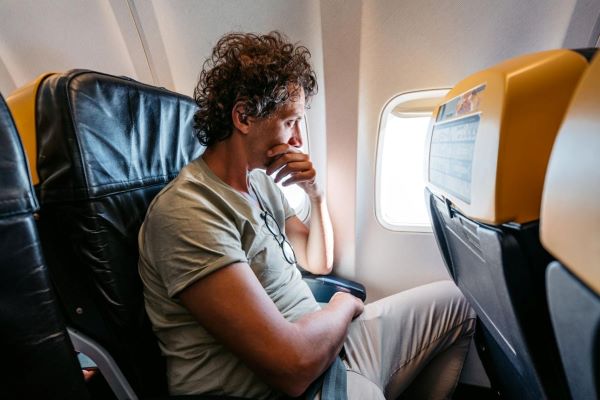
Would You Allow an Airline Seat to Monitor Your Stress Levels During a Flight?
The Moment Flying Stops Feeling Easy
It happens quietly.
You board, settle in, fasten your seatbelt — and then something shifts. Your shoulders tighten. Your breathing becomes just a little more shallow. You’re not panicking… but you’re not fully relaxed either.
Now imagine this:
Your seat notices before you do.
It adjusts. The lighting softens. Your screen suggests calming audio. Maybe even the cabin crew is subtly alerted — without you saying a word.
Sounds helpful.
But here’s the real question: Would you be okay with your seat monitoring your stress levels mid-flight?
Get the SkypropreAir Free Travel Pack
Plan smarter, choose a better seat and enjoy a more comfortable long-haul journey. Enter your details below to receive the Travel Pack.
The Rise of “Smart Seats” in Modern Cabins
Airlines are quietly testing seats that go far beyond comfort. These aren’t just padded cushions — they’re data-driven environments.
Using embedded sensors, these seats can detect:
-
Heart rate variability
-
Breathing patterns
-
Micro-movements linked to tension
-
Skin temperature changes
The goal? Shift flying from a one-size-fits-all experience to something that responds to how you actually feel in real time.
This fits into a bigger trend we explored in “The Debate Over AI-Powered Airline Cabins Is Just Beginning” — where the entire cabin is evolving into a responsive ecosystem rather than a static space.
Why Airlines Are Investing in This
Let’s be honest — airlines can’t keep increasing legroom forever.
So instead, they’re focusing on something more subtle but powerful: psychological comfort.
Stress-monitoring seats could:
-
Help nervous flyers feel supported without asking
-
Improve sleep quality on long-haul flights
-
Reduce inflight anxiety incidents
-
Give airlines a competitive edge without redesigning cabins
In many ways, this is the next phase after physical comfort — and it may matter even more.
What This Means for You as a Passenger
On paper, the benefits are hard to ignore.
Imagine flying long-haul and:
-
Your seat gently adjusts when your body tenses
-
The cabin environment adapts to help you relax
-
You arrive feeling noticeably less drained
This connects directly with what we covered in “The Hidden Science Behind Cabin Fatigue” — your body reacts to flying in ways you don’t always notice.
Smart seats aim to respond to those reactions automatically.
The Line Between Comfort and Surveillance
Here’s where things get uncomfortable.
Biometric data isn’t like seat preference or meal choice — it’s deeply personal.
Key concerns include:
-
Who owns your data?
-
Is it stored or deleted after the flight?
-
Could it be used for profiling or marketing?
-
What happens if it’s shared with third parties?
This is why some passengers see smart seats as a breakthrough…
and others see them as a step too far.
It’s the same tension we discussed in “How Much Data Should Airlines Be Allowed to Collect About Passengers?” — convenience vs control.
The One Factor That Will Decide Everything
Adoption will come down to one thing: choice.
If airlines make this:
-
Opt-in, transparent, and clearly beneficial → passengers will try it
-
Automatic and unclear → backlash is inevitable
Trust, not technology, will decide whether this succeeds.
The SkypropreAir Verdict
This isn’t just about seats — it’s about how far airlines should go in “understanding” passengers.
Done right, this could be one of the most meaningful upgrades to economy travel in years — helping you feel better without paying more.
Done wrong, it risks turning the cabin into something that feels less like a place to relax… and more like a place where you’re being quietly monitored.
Right now, it sits right on that edge.
Smart Travel Tip (Subtle but Powerful)
If you’re already thinking about comfort on your next flight, the biggest difference still comes down to smart booking choices.
Checking routes and seat availability early on platforms like Aviasales can quietly improve your chances of getting a more comfortable setup — without paying a premium.
And if you’re traveling long-haul, having flexible travel insurance (like SafetyWing) can reduce a different kind of stress — the kind no seat can fix mid-air.
Suggested FAQs
1. Are stress-monitoring airplane seats already in use?
Not widely yet. Most are still in testing or prototype phases, but development is moving quickly as airlines invest in smart cabin technology.
2. Will passengers be able to turn this feature off?
If implemented properly, it will likely be optional. Airlines that force it risk strong passenger backlash.
3. Can airlines use this data beyond the flight?
That depends on policies. The safest approach — and what passengers will expect — is real-time use only, without long-term storage.