
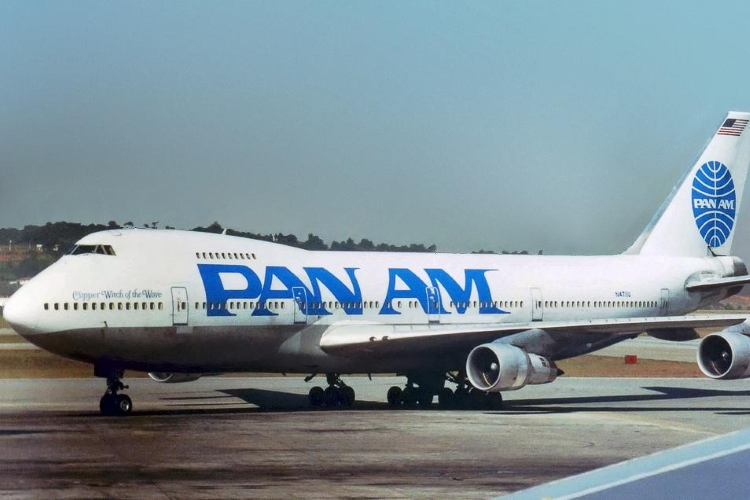
Why Pan Am Disappeared: The Rise and Fall of the Airline That Once Ruled the Skies
The Airline Everyone Thought Was Too Powerful to Fail… Vanished Forever
There was a time when flying wasn’t simply about reaching another country.
Flying itself was part of the adventure.
If you boarded a Pan American World Airways flight—better known simply as Pan Am—you were flying with what many considered the world’s greatest airline.
Its famous blue globe logo became synonymous with luxury, innovation, and international travel.
Hollywood celebrities flew Pan Am.
Get the SkypropreAir Free Travel Pack
Plan smarter, choose a better seat and enjoy a more comfortable long-haul journey. Enter your details below to receive the Travel Pack.
Presidents trusted it.
Business executives depended on it.
Millions of travelers believed Pan Am would dominate aviation forever.
Then, almost unbelievably, it disappeared.
How could the airline that helped invent modern international travel vanish completely?
The answer is a fascinating story of innovation, ambition, global crises, financial mistakes, and changing competition.
If you’re fascinated by legendary airlines, read our guide: Why TWA Went From America’s Greatest Airline to Bankruptcy.
Pan Am Helped Invent Modern International Travel
Founded in 1927, Pan Am quickly became America’s international airline.
While most competitors focused on domestic routes, Pan Am built an unmatched global network stretching across Europe, Asia, South America, Africa, and the Pacific.
Long before globalization became a buzzword, Pan Am had already connected continents.
Flying overseas often meant flying Pan Am.
Its service became famous for professionalism, comfort, and prestige.
Travel became something people dressed up for.
The Airline That Changed Aviation Forever
Pan Am introduced some of aviation’s biggest milestones.
Among them:
-
Commercial transatlantic flying boats
-
Early jet service with the Boeing 707
-
Launch customer for the revolutionary Boeing 747 Jumbo Jet
When the Boeing 747 entered service in 1970, it transformed long-haul travel forever.
Larger aircraft meant more passengers.
More passengers meant lower ticket prices.
Initially, Pan Am appeared unstoppable.
Learn how the Boeing 747 transformed global aviation in our article: How the Boeing 747 Changed Air Travel Forever.
The Jumbo Jet That Became a Financial Burden
The Boeing 747 became Pan Am’s greatest symbol.
It also became one of its biggest financial challenges.
Large aircraft only make money when seats are consistently full.
During economic downturns, operating enormous aircraft became extremely expensive.
Fuel.
Maintenance.
Crews.
Airport fees.
Loan repayments.
The airline had bet heavily on continued growth.
Unfortunately, the world changed.
The Oil Crisis Changed Everything
During the 1970s, oil prices surged dramatically.
Airlines suddenly faced enormous fuel bills.
Because Pan Am operated long international routes with fuel-hungry aircraft, its operating costs rose sharply.
Profits began disappearing.
Ticket prices increased.
Passenger demand weakened.
Financial pressure continued building year after year.
Planning Your Own Long-Haul Flight?
Today’s travelers have far more airline choices than passengers did during Pan Am’s era. Before booking your next international trip, compare fares across multiple airlines using Aviasales to find competitive prices and flexible route options.
One Weakness Competitors Didn’t Have
Unlike airlines such as Delta, American, or United, Pan Am had very few domestic U.S. routes.
That proved to be a serious disadvantage.
Domestic passengers feed international flights.
Competitors could fill overseas aircraft with travelers connecting from dozens of American cities.
Pan Am couldn’t.
Its international flights relied heavily on a limited number of gateway airports.
As competition intensified, that weakness became increasingly costly.
Deregulation Opened the Floodgates
The U.S. Airline Deregulation Act of 1978 reshaped aviation.
Airlines rapidly expanded.
Competition increased dramatically.
International routes were no longer dominated by Pan Am.
Large domestic airlines entered overseas markets.
Pan Am suddenly faced powerful competitors with much stronger domestic networks.
Its competitive advantage disappeared almost overnight.
A Costly Acquisition Made Matters Worse
Hoping to strengthen its domestic presence, Pan Am acquired National Airlines in 1980.
The purchase seemed logical.
Instead, it became one of the company’s biggest mistakes.
The merger proved difficult.
Operating systems differed.
Labour integration became challenging.
Costs spiraled.
Rather than solving Pan Am’s biggest weakness, the acquisition increased debt at precisely the wrong time.
Competition Became Relentless
Throughout the 1980s, airlines around the world modernized rapidly.
British Airways.
Lufthansa.
Singapore Airlines.
Cathay Pacific.
American Airlines.
Delta.
United.
Passengers suddenly had many excellent alternatives.
Pan Am was no longer the only premium choice for international travel.
You may also enjoy: The World’s Best Long-Haul Airlines Ranked for Passenger Comfort.
Lockerbie Changed Everything
On December 21, 1988, Pan Am Flight 103 exploded over Lockerbie, Scotland after a bomb hidden onboard detonated.
The attack claimed 270 lives.
It remains one of aviation’s darkest moments.
Although terrorism caused the tragedy, Pan Am endured intense scrutiny over airport security procedures.
Public confidence declined.
Legal claims mounted.
Insurance costs rose significantly.
For an airline already under severe financial strain, it became another devastating setback.
The Gulf War Delivered Another Financial Blow
Just as Pan Am attempted to recover, the 1990 Gulf War disrupted international travel.
Passenger demand fell.
Fuel prices climbed again.
Revenue dropped.
The airline no longer had the financial strength to survive another global crisis.
Protect Yourself From Unexpected Travel Disruptions
History has shown how quickly global events can disrupt travel. Whether it’s weather, medical emergencies, or geopolitical events, comprehensive travel insurance can provide valuable protection. Before your next international journey, consider checking SafetyWing for flexible travel medical and trip coverage.
Selling Its Future to Survive the Present
To raise cash, Pan Am sold valuable assets.
It sold Pacific routes.
It sold aircraft.
It sold its famous Pan Am Building in New York.
Each sale delayed collapse.
But each also reduced the airline’s ability to generate future revenue.
Eventually, there was almost nothing left to sell.
The Final Flight
In 1991, Pan Am entered bankruptcy.
Attempts to secure new investment failed.
Delta Air Lines initially invested but later withdrew support.
On December 4, 1991, Pan Am operated its final scheduled flight.
One of the most famous airline brands ever created disappeared forever.
Not because travelers stopped loving it.
But because years of financial pressure, strategic mistakes, changing markets, global crises, and intense competition became impossible to overcome.
Pan Am’s Legacy Lives On
Although Pan Am disappeared, its influence remains visible throughout modern aviation.
It pioneered global airline networks.
It helped introduce the Jet Age.
It made long-haul travel accessible to millions.
Its innovations shaped the airline industry we know today.
Its iconic blue globe remains one of aviation’s most recognizable symbols.
Pan Am proved that even the most admired companies must continually adapt to survive.
Why Pan Am Really Disappeared
Its collapse wasn’t caused by one event.
Instead, several major factors combined:
-
Heavy dependence on international routes
-
Lack of a strong domestic feeder network
-
Rising fuel costs after the oil crises
-
Airline deregulation
-
Costly acquisition of National Airlines
-
Fierce international competition
-
The Lockerbie terrorist attack
-
The Gulf War
-
Growing debt and asset sales
Together, these pressures slowly brought down one of aviation’s greatest pioneers.
Its story remains one of the most remarkable—and cautionary—chapters in airline history.
Continue Reading
Unexpected events can disrupt any journey. SafetyWing travel insurance helps protect travelers against medical emergencies and other unexpected situations while abroad.
FAQs
1. Why did Pan Am fail while other airlines survived?
Pan Am relied heavily on international routes, carried significant debt, lacked a strong domestic network, and was hit hard by deregulation, rising fuel prices, the Lockerbie bombing, and increased competition.
2. When did Pan Am officially cease operations?
Pan Am operated its final scheduled flight on December 4, 1991, after filing for bankruptcy.
3. Could Pan Am ever return?
Several companies have acquired the Pan Am name over the years, but none have revived it as a major commercial airline. Today, Pan Am survives mainly as a historic brand and a symbol of aviation’s golden age.
Comment Question
If Pan Am had survived into the modern era, do you think it would still be one of the world’s best airlines, or would it have struggled against today’s low-cost carriers and global competition? Share your thoughts in the comments below.