
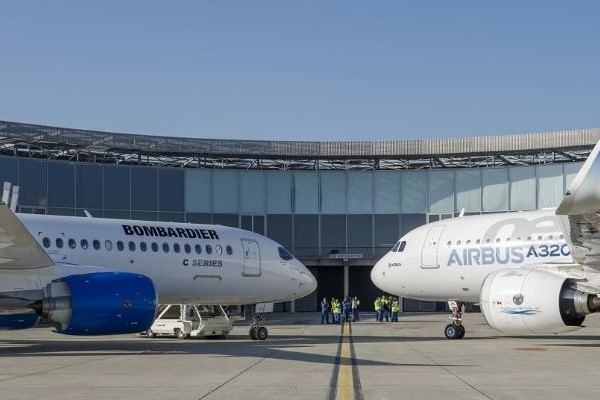
Airbus vs Boeing: Which Builds the Better Airplane?
You settle into your seat, buckle your seatbelt, and glance out of the window.
A thought quietly crosses your mind.
Is this an Airbus… or a Boeing?
For millions of travelers, the name on the aircraft hardly matters—until turbulence begins, a news headline sparks concern, or someone claims one manufacturer builds “better” airplanes than the other.
The rivalry between Airbus and Boeing has lasted for more than half a century. It has shaped aviation history, transformed the way we travel, and sparked endless debates among pilots, engineers, airlines, and passengers.
Get the SkypropreAir Free Travel Pack
Plan smarter, choose a better seat and enjoy a more comfortable long-haul journey. Enter your details below to receive the Travel Pack.
But when you strip away the marketing, national pride, and internet arguments…
Which company actually builds the better airplane?
The answer isn’t nearly as straightforward as most people think.
A Rivalry That Changed Aviation Forever
Few business rivalries have influenced the world like Airbus versus Boeing.
For decades Boeing dominated commercial aviation. Aircraft like the 707, 727, 737, and 747 became global icons that connected continents and revolutionized travel.
Then Europe decided it wanted a competitor.
Airbus was founded in 1970 by a consortium of European aerospace companies determined to challenge America’s dominance.
Many experts predicted Airbus would fail.
Instead, it became Boeing’s biggest competitor—and today the two companies build almost every large commercial passenger aircraft flying around the world.
Every major airline carefully weighs Airbus against Boeing before placing orders worth billions of dollars.
Related Reading: The Boeing vs Airbus Rivalry: How Two Companies Changed Aviation Forever
Related Reading: Why the Boeing 747 Became the Queen of the Skies
Planning your next flight?
Whether you prefer flying on an Airbus or a Boeing, compare fares across hundreds of airlines before you book.
Find the best flight deals with Aviasales.
The Design Philosophy That Makes Them Feel Different
Although both manufacturers aim for the same goal—moving passengers safely and efficiently—their design philosophies differ.
Traditionally, Boeing has emphasized giving pilots greater manual control.
Its aircraft often allow crews to feel more directly connected to the airplane.
Airbus, meanwhile, embraced automation much earlier.
Its fly-by-wire technology uses computers to interpret pilot inputs and prevent dangerous flight conditions before they happen.
Many pilots describe Boeing aircraft as “pilot-focused.”
Many describe Airbus aircraft as “system-focused.”
Neither philosophy is inherently superior.
They simply prioritize different approaches to flying.
If you’re interested in how cockpit technology has transformed flying, read The Hidden Technology That Modern Pilots Depend On Every Flight.
Passenger Comfort: Is One Better?
From a passenger’s perspective, the manufacturer isn’t always the deciding factor.
The airline usually has a greater influence on comfort.
Seat width.
Seat pitch.
Cabin configuration.
Entertainment systems.
Food.
Lighting.
Service.
All of these depend on the airline rather than Airbus or Boeing.
However, aircraft design still matters.
Many passengers praise Airbus cabins—particularly the A350—for their quieter interiors, wider fuselages on some models, and spacious feel.
Boeing responds with the 787 Dreamliner, whose higher cabin humidity, lower cabin altitude, larger windows, and advanced air filtration have dramatically improved long-haul comfort.
In reality, modern Airbus and Boeing aircraft both offer excellent passenger experiences when configured well.
Related Reading:
Fuel Efficiency Has Become the New Battleground
Today’s airlines care about one thing above almost everything else:
Operating costs.
Fuel accounts for one of an airline’s biggest expenses.
Saving even a few percentage points can translate into hundreds of millions of dollars over an aircraft’s lifetime.
This has driven an extraordinary engineering race.
The Airbus A320neo family and Boeing 737 MAX family both use advanced engines and aerodynamic improvements to reduce fuel burn.
For long-haul routes, the Airbus A350 and Boeing 787 compete fiercely for airline orders because both promise exceptional efficiency.
Every kilogram saved.
Every aerodynamic improvement.
Every engine upgrade.
It all contributes to lower costs and reduced emissions.
Innovation Has Pushed Both Companies Forward
Competition benefits passengers.
Every time one manufacturer introduces a breakthrough, the other races to improve.
Airbus pioneered widespread fly-by-wire technology in commercial aviation.
Boeing transformed long-haul travel with the composite-heavy Dreamliner.
Today both manufacturers continue investing in:
-
More efficient engines
-
Lighter composite materials
-
Smarter cockpit systems
-
Improved cabin air quality
-
Better passenger lighting
-
Reduced noise levels
-
Sustainable aviation technologies
Without this competition, commercial aviation would likely have evolved much more slowly.
Related Reading: The Future of Aviation: 10 Changes That Will Transform Flying
Travel protected wherever you fly
Unexpected flight delays, lost baggage, or medical emergencies can happen regardless of whether you’re flying Airbus or Boeing.
- Protect your trip with SafetyWing Travel Insurance before you depart.
Safety: The Question Everyone Wants Answered
Whenever travelers ask which manufacturer is better, safety usually tops the list.
The reality is reassuring.
Commercial aviation remains one of the safest forms of transportation ever created.
Both Airbus and Boeing aircraft undergo years of testing before certification.
Multiple aviation authorities review every design.
Millions of flight hours continuously generate new safety data.
The Boeing 737 MAX crisis understandably damaged public confidence.
Following two tragic accidents, regulators grounded the aircraft worldwide while software, pilot training, and certification processes were extensively reviewed before it returned to service.
The episode led to important industry-wide lessons.
Meanwhile, Airbus has also faced technical issues over the years, as every major aircraft manufacturer has.
The important point is this:
Modern commercial aircraft are continually monitored, updated, and improved throughout their service lives.
For a deeper look at airline safety, don’t miss Why Commercial Aviation Is Safer Than Most People Think.
Which Aircraft Do Pilots Prefer?
Ask ten pilots.
Expect ten different answers.
Some love Boeing because they appreciate the aircraft’s handling characteristics.
Others prefer Airbus because of its advanced automation and workload reduction during complex operations.
Many pilots who have flown both say each aircraft excels in different situations.
Ultimately, professional pilots are trained extensively on their assigned aircraft and develop confidence through experience rather than brand loyalty.
Which Manufacturer Do Airlines Prefer?
There is no universal winner.
Some airlines operate mostly Airbus fleets.
Others remain fiercely loyal to Boeing.
Many fly both.
Fleet decisions depend on:
-
Route networks
-
Maintenance costs
-
Existing pilot training
-
Aircraft availability
-
Delivery schedules
-
Financing
-
Fleet commonality
-
Long-term operating strategy
The “better” airplane often depends more on an airline’s business model than on the aircraft itself.
Reliability Matters More Than Headlines
News stories often focus on rare incidents.
Passengers naturally remember dramatic headlines.
Yet every day, thousands of Airbus and Boeing aircraft quietly complete flights across the globe without attracting attention.
That routine reliability is easy to overlook precisely because it has become normal.
Behind every successful flight are countless engineers, technicians, pilots, dispatchers, air traffic controllers, and maintenance crews working together to keep aviation remarkably dependable.
Related Reading: Why Some Flights Feel Much More Turbulent Than Others
The Future Will Bring an Even Bigger Competition
The Airbus-Boeing rivalry is entering a new era.
The next generation of aircraft will likely focus on:
-
Hydrogen propulsion
-
Sustainable aviation fuels
-
Hybrid-electric systems
-
AI-assisted flight operations
-
Lighter composite materials
-
More efficient engines
-
Improved passenger wellness
-
Lower carbon emissions
Whoever leads these technologies could define commercial aviation for decades to come.
Passengers may ultimately benefit more than anyone else.
So… Which Builds the Better Airplane?
The answer depends on what you value most.
If you’re looking for advanced cockpit automation and elegant system integration, Airbus has built an outstanding reputation.
If you appreciate pilot-centered design and innovations like the Dreamliner, Boeing remains an engineering powerhouse.
For passengers, however, the difference is often far smaller than people imagine.
The airline operating the aircraft, the cabin layout, seat quality, maintenance standards, and onboard service usually influence your journey far more than whether the aircraft was built in Seattle or Toulouse.
Perhaps that’s the most surprising conclusion of all.
After decades of fierce competition, neither manufacturer has truly “won.”
Instead, their rivalry has continually pushed both companies to build safer, quieter, more efficient, and more comfortable airplanes.
And every traveler benefits each time they step aboard.
Before You Fly
Compare flight prices with Aviasales and see whether your preferred airline is operating an Airbus or Boeing on your route.
Travel with confidence by protecting your trip through SafetyWing, especially for international journeys where medical emergencies or travel disruptions can be expensive.
Frequently Asked Questions
1. Is Airbus safer than Boeing?
Both manufacturers produce aircraft that meet extremely strict international safety standards. Modern Airbus and Boeing aircraft are among the safest machines ever built, with continuous monitoring, rigorous maintenance requirements, and oversight from aviation regulators.
2. Which is quieter: Airbus or Boeing?
It depends on the aircraft model. Both the Airbus A350 and Boeing 787 Dreamliner are widely regarded as some of the quietest commercial aircraft in service today.
3. Which manufacturer is better for long-haul flights?
Both excel. The Airbus A350 and Boeing 787 Dreamliner are considered among the best long-haul aircraft, offering improved cabin pressure, higher humidity, lower noise levels, and greater passenger comfort compared with older aircraft.
Join the Conversation
If you had the choice before your next long-haul flight, would you deliberately choose an Airbus over a Boeing—or do you think the airline matters far more than the aircraft itself?
Tell us why in the comments below. We’d love to hear about your best—or worst—experience flying on either manufacturer.