
The Secret Compartments Most Passengers Never Notice: Hidden Spaces Inside Airplanes Explained
The Secret Compartments Most Passengers Never Notice
You Could Fly Hundreds of Times… And Never Realize What’s Hidden Just a Few Feet Away
You settle into your seat.
The cabin doors close.
The engines roar to life.
Around you, hundreds of passengers are thinking about legroom, snacks, movies, or whether they’ll make their connection.
Almost nobody is thinking about what’s hidden inside the aircraft itself.
Get the SkypropreAir Free Travel Pack
Plan smarter, choose a better seat and enjoy a more comfortable long-haul journey. Enter your details below to receive the Travel Pack.
Behind seemingly ordinary walls, beneath the cabin floor, above the ceiling panels, and even inside certain doors are compartments that most travelers will never see.
Some protect critical equipment.
Others store emergency supplies.
A few are reserved only for crew members.
And one hidden space is so unusual that many frequent flyers don’t believe it exists until they see it.
Commercial aircraft are carefully designed to maximize every centimeter of space.
While passengers only experience the visible cabin, much of an aircraft remains hidden throughout the flight.
Here’s what airlines don’t show passengers.
Related: Before discovering what’s hidden inside modern aircraft, read our guide on Why Airplane Toilets Flush So Loudly to uncover another fascinating aviation mystery.
Hidden Doesn’t Mean Secretive—It Means Functional
Movies often portray airplanes as having mysterious hidden rooms.
The reality is less dramatic—but far more fascinating.
Modern passenger aircraft contain numerous concealed compartments designed to improve safety, efficiency, maintenance, and security.
Many are invisible simply because passengers never have a reason to access them.
Every hidden space serves a specific purpose.
Nothing inside an aircraft is wasted.
The Crew Rest Compartments Above Your Head
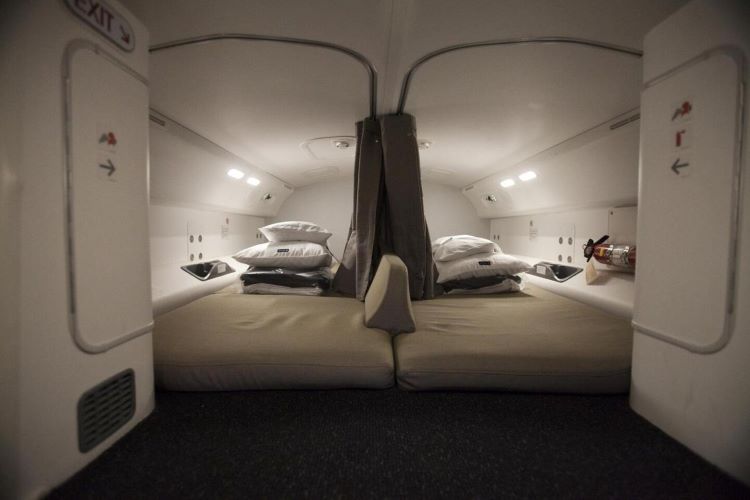
Perhaps the most surprising hidden area is the crew rest compartment.
On many long-haul aircraft—including the Boeing 777, Boeing 787, Airbus A350, and some Airbus A330 variants—pilots and cabin crew take scheduled rest breaks during ultra-long flights.
Passengers rarely notice these areas because they’re cleverly hidden.
Access is often through a discreet staircase or ladder concealed behind an ordinary-looking cabin door.
Inside are:
-
Small sleeping bunks
-
Reading lights
-
Seat belts for turbulence
-
Ventilation systems
-
Privacy curtains
-
Emergency communication equipment
The rooms aren’t luxurious.
They’re compact, quiet, and designed purely to allow crew members to rest before returning to duty.
Without them, operating 12- to 16-hour flights safely would be impossible.
Related: Read The Best Aircraft for Long-Haul Flights Ranked by Passenger Comfort to discover which airplanes offer the most comfortable cabins for ultra-long journeys.
Travel Smart Tip
If you’re planning a long-haul trip, compare fares across multiple airlines before booking. We recommend checking Aviasales to find competitive flight prices, flexible dates, and alternative routes that could save you money.
- Compare flight prices with Aviasales before booking your next trip.
The Hidden Electronics Beneath the Cabin Floor
Beneath your feet lies one of the aircraft’s busiest technical spaces.
Under removable floor panels are miles of wiring, hydraulic lines, communication systems, sensors, and electronic equipment.
These compartments allow engineers to inspect and repair systems without dismantling the passenger cabin.
Passengers walk over this equipment every flight without realizing how much technology is directly underneath them.
The Avionics Bay—The Aircraft’s Digital Brain
Near the front of many aircraft is a compartment known as the avionics bay.
Passengers never enter it.
Maintenance crews do.
Inside are computers that control navigation, communications, weather radar, flight management systems, and countless other functions.
Think of it as the aircraft’s server room.
Modern jets depend on these computers to process enormous amounts of information every second.
Keeping them protected and easily accessible is essential.
Related: You may also enjoy How Pilots Navigate Across Oceans Without Getting Lost, where we explain the remarkable technology guiding flights across the globe.
Hidden Storage for Emergency Equipment
Not every emergency item is visible.
While passengers notice life jackets beneath their seats and oxygen masks overhead, airlines also store additional emergency equipment throughout the aircraft.
Hidden compartments may contain:
-
Medical kits
-
Firefighting equipment
-
Portable oxygen bottles
-
Emergency flashlights
-
Survival gear
-
Protective breathing equipment for crew
Their locations vary by aircraft type, but every item is carefully positioned so crew members can retrieve it quickly during an emergency.
The Secret Compartments Inside Galley Areas
The aircraft galley is far more than a kitchen.
Behind cabinet doors are specially designed compartments holding:
-
Meal carts
-
Beverage containers
-
Waste bins
-
Dry supplies
-
Coffee systems
-
Security equipment
Some cabinets appear decorative but actually conceal electrical panels or service connections.
Everything locks securely to prevent movement during turbulence.
Related: Curious about another hidden side of flying? Read The Cleanest and Dirtiest Places on an Airplane to learn where germs are most likely to hide.
Hidden Ceiling Panels Passengers Never Look At
Above the cabin ceiling are maintenance access areas containing:
-
Air-conditioning ducts
-
Electrical wiring
-
Cabin lighting systems
-
Speakers
-
Sensors
-
Structural supports
Although passengers only see smooth overhead panels, engineers can remove sections to inspect these systems during maintenance.
The Cargo Hold Is More Sophisticated Than Most People Imagine
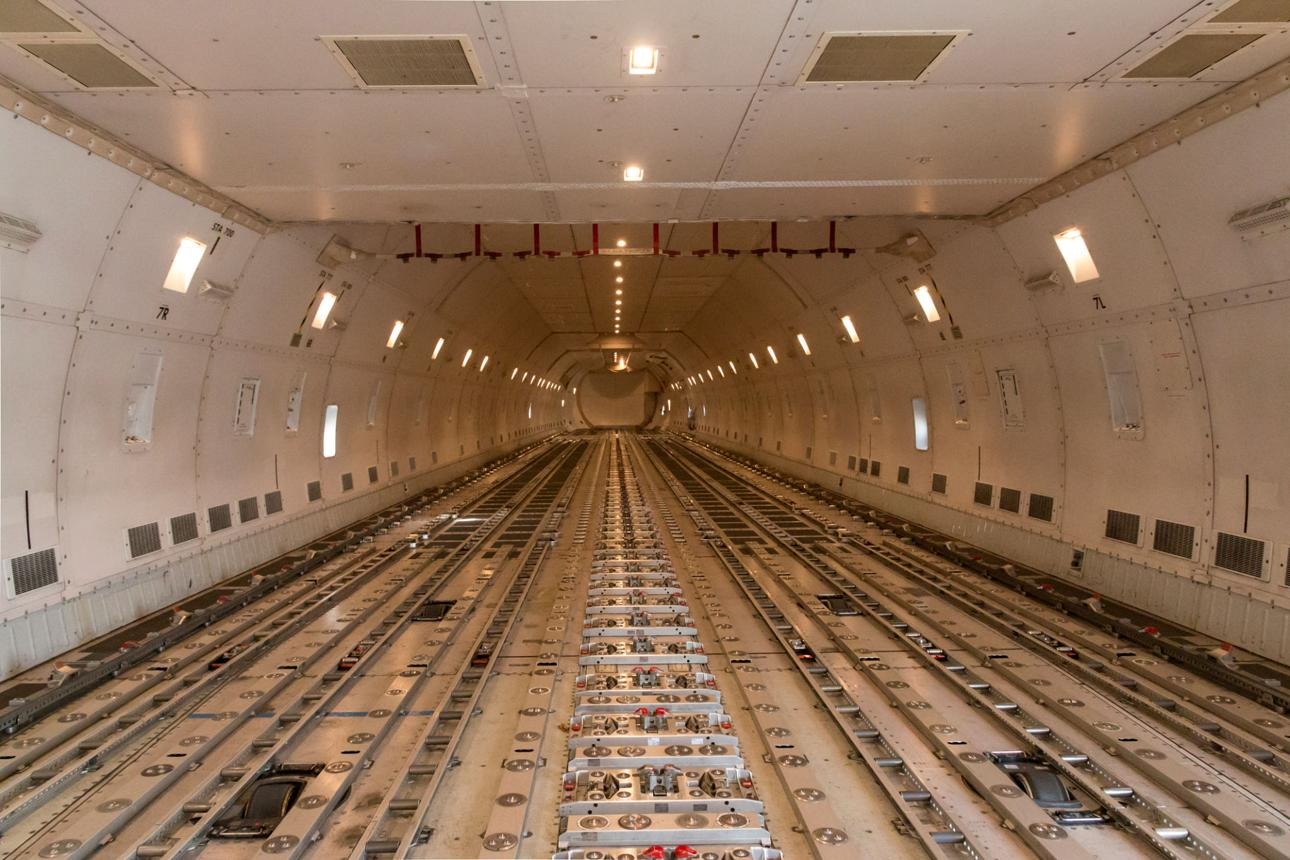
The cargo compartment isn’t simply empty space beneath the cabin.
Modern cargo holds include:
-
Fire detection systems
-
Fire suppression equipment
-
Temperature monitoring
-
Ventilation controls
-
Secure cargo restraint systems
-
Live-animal ventilation (on aircraft certified for animal transport)
Some compartments can even be temperature-controlled for pharmaceuticals, flowers, or sensitive cargo.
Related: Learn How Airlines Protect and Handle Your Checked Luggage to see what happens after your suitcase disappears at the check-in counter.
Protect Yourself Before You Fly
Flight delays, medical emergencies, and lost baggage can happen unexpectedly.
That’s why many experienced travelers purchase travel insurance before every international trip.
- Compare affordable travel insurance plans from SafetyWing before your next journey.
Hidden Access Panels Throughout the Cabin
If you’ve ever noticed tiny unlabeled panels near doors or cabin walls, you’ve probably spotted maintenance access points.
These allow technicians to reach valves, wiring, oxygen systems, or structural inspection areas without removing major cabin components.
Passengers walk past dozens of them without noticing.
The Flight Deck Has Hidden Storage Too
Even inside the cockpit, storage space is carefully concealed.
Pilots have dedicated compartments for:
-
Flight manuals
-
Checklists
-
Emergency equipment
-
Oxygen masks
-
Headsets
-
Personal items
Everything has a designated location to reduce distraction and ensure critical equipment is immediately available.
Related: Read Why Pilots and Cabin Crew Eat Different Meals on Long Flights to discover another little-known aviation safety practice.
Lavatory Panels Hide More Than Plumbing
Aircraft lavatories contain several hidden access panels.
Behind them are plumbing systems, electrical wiring, vacuum toilet components, and maintenance shut-off valves.
These panels allow technicians to service systems quickly while minimizing aircraft downtime.
They’re not hidden for secrecy—they’re hidden because passengers have no reason to access them.
Security Features Most Travelers Never Notice
Since the early 2000s, commercial aircraft have incorporated additional discreet security features.
Without revealing sensitive operational details, modern airliners include reinforced access areas, protected system compartments, and secure storage designed to enhance flight safety.
These features are intentionally unobtrusive but play an important role in protecting both passengers and crew.
Why Airlines Hide So Much
At first glance, it may seem strange that so much of an aircraft is concealed.
The answer is simple.
Passenger cabins are designed to feel calm, spacious, and uncluttered.
Exposed wiring, equipment, maintenance panels, and storage areas would make the cabin look industrial rather than comfortable.
Hidden compartments also protect sensitive equipment from accidental damage, improve safety, reduce noise, and make maintenance more efficient.
It’s a perfect balance between engineering and passenger comfort.
Related: You might also enjoy The Airline Ticket Pricing Secret Most Travelers Never Learn, one of our most popular guides explaining how airlines price flights.
The Most Fascinating Part of Flying Is Often Invisible
Every commercial aircraft is far more than rows of seats and overhead bins.
It’s a carefully engineered machine filled with hidden compartments working quietly behind the scenes.
Above your head, crew members may be resting.
Below your feet, sophisticated electronics and systems are operating continuously.
Behind nearby walls are emergency supplies, maintenance access points, and equipment designed to keep every flight running safely.
The next time you board a plane, remember this:
The cabin you see is only part of the aircraft.
The real marvel lies in everything hidden just out of sight.
Conclusion
Commercial airplanes are masterpieces of efficient engineering, where every hidden compartment has a purpose. From crew rest modules tucked above the ceiling to avionics bays beneath the cockpit floor and emergency equipment concealed behind cabin panels, these unseen spaces help make modern air travel safe, reliable, and comfortable.
The next time you look around the cabin, remember that you’re only seeing part of the aircraft. Behind every wall, beneath every floor panel, and above every ceiling section is a carefully designed world that keeps your flight operating safely from takeoff to landing.
Frequently Asked Questions
1. Do all passenger airplanes have hidden crew rest compartments?
No. Crew rest compartments are mainly found on long-haul aircraft such as the Boeing 777, Boeing 787, Airbus A350, and some Airbus A330 models. Short-haul aircraft usually do not have dedicated sleeping areas because flight times are much shorter.
2. Can passengers ever visit the hidden compartments on an airplane?
Generally, no. Most hidden compartments are restricted to pilots, cabin crew, or maintenance engineers for safety and security reasons. Occasionally, airlines may showcase them during special tours or promotional videos.
3. Are there hidden compartments used for security purposes?
Yes. Commercial aircraft include discreet security and equipment storage areas, but airlines and manufacturers do not publicly disclose operational details to help protect flight security.
Join the Conversation
If you were allowed to explore just one hidden part of a commercial airplane, which would you choose—the crew rest compartment, the cockpit’s avionics bay, the cargo hold, or another secret space? Tell us why in the comments below!