
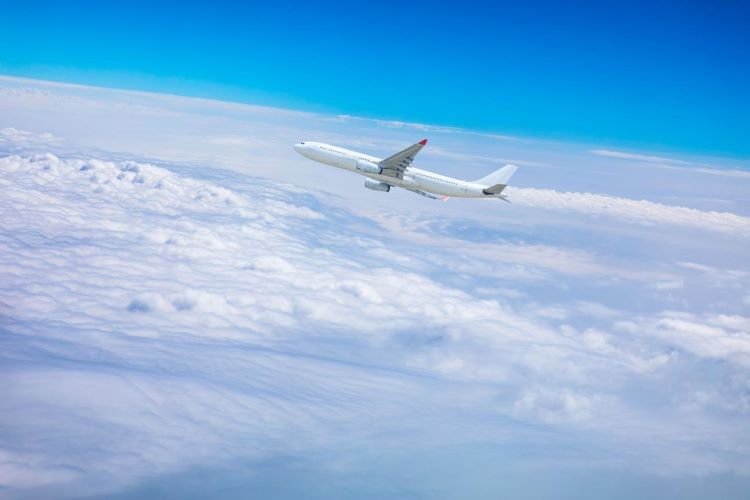
Why Some Flights Feel Much More Turbulent Than Others
The cabin suddenly drops.
Your stomach lurches.
Coffee splashes onto tray tables. Conversations stop mid-sentence. Nervous hands grip the armrests. Somewhere behind you, a child starts crying while another passenger quietly whispers, “Is this normal?”
For a few long seconds, the aircraft seems to dance unpredictably through the sky.
Then, almost as quickly as it began, everything calms down.
Get the SkypropreAir Free Travel Pack
Plan smarter, choose a better seat and enjoy a more comfortable long-haul journey. Enter your details below to receive the Travel Pack.
Later that same week, you board another flight covering a similar distance. This time the journey is so smooth that your drink barely ripples.
What changed?
Did one pilot fly better? Was one aircraft safer than the other?
The answer is far more fascinating.
Turbulence isn’t random. It’s the invisible result of powerful atmospheric forces that pilots, meteorologists, and modern aircraft constantly work to understand. Once you know why some flights feel dramatically rougher than others, you’ll never experience turbulence in quite the same way again.
The Sky Isn’t Empty—It’s a Constantly Moving Ocean
When we look out of an airplane window, the sky appears perfectly still.
In reality, the atmosphere behaves much like an ocean.
Invisible rivers of air flow in different directions and at different speeds. Warm air rises. Cold air sinks. Moisture forms clouds. Wind changes with altitude.
Aircraft fly through these constantly shifting currents.
Most of the time the changes are gentle.
Sometimes they aren’t.
When an aircraft crosses from one moving air mass into another, passengers feel bumps as the wings adjust to changing airflow.
The stronger those differences become, the stronger the turbulence can feel.
- Related reading: Why Cabin Pressure Makes Some People Feel Exhausted
Planning a Long-Haul Trip?
Before booking your next flight, compare fares across multiple airlines with Aviasales. Finding a route with a larger aircraft or a better departure time could make for a noticeably smoother journey while saving money.
Compare flight prices with Aviasales before you book.
Not All Turbulence Is the Same
Many travelers imagine turbulence as one single phenomenon.
There are actually several different types.
Convective Turbulence
This is the turbulence most people recognize.
On warm afternoons, sunlight heats the ground unevenly.
Warm air rises rapidly, creating powerful vertical currents.
Clouds begin to build.
Eventually these can develop into towering thunderstorms that produce severe updrafts and downdrafts.
Pilots almost always avoid flying directly through these storms, often deviating many miles around them.
Mechanical Turbulence
Mountains, tall buildings and rugged terrain disrupt airflow.
As wind passes over these obstacles, it forms swirling eddies similar to water flowing around rocks in a river.
Aircraft flying nearby may experience bumpy conditions even under otherwise clear skies.
This explains why airports surrounded by mountains often experience bumpier arrivals and departures.
Clear Air Turbulence
Perhaps the most surprising form is clear air turbulence.
There are no clouds.
No rain.
No visible warning.
Passengers may believe the weather is perfect when the aircraft suddenly jolts.
This occurs near fast-moving jet streams where wind speeds change dramatically over short distances.
Because it’s invisible, clear air turbulence is among the hardest forms to predict.
The Weather Along Your Route Matters More Than the Airport Forecast
Many passengers judge a flight by looking outside before boarding.
Blue skies often create false confidence.
Your aircraft may travel thousands of miles.
Along that journey it crosses different weather systems, mountain ranges, oceanic air masses, storm fronts and jet streams.
The weather over your departure airport represents only a tiny fraction of the flight.
A sunny departure doesn’t guarantee a smooth ride hours later.
Related reading: The Science Behind Jet Lag That Most Passengers Never Learn
Jet Streams Can Create Surprisingly Rough Flights
Several miles above Earth flow narrow bands of extremely fast-moving air called jet streams.
Some exceed 250 mph (400 km/h).
Airlines frequently use these winds to shorten flight times and reduce fuel consumption.
Flying east across the Atlantic often means riding favorable winds.
Flying west frequently means flying against them.
However, jet streams also create rapid changes in wind speed known as wind shear.
Those boundaries can generate moderate or occasionally severe turbulence.
Ironically, the same winds that save airlines millions in fuel can sometimes create a bumpier journey.
Aircraft Size Changes How Turbulence Feels
One reason passengers compare flights is because different aircraft respond differently.
A large Airbus A380 often feels remarkably stable.
Its enormous weight naturally absorbs many smaller bumps.
Smaller regional aircraft react more noticeably to the same atmospheric conditions.
That doesn’t mean they’re less safe.
Imagine driving over the same road.
A heavy luxury SUV glides over imperfections that a compact car clearly notices.
Aircraft behave much the same way.
Modern airliners are engineered to withstand turbulence far beyond what passengers normally experience.
Related reading: The Airbus A350 vs A380: Which Is More Comfortable?
Your Seat Can Completely Change Your Experience
Many travelers unknowingly make turbulence feel worse simply because of where they sit.
Seats directly over the wings experience the least movement because they’re closest to the aircraft’s center of gravity.
Seats toward the tail often experience the greatest up-and-down motion.
This explains why two passengers can have completely different opinions about the exact same flight.
Choosing the right seat can dramatically improve comfort.
- Related reading: The Quietest Seat on Every Major Aircraft
Pilots Usually Know About Turbulence Before You Do
Passengers often assume turbulence catches pilots by surprise.
Usually, the opposite is true.
Before departure, flight crews study weather charts, satellite imagery, wind forecasts and reports from aircraft already flying the route.
During the flight they remain in constant communication with air traffic control and nearby aircraft.
If another crew reports turbulence ahead, pilots often request a different altitude long before passengers notice anything.
This continuous information sharing helps avoid many rough areas whenever possible.
Protect Yourself Before You Travel
Even though turbulence is rarely dangerous, travel disruptions, delays, cancellations, medical emergencies and lost baggage can happen on any trip.
Travel insurance provides peace of mind long before you fasten your seat belt.
- Protect your next journey with SafetyWing Travel Insurance.
Climate Change May Increase Certain Types of Turbulence
Researchers are studying how climate change may affect clear air turbulence.
Warmer atmospheric temperatures can strengthen wind differences at cruising altitude.
Several studies suggest moderate and severe clear air turbulence may become more common along busy long-haul routes over the coming decades.
Airlines are already investing in improved forecasting systems to help crews identify these invisible hazards earlier.
Why Turbulence Feels Much Worse Than It Actually Is
Fear amplifies physical sensation.
When an aircraft moves unexpectedly, your brain immediately activates its threat response.
Your heart rate increases.
Your muscles tense.
Every bump suddenly feels larger.
Yet commercial aircraft are designed to withstand forces far beyond the turbulence encountered during routine airline operations.
Their wings are built to flex significantly without damage.
The greatest concern during turbulence is usually not the aircraft.
It’s preventing injuries caused by passengers who are standing or not wearing their seat belts.
That’s why crews encourage passengers to keep their seat belts fastened whenever they’re seated.
Technology Is Making Flights Smoother Than Ever
Modern aircraft continue to become smarter.
Today’s airlines increasingly rely on:
-
AI-assisted weather forecasting
-
Satellite weather observations
-
Real-time turbulence reporting
-
Advanced weather radar
-
Predictive flight planning
-
Automated ride-quality optimization
Some future aircraft may even detect invisible turbulence ahead and automatically make small adjustments before passengers notice anything at all.
The Real Reason Every Flight Feels Different
- Every flight is unique.
- Different weather.
- Different winds.
- Different altitudes.
- Different aircraft.
- Different routes.
Even two flights leaving minutes apart can experience completely different atmospheric conditions.
The next time your aircraft begins bouncing through the sky, remember this:
The airplane isn’t struggling.
It’s doing exactly what it was designed to do—safely navigating an invisible ocean of moving air.
Understanding the science doesn’t eliminate turbulence.
But it can eliminate much of the fear.
Before Your Next Flight
Whether you’re flying across Europe or embarking on a 12-hour long-haul journey, planning ahead can make all the difference.
- Compare fares and aircraft types with Aviasales before booking.
- Protect yourself against unexpected travel disruptions with SafetyWing Travel Insurance.
Small decisions before departure often make for a far more comfortable journey.
Frequently Asked Questions
1. Is turbulence becoming more common?
Research suggests that some forms of clear air turbulence may increase as global temperatures change, although turbulence varies greatly depending on the route, season and weather.
2. Which seats experience the least turbulence?
Seats located directly over or slightly ahead of the wings usually provide the smoothest ride because they are closest to the aircraft’s center of gravity.
3. Can turbulence cause an aircraft to crash?
Modern commercial aircraft are designed and tested to withstand turbulence far stronger than what is normally encountered. The greatest risk is injury to unbuckled passengers rather than damage to the aircraft.
Join the Conversation
Have you ever experienced a flight where the turbulence genuinely frightened you—or another where the ride was so smooth you barely felt airborne? What do you think made the difference? Share your experience in the comments below.