
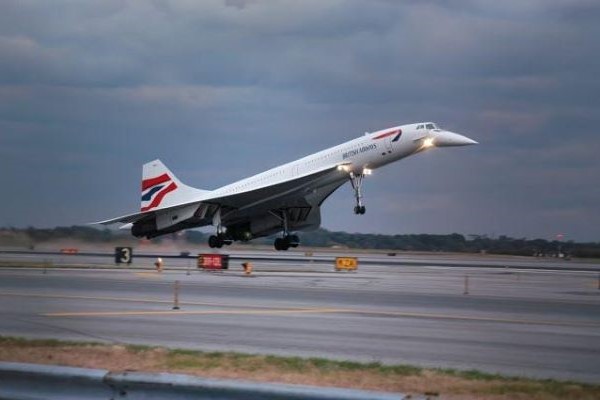
Why Did Concorde Really Stop Flying? The Full Story
The World’s Fastest Passenger Aircraft Didn’t Die From One Crash
For nearly three decades, Concorde represented the future.
Passengers crossed the Atlantic faster than the Earth could rotate beneath them. Breakfast in London. Lunch in New York. Home before dinner.
It wasn’t simply an airplane.
It was a symbol of human ambition.
Then, almost overnight, the impossible happened.
Get the SkypropreAir Free Travel Pack
Plan smarter, choose a better seat and enjoy a more comfortable long-haul journey. Enter your details below to receive the Travel Pack.
The aircraft that had conquered the sound barrier disappeared from the skies forever.
Many people believe a single tragic accident ended Concorde’s career.
But that’s only part of the story.
Behind its retirement lies a complex combination of engineering challenges, economics, environmental concerns, changing travel habits, and one devastating moment that accelerated a fate that had been building for years.
This is the full story of why aviation’s greatest icon stopped flying.
A Dream That Flew Faster Than Sound
When Concorde entered commercial service in 1976, it changed aviation forever.
Built through a partnership between Britain and France, the sleek aircraft routinely cruised at Mach 2.04—more than twice the speed of sound, around 2,180 km/h (1,354 mph).
Flying at 60,000 feet, Concorde soared above most weather systems and high enough that passengers could actually see the curvature of the Earth.
The journey from London to New York, which normally took seven to eight hours, was reduced to about three and a half.
Nothing else came close.
For business leaders, celebrities, royalty and wealthy travelers, time became the ultimate luxury.
Concorde wasn’t just transportation.
It was prestige.
Related Reading: The Future of Aviation: How Supersonic Passenger Flights Could Return
Travel Smarter While You Explore the World
If you’re planning your next trip, compare fares across hundreds of airlines before you book. Aviasales helps you find some of the best flight deals worldwide.
- Compare flight prices with Aviasales before booking.
The Hidden Cost of Flying Twice as Fast
The incredible speed came with enormous compromises.
Concorde consumed far more fuel per passenger than conventional airliners.
Its four afterburning turbojet engines delivered breathtaking performance but burned fuel at astonishing rates, especially during takeoff and acceleration through the sound barrier.
Operating costs were exceptionally high.
Maintenance was complex.
Replacement parts were expensive.
Every flight required highly specialized crews and meticulous engineering inspections.
Unlike modern aircraft that carry 300 to 500 passengers, Concorde seated only about 100.
That meant airlines had to charge premium fares simply to cover operating expenses.
As long as wealthy passengers kept filling seats, the economics worked.
But the business model was always fragile.
Related Reading: Why the Airbus A380 Is More Efficient Than Most People Think
The Sonic Boom That Limited Its Future
One of Concorde’s greatest achievements was also one of its biggest problems.
Whenever it exceeded the speed of sound, it produced a powerful sonic boom.
People on the ground experienced the boom as an explosive shockwave.
Communities complained.
Governments responded.
Most countries prohibited supersonic flight over land.
As a result, Concorde could only fly at full speed over oceans.
This dramatically limited the number of profitable routes.
Instead of connecting hundreds of cities worldwide, Concorde was largely confined to transatlantic services between Europe and North America.
Its potential market remained surprisingly small.
The Tragic Crash That Changed Everything

Everything changed on July 25, 2000.
Air France Flight 4590 departed Paris bound for New York.
Seconds after takeoff, disaster struck.
A strip of metal that had fallen from another aircraft punctured one of Concorde’s tires.
The exploding tire sent rubber fragments into the underside of the wing.
The impact ruptured a fuel tank.
Fuel leaked rapidly.
A fire erupted.
The aircraft lost thrust and crashed into a nearby hotel, killing everyone on board along with several people on the ground.
It remains the only fatal Concorde accident.
The tragedy shocked the world.
For an aircraft that had enjoyed an exceptional safety record for decades, public confidence disappeared almost overnight.
Related Reading: The Most Serious Aviation Accidents That Changed Airline Safety Forever
Concorde Returned—but the Magic Never Fully Came Back
After extensive investigations, engineers introduced numerous safety improvements.
These included:
-
Stronger, burst-resistant tires
-
Reinforced fuel tanks
-
Improved electrical protection
-
Enhanced inspection procedures
Concorde returned to service in late 2001.
Technically, it was safer than ever.
Commercially, however, the world had changed.
The accident had damaged its reputation.
Many travelers no longer viewed it as invincible.
September 11 Changed Air Travel Forever
Just weeks before Concorde returned to service, the September 11 terrorist attacks transformed global aviation.
Business travel declined sharply.
Luxury travel slowed dramatically.
Companies became more cautious about spending.
Premium ticket sales—the lifeblood of Concorde—fell significantly.
An aircraft that depended almost entirely on wealthy business travelers suddenly faced a shrinking customer base.
Even loyal passengers became harder to attract.
Protect Every Journey Before You Fly
Unexpected delays, medical emergencies, or lost luggage can quickly become expensive.
SafetyWing Travel Insurance provides flexible coverage trusted by frequent travelers and digital nomads around the world.
- Check SafetyWing coverage before your next international trip.
An Aging Aircraft Became Increasingly Difficult to Maintain
By the early 2000s, Concorde was approaching three decades of service.
Unlike modern aircraft built in large numbers, only 20 Concordes were ever manufactured.
Production had ended years earlier.
Spare parts became increasingly scarce.
Many components required custom manufacturing.
Maintenance costs rose every year.
Supporting such a tiny fleet no longer made economic sense for airlines or manufacturers.
Keeping Concorde flying demanded enormous investments for very few aircraft.
Fuel Prices Were Rising
Oil prices also began climbing.
For an airplane already known for its heavy fuel consumption, every increase in fuel costs made profitability even more difficult.
Modern wide-body aircraft such as the Boeing 777 offered airlines something Concorde never could:
-
Lower operating costs
-
Greater passenger capacity
-
Longer range
-
Far better fuel efficiency
Instead of carrying 100 passengers at twice the speed, airlines increasingly preferred carrying 300 passengers more economically.
Business realities were becoming impossible to ignore.
Related Reading: Boeing vs Airbus: The Engineering Battle That Changed Aviation
Passengers Began Valuing Comfort Over Speed
Travel priorities slowly changed.
Concorde’s cabin was surprisingly small.
Seats were narrower than many people expected.
The aisle was tight.
There was little overhead storage.
Cabin noise was significantly louder than today’s aircraft.
Meanwhile, new aircraft introduced quieter cabins, larger windows, improved entertainment systems, flatter beds in premium cabins, and much greater comfort.
Many travelers decided that arriving four hours earlier wasn’t worth paying several times the price.
Comfort was replacing speed as aviation’s biggest selling point.
Related Reading: The Quietest Seat on Every Major Aircraft
Airlines Could No Longer Justify the Numbers
By 2003, both British Airways and Air France faced the same conclusion.
Passenger demand had weakened.
Operating costs continued rising.
Maintenance expenses were becoming unsustainable.
Manufacturer support was ending.
The fleet was aging.
No airline could justify the enormous investment required to keep Concorde in service.
On October 24, 2003, British Airways operated the final commercial Concorde flight.
An extraordinary chapter in aviation history came to an emotional close.
Crowds gathered at airports.
Many watched with tears in their eyes.
People understood they weren’t simply witnessing the retirement of an airplane.
They were saying goodbye to a dream.
Could Concorde Fly Again Someday?
Not the original Concorde.
The aircraft are now preserved in museums around the world.
However, the dream of supersonic passenger travel is returning.
Several aerospace companies are developing a new generation of quieter, more fuel-efficient supersonic aircraft.
Advances in lightweight materials, sustainable aviation fuels, modern engines, and digital flight controls could overcome many of the challenges that limited Concorde.
The goal is simple:
Deliver the speed people loved without the costs, noise, and environmental impact that ultimately ended Concorde’s remarkable career.
Whether that dream succeeds remains one of aviation’s most fascinating questions.
Related Reading: The Biggest Changes Coming to Commercial Aviation Over the Next 20 Years
Final Thoughts
Concorde did not disappear because of one accident.
It was retired because several powerful forces collided at the same time.
A tragic crash.
Changing economics.
Rising fuel costs.
An aging fleet.
Environmental restrictions.
The decline of premium travel after 9/11.
Together, they ended one of humanity’s boldest engineering achievements.
Yet Concorde’s legacy remains unmatched.
Nearly a quarter of a century after its retirement, no commercial airliner has replaced its combination of elegance, speed, and technological daring.
Perhaps that is why Concorde still captures imaginations today.
It reminds us that sometimes the greatest achievements arrive before the world is fully ready to sustain them.
Frequently Asked Questions
Why was Concorde retired if it was still popular?
Concorde remained iconic, but a combination of high operating costs, rising fuel prices, limited routes, an aging fleet, reduced demand after 9/11, and expensive maintenance made continued operations financially unsustainable.
Did the 2000 Concorde crash alone end the aircraft?
No. The crash seriously damaged public confidence, but Concorde was already facing economic challenges, aging technology, high operating costs, and a limited route network.
Will passengers fly supersonic again?
Many aerospace companies are working on next-generation supersonic aircraft designed to be quieter, cleaner, and far more fuel-efficient than Concorde. Commercial supersonic travel could return later this decade or in the 2030s if certification and economics align.
Join the Conversation
If airlines announced tomorrow that a modern Concorde could fly from London to New York in just 3½ hours—but tickets cost three times more than today’s business class—would you pay for the experience, or has comfort become more important than speed? Why? Share your thoughts in the comments below!