
The Surprising History of the Airline Life Jacket
The Yellow Vest You Hope You’ll Never Need
You’ve probably seen it dozens of times.
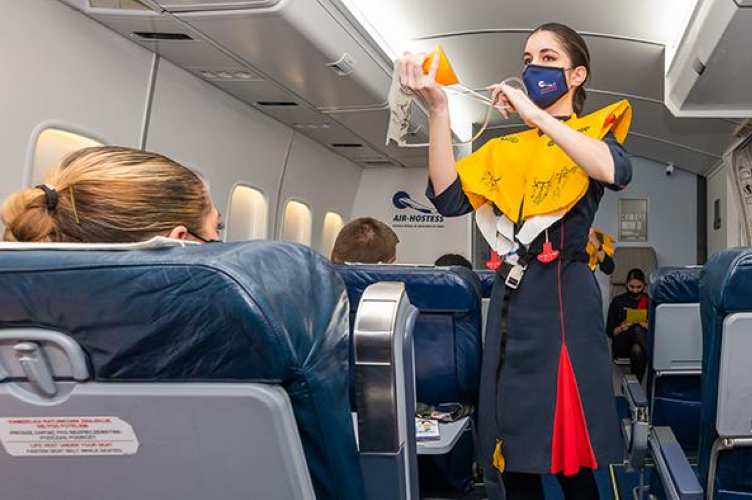
The cabin crew points toward the life jacket during the safety demonstration.
Most passengers barely look up.
Some continue scrolling through their phones.
Others glance at the safety card without ever reading it.
Get the SkypropreAir Free Travel Pack
Plan smarter, choose a better seat and enjoy a more comfortable long-haul journey. Enter your details below to receive the Travel Pack.
Yet hidden beneath your seat is one of the most carefully engineered pieces of survival equipment ever designed.
Millions of travelers fly every day without giving it a second thought.
But behind that bright yellow vest lies a remarkable history shaped by tragedy, innovation, and one simple goal:
To give ordinary people a fighting chance when the unimaginable happens.
The story of the airline life jacket is far more fascinating than most passengers realize.
Related Reading: If you’re fascinated by airline safety, don’t miss Why Flight Attendants Sit on Their Hands During Takeoff, The Most Dangerous Phase of Every Flight, and Why Passenger Planes Fly at 35,000 Feet Instead of 10,000.
When Flying Over Water Was Truly Dangerous
Commercial aviation wasn’t always as safe as it is today.
In the 1920s and 1930s, aircraft flew lower, slower, and with engines that were far less reliable than modern jetliners.
Many routes crossed rivers, lakes, coastlines, and eventually vast oceans.
If an engine failed, pilots sometimes had only one option—ditch the aircraft on water.
The problem?
Early airplanes carried little or no dedicated flotation equipment.
Surviving the impact often meant facing another deadly challenge: staying afloat until rescue arrived.
Several early ditching accidents forced aviation authorities to rethink passenger safety.
It became clear that surviving the landing wasn’t enough.
Passengers also needed reliable flotation devices.
Borrowing an Idea From Sailors
The first aviation life jackets were inspired by maritime life preservers.
Unfortunately, they weren’t ideal for aircraft.
Many were made from cork.
Some were heavy.
Others made it difficult for passengers to move through narrow cabin exits.
Aircraft designers quickly realised aviation needed something completely different.
Passengers required flotation devices that were:
-
Lightweight
-
Compact
-
Comfortable
-
Reliable
-
Easy to inflate under extreme stress
That challenge sparked decades of innovation.
Travel Smarter Every Time You Fly
Whether you’re flying over the Atlantic or taking a short European trip, unexpected delays, medical emergencies, or lost baggage can happen.
Protect every journey with SafetyWing Travel Insurance before you fly.
Recommended for international travellers, digital nomads, and frequent flyers.
World War II Revolutionised Survival Equipment
The greatest leap forward came during World War II.
Military pilots regularly flew over vast oceans.
If they were forced down, survival depended almost entirely on flotation equipment.
Engineers created inflatable life jackets known as the famous “Mae West.”
Unlike cork versions, these jackets were:
-
Much lighter
-
Easier to wear
-
More buoyant
-
Comfortable inside cramped cockpits
Thousands of Allied pilots survived because of these improvements.
After the war, commercial aviation adopted many of the same design principles.
Modern airline life jackets are direct descendants of those wartime innovations.
Why Your Life Jacket Lives Under Your Seat
Early airlines experimented with several storage locations.
Some stored life jackets in overhead compartments.
Others distributed them before takeoff.
Neither solution worked well.
Overhead bins could jam.
Cabin crew had little time to hand them out during emergencies.
The answer proved surprisingly simple.
Store one beneath every passenger’s seat.
That decision remains one of aviation’s smartest safety improvements.
Today, wherever you sit, your flotation device is usually within arm’s reach.
The Fatal Mistake That Changed Safety Demonstrations Forever
Early investigations uncovered a tragic pattern.
Some passengers inflated their life jackets inside the aircraft.
Once inflated, the jacket forced them upward against the cabin ceiling.
Others became trapped inside flooded cabins because they could no longer swim downward to escape.
This single mistake cost lives.
That’s why every airline today repeats one vital instruction:
Inflate your life jacket only after leaving the aircraft.
It may sound like a minor detail.
In reality, it has saved countless lives.
Related Reading: You may also enjoy The Secret Compartments Most Passengers Never Notice and Why Airplane Toilets Flush So Loudly, where we uncover other hidden features designed to improve safety and passenger comfort.
The Incredible Engineering Inside a Modern Life Jacket
Today’s airline life jacket looks simple.
It isn’t.
Inside that compact yellow pouch are decades of engineering experience.
Modern life jackets typically include:
-
Twin air chambers
-
Carbon dioxide inflation cylinders
-
Backup oral inflation tubes
-
Water-activated locator lights
-
Emergency whistles
-
Reflective strips
-
High-visibility materials
Each feature exists because investigators learned valuable lessons from previous accidents.
Planning Your Next Flight?
Before booking, compare hundreds of airlines and find competitive fares with Aviasales.
Many experienced travellers use fare comparison tools to save money while finding the most convenient routes.
A cheaper ticket means more money to enjoy your destination.
Years of Waiting for One Critical Moment
A life jacket may spend years beneath your seat without ever being touched.
Yet it must perform perfectly when needed.
Airlines regularly inspect every unit.
Maintenance engineers check:
-
CO₂ cylinders
-
Inflation systems
-
Fabric condition
-
Emergency lights
-
Expiry dates
-
Protective packaging
If anything fails inspection, the unit is immediately replaced.
Nothing is left to chance.
How Often Are Airline Life Jackets Actually Used?
Thankfully, very rarely.
Commercial aircraft ditchings are among the rarest emergencies in aviation.
Modern aircraft feature multiple backup systems, highly trained crews, sophisticated weather forecasting, and advanced navigation technology.
Even so, history proves that preparation matters.
When emergencies occur, the combination of trained cabin crews and properly maintained survival equipment dramatically increases passengers’ chances of survival.
The best safety equipment is often the equipment you never need.
The Safety Demonstration Most People Ignore
Many frequent flyers stop listening during the cabin briefing.
They’ve heard it countless times.
But every aircraft is different.
Exit locations change.
Life jacket designs vary slightly.
Emergency procedures can differ depending on aircraft type.
Those few minutes of attention could become the most valuable investment you make during your journey.
A Small Yellow Vest With a Remarkable Legacy
The airline life jacket is much more than emergency equipment.
It represents decades of innovation.
It reflects lessons learned from tragedy.
It showcases aviation’s relentless pursuit of passenger safety.
Most travellers will never wear one.
That is precisely the outcome everyone hopes for.
Yet knowing it’s there should inspire confidence.
Because modern aviation doesn’t depend on luck.
It depends on preparation.
And perhaps no piece of equipment tells that story better than the small yellow package quietly waiting beneath your seat.
Final Thoughts
The history of the airline life jacket reminds us that every safety feature onboard today’s aircraft has a story behind it. From primitive cork vests to sophisticated inflatable designs equipped with locator lights and backup inflation systems, every improvement has been driven by one mission: helping passengers survive the unexpected.
The next time the cabin crew demonstrates the life jacket, resist the temptation to check your phone.
Watch carefully.
One day, those few minutes of attention could make all the difference.
Continue Exploring SkypropreAir
If you enjoyed this article, you’ll also love:
Frequently Asked Questions
Why are airline life jackets stored under the seat?
They remain accessible even if overhead compartments become blocked after an emergency landing.
Should passengers inflate the life jacket inside the aircraft?
No. It should only be inflated after exiting the aircraft, as inflating it inside can trap passengers in a flooded cabin.
Do airlines regularly inspect life jackets?
Yes. Airlines inspect and replace life jackets according to strict maintenance schedules to ensure they function perfectly if ever needed.
Join the Conversation
Before your next flight, will you pay closer attention to the safety demonstration—or do you think frequent flyers already know everything they need to know? Share your thoughts and experiences in the comments below. We’d love to hear your perspective.