
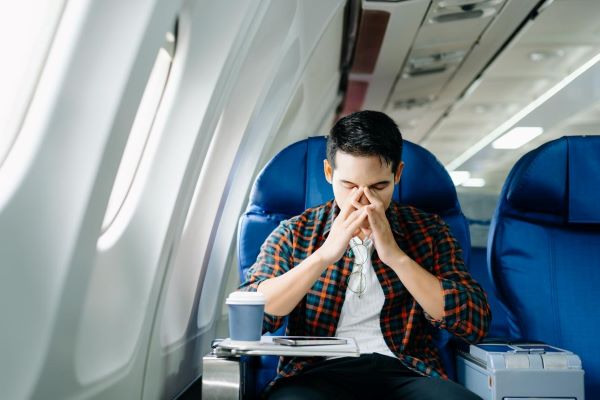
The Strange Psychological Effect Long Flights Have on Passengers — And Why You Feel Different After Landing
Most passengers think long flights only affect the body.
The stiff legs.
The dry skin.
The exhaustion.
But somewhere around hour seven of a long-haul flight, something stranger often begins to happen.
Get the SkypropreAir Free Travel Pack
Plan smarter, choose a better seat and enjoy a more comfortable long-haul journey. Enter your details below to receive the Travel Pack.
The cabin grows quieter. The outside world disappears into darkness. The engines create a hypnotic hum that never stops. And suddenly, passengers begin thinking differently.
Small memories return.
Life decisions feel heavier.
Movies become emotional.
People stare silently out of windows for hours.
Some travelers even feel a strange sadness after landing — without fully understanding why.
Frequent flyers know this feeling well.
And according to psychologists and aviation experts, long flights can temporarily alter the way the brain processes emotion, time, stress, and human connection.
The truth is this:
Long-haul flying is not just physical travel.
It is psychological isolation at 38,000 feet.
If you’ve ever wondered why flying can feel strangely emotional, mentally draining, or deeply reflective, you are not imagining it.
And modern airlines are quietly redesigning cabins around this exact phenomenon.
The Cabin Creates a Temporary Psychological Bubble
Inside a long-haul aircraft, normal life disappears.
Passengers lose almost every environmental cue the human brain normally depends on:
-
sunlight
-
routine
-
physical movement
-
natural sleep cycles
-
normal meal timing
-
social structure
For 8 to 15 hours, people exist inside an artificial world suspended above the earth.
That disconnect affects the brain more than most passengers realize.
This is partly why overnight flights often feel surreal.
Hours blur together.
Passengers wake up confused about time zones, meals, even emotions.
Many travelers describe feeling “disconnected from reality” halfway through ultra-long-haul journeys.
And psychologically, that description is surprisingly accurate.
Related: “Why Flying Feels Worse in 2026 — Even on New Aircraft” on SkypropreAir
Why Long Flights Make People More Emotional
One of the least discussed parts of air travel is emotional amplification.
Long flights often make emotions feel stronger.
A breakup feels heavier.
A reunion feels more meaningful.
A simple song suddenly feels heartbreaking.
Passengers cry during movies they would barely react to on the ground.
Psychologists believe this happens because the brain has fewer distractions during flights. With reduced stimulation, the mind naturally turns inward.
And airplanes create the perfect environment for reflection:
-
darkness
-
silence
-
isolation
-
transition
-
physical stillness
That combination pushes many people into unusually reflective emotional states.
The Strange Way Long Flights Distort Time
Few environments distort human perception of time like ultra-long-haul flying.
Passengers sleep at unnatural hours.
Meals arrive when the body thinks it should be asleep.
Cabin lighting changes artificially.
Windows remain closed for hours.
The brain gradually loses its normal sense of time progression.
This mild disorientation affects mood, stress levels, and mental clarity.
It also explains why passengers often arrive feeling emotionally fragile after crossing multiple time zones.
Related: “Why Smart Travelers Check In Later — Not Earlier” on SkyportreAir
Why Strangers Open Up on Airplanes
There is another strange psychological effect many travelers recognize instantly:
Passengers become unusually honest on flights.
People tell strangers deeply personal stories.
They discuss failed relationships, fears, career regrets, family issues, and life goals with seatmates they may never see again.
Why?
Because flying temporarily removes normal social identity.
Inside an airplane cabin, passengers are anonymous.
No office.
No neighborhood.
No daily routine.
No long-term consequences.
That temporary detachment often makes emotional openness feel safer.
The Mental Fatigue Nobody Warns Passengers About
Most people expect physical tiredness after flying.
What surprises them is the psychological exhaustion.
Even while sitting still, the brain remains under constant stress during long flights.
The cabin continuously stimulates the nervous system through:
-
engine vibration
-
low humidity
-
artificial lighting
-
restricted movement
-
interrupted sleep
-
crowded seating
The body never fully relaxes.
And the longer the flight, the more mentally exhausting the experience becomes.
Why Window Seats Feel So Emotional
There is something psychologically powerful about staring out of an aircraft window for hours.
Especially during night flights.
Cities glowing below.
Storms over oceans.
Sunrise above the clouds.
At cruising altitude, passengers experience a perspective humans were never naturally designed to see.
And perspective changes emotion.
Many travelers quietly admit that long flights become moments of unexpected self-reflection.
Related: “The Hidden Psychology Behind Choosing Window or Aisle Seats” on SkypropreAir
The “Post-Flight Emotional Crash” Is Real
Many travelers feel emotionally strange after landing. skypropreair
Especially after overnight or ultra-long-haul flights.
The cabin lights brighten.
Phones reconnect.
Notifications flood in.
Reality returns instantly.
And psychologically, the transition can feel abrupt.
Some passengers even experience sadness after meaningful flights — especially after vacations, reunions, or solo travel experiences.
Airlines Are Quietly Designing Around Passenger Psychology
The aviation industry increasingly understands that passenger comfort is psychological as much as physical.
That is why modern aircraft cabins are changing rapidly.
Newer aircraft like the Boeing 787 Dreamliner and Airbus A350 are specifically designed to reduce passenger fatigue through:
-
lower cabin altitude
-
better humidity
-
larger windows
-
quieter cabins
-
improved lighting systems
Airlines know exhausted passengers remember flights negatively.
And emotionally comfortable passengers are more loyal.
Related: “Why the Boeing 787 Feels So Different to Passengers” on SkypropreAir
The Real Reason Long Flights Stay With Us
Most transportation simply moves people physically.
Long-haul flights often move people emotionally too.
Because somewhere between departure and arrival, passengers temporarily disconnect from ordinary life.
And in that strange suspended environment, the mind becomes unusually honest.
That may be why some flights become unforgettable even when nothing dramatic happens.
Because long-haul travel does not just transport the body.
Sometimes, it quietly rearranges the mind.
How Smart Travelers Reduce Long-Flight Mental Fatigue
Experienced travelers often use small strategies to protect themselves psychologically during long-haul journeys:
-
choosing quieter cabin zones
-
staying hydrated
-
limiting alcohol
-
downloading calming entertainment
-
using noise-canceling headphones
-
controlling screen exposure before sleep
-
selecting better seats early
Before booking long-haul travel, many frequent flyers now compare aircraft type, seat comfort, and cabin layout — not just ticket price.
Flight comparison tools like Aviasales can help travelers identify better long-haul routes and aircraft options before booking.
And for travelers dealing with delays, missed connections, or unexpected medical situations abroad, flexible travel coverage providers like SafetyWing have become increasingly popular among frequent international travelers.
FAQs
Why do long flights affect emotions so strongly?
Long flights reduce distractions, disrupt sleep cycles, and create psychological isolation, which often increases emotional sensitivity and introspection.
Why do passengers feel mentally exhausted after flying?
Cabin noise, poor sleep, dry air, restricted movement, and constant low-level stress create cognitive fatigue during long-haul travel.
Why do people become unusually reflective during flights?
The quiet, isolated environment of air travel removes many daily distractions, giving the brain more space for memory, reflection, and emotional processing.