
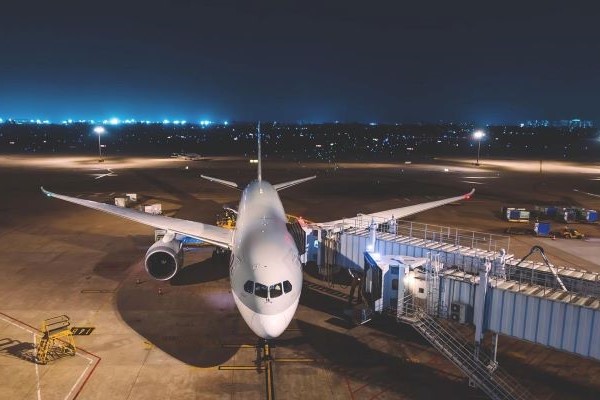
Why Some Passengers Hate Flying on the Boeing 787 Dreamliner
The aircraft was supposed to feel like the future. For some travelers, it feels like a flying anxiety machine.
A passenger stares out the oversized window as the wing bends dramatically during turbulence somewhere over the Atlantic.
The cabin glows blue.
The engines sound strangely quiet.
The electronically dimmed window refuses to go fully dark.
Get the SkypropreAir Free Travel Pack
Plan smarter, choose a better seat and enjoy a more comfortable long-haul journey. Enter your details below to receive the Travel Pack.
Around them, hundreds of people are trying to sleep in tightly packed seats while the aircraft gently shakes through the night sky.
And somewhere in the back of their mind, one thought quietly appears:
“I don’t think I like flying on this plane.”
The Boeing 787 Dreamliner was designed to revolutionize long-haul travel. Airlines praised it. Aviation experts admired it. Passengers were told it would be quieter, smoother, and more comfortable than older aircraft.
But a growing number of travelers are discovering something unexpected:
They genuinely dislike flying on it.
Not because it is old.
Not because it looks outdated.
But because the Dreamliner triggers something emotional modern aviation still struggles to understand,
Passenger trust.
The Boeing 787 Feels “Different” — And That Makes Some Travelers Uneasy
The strange thing about the Boeing 787 debate is that many passengers cannot fully explain why they dislike it.
They just say it feels… strange.
Too quiet.
Too artificial.
Too controlled.
The Dreamliner introduced futuristic cabin technology designed to improve comfort, including larger electronically dimmable windows, mood lighting, and improved cabin pressure systems.
But for nervous flyers, those same features can feel emotionally unsettling.
The aircraft does not feel “traditional.”
And when passengers already feel anxious about flying, unfamiliarity matters more than airlines realize.
Related reading:
-
Why Some Passengers Are Worried About AI Inside Airplane Cabins
-
Passengers Are Divided Over the Rise of Biometric Airline Technology
-
Would You Allow an Airline Seat to Monitor Your Stress Levels During a Flight?
The Windows That Quietly Frustrate Passengers
The Dreamliner’s oversized windows were marketed as one of its most impressive features.
But many passengers secretly hate them.
Unlike traditional aircraft shades, the Boeing 787 uses electronically dimming windows. Airlines and cabin crew can even control them during parts of the flight.
The problem?
They never become fully dark.
That sounds minor until you are trapped on a 10-hour overnight flight trying desperately to sleep while daylight still glows faintly through half the cabin.
Frequent flyers have increasingly complained that the system removes something passengers value psychologically during flights:
Control.
And in modern air travel, even small losses of control can dramatically affect comfort.
Related reading:
Many Airlines Turned the Dreamliner Into a Comfort Contradiction
Ironically, some passengers blame Boeing for problems actually caused by airlines.
The 787 was promoted as a next-generation passenger aircraft focused on comfort and long-haul wellbeing.
Then airlines packed economy cabins tightly to maximize revenue.
Many Boeing 787 economy cabins now use dense 3-3-3 seating layouts, creating narrower seats than many passengers expected from an aircraft branded as the “Dreamliner.”
That gap between expectation and reality creates disappointment stronger than on older planes.
Passengers hear “Dreamliner.”
Then they sit down and feel cramped for 11 hours.
Emotionally, the aircraft becomes associated with discomfort.
Related reading:
-
The Airplane Comfort Rule Frequent Travelers Never Break
-
Why Some Airplane Seats Feel More Tiring Than Others
The Turbulence Feels More Dramatic — Even When It Isn’t
One of the biggest psychological complaints about the Boeing 787 involves turbulence.
Passengers often say turbulence feels worse on the Dreamliner.
Aviation experts point out that the aircraft’s composite wings are intentionally designed to flex more during flight. That flexibility is part of the engineering.
But emotionally, seeing giant wings visibly bending above the clouds can feel terrifying to nervous travelers.
The Dreamliner’s quieter cabin may also make turbulence feel more emotionally noticeable because passengers are less distracted by loud engine noise.
Every bump suddenly feels amplified.
And once fear enters the mind, normal flight movements begin to feel abnormal.
Related reading:
-
The Real Reason Boarding Feels So Stressful
-
Why Some Travelers Feel Anxious the Moment They Board
-
The Exhausting Side of Flying Nobody Talks About Enough
Boeing’s Reputation Changed Passenger Psychology
For years, the Boeing 787 represented innovation.
Today, for some travelers, the word “Boeing” alone creates anxiety before takeoff even begins.
Fairly or unfairly, Boeing’s broader public controversies in recent years affected how some passengers emotionally view all Boeing aircraft.
And most travelers do not separate aircraft models the way aviation professionals do.
They simply hear:
“Boeing.”
That emotional association changes everything.
A routine vibration suddenly feels suspicious.
A strange sound becomes alarming.
A turbulence moment feels dangerous.
Modern passengers increasingly board planes carrying fear created by headlines, TikTok videos, YouTube clips, Reddit discussions, and social media algorithms long before they ever reach the gate.
The Quiet Psychological Problem Airlines Rarely Talk About
The Dreamliner may represent one of the biggest emotional contradictions in modern aviation.
Objectively, it introduced real comfort improvements:
-
Better cabin humidity
-
Lower cabin altitude pressure
-
Quieter engines
-
Larger windows
-
Improved fuel efficiency
-
Reduced jet lag effects for many passengers
Yet some travelers still prefer older aircraft emotionally.
Why?
Because flying is not purely logical.
Passengers do not experience aircraft through engineering statistics.
They experience them through feeling.
And once an aircraft loses emotional trust with certain travelers, technical innovation alone cannot fully repair it.
Related reading:
Why the Boeing 787 Remains One of Aviation’s Most Divisive Aircraft
For some passengers, the Dreamliner feels futuristic and relaxing.
For others, it feels oddly cold, cramped, and emotionally uncomfortable.
That divide may never fully disappear because the Boeing 787 sits at the center of a much larger aviation conversation:
How much technology actually improves the emotional experience of flying?
Because travelers are not only searching for efficiency anymore.
They are searching for reassurance.
Comfort.
Calmness.
Control.
And in a world where anxiety around flying is quietly rising, the aircraft passengers trust emotionally may matter just as much as the aircraft engineers consider advanced.
The SkypropreAir Verdict
The Boeing 787 Dreamliner is not universally hated.
In fact, many frequent flyers still love it.
But its growing criticism reveals something airlines often underestimate:
Passengers remember how a plane felt more than what the specifications say.
And sometimes, the future of flying can accidentally feel less human than the past.
FAQs
Why do some passengers dislike flying on the Boeing 787?
Some travelers dislike the Dreamliner because of its electronically dimming windows, dense seating layouts, turbulence perception, and broader emotional concerns tied to Boeing’s reputation.
Is the Boeing 787 safe to fly?
Yes. The Boeing 787 operates under international aviation safety regulations and is flown daily by airlines around the world.
Why does turbulence feel stronger on the Boeing 787?
Some passengers say the aircraft’s quieter cabin and visibly flexible wings make turbulence feel more emotionally noticeable, even though the aircraft is designed to safely handle turbulence.