
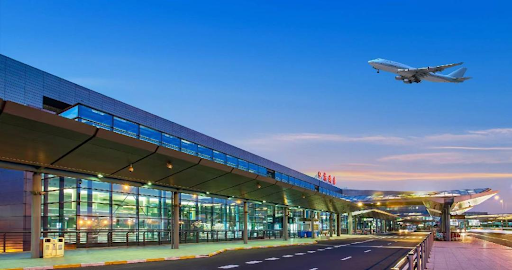
How Airlines Respond To Missile Threats
How airlines respond to missile threats is one of the least understood aspects of commercial aviation. Although these threats are extremely rare, airlines follow detailed procedures involving intelligence agencies, air traffic control, airport authorities, and flight crews to keep passengers safe.
How Airlines Respond to Missile Threats Safely
The Flight That Almost Changed Everything
The aircraft was descending through the evening sky.
Passengers glanced out of the windows as city lights shimmered below. Flight attendants began their final cabin checks. The captain calmly announced that landing would begin in a few minutes.
Everything appeared routine.
Yet hundreds of people on the ground suddenly working together to protect everyone on board.
Get the SkypropreAir Free Travel Pack
Plan smarter, choose a better seat and enjoy a more comfortable long-haul journey. Enter your details below to receive the Travel Pack.
Airport security had received a report of a possible missile threat near the airport.
Within seconds, airline operations centres, air traffic controllers, intelligence agencies, airport police, and national security officials began assessing the situation. Pilots prepared for instructions they hoped they would never receive.
The passengers remained blissfully unaware.
Incidents like these are extremely rare, and the overwhelming majority of reported threats prove to be false alarms or lack credibility. Even so, commercial aviation operates on one fundamental principle: every credible threat is treated seriously until proven otherwise.
Most travellers believe aviation safety begins when an aircraft leaves the runway.
In reality, one of the world’s most sophisticated security systems is already protecting every flight long before the engines even start.
Planning to travel? Compare airfares with Aviasales to find pet-friendly routes and airline options before you book.
Related Reading: What Are MANPADS? And How Do Airlines Protect Passengers From Them?
A Global Security Network That Never Sleeps
Commercial aviation is safeguarded by far more than airport security checkpoints.
Behind every scheduled flight is a vast international network that continuously monitors global events, intelligence reports, political developments, military activity, cyber threats, and emerging security risks.
Governments, civil aviation authorities, airlines, airport operators, intelligence services, and international organisations constantly exchange information.
Their goal is simple.
Identify potential risks before passengers are ever exposed to them.
This invisible network allows airlines to make informed decisions hours or even days before an aircraft departs.
Related Reading: Why Pilots Divert Immediately When Smoke Appears on Board
Every Credible Threat Is Investigated
Missile threats can originate from many different sources.
They may begin with intelligence gathered by security agencies, reports from local authorities, suspicious activity near an airport, anonymous warnings, or information shared between allied governments.
Not every report is genuine.
Many are quickly found to be false or unsubstantiated.
However, aviation security professionals never dismiss a credible warning simply because similar reports have proved harmless in the past.
Instead, each threat is assessed using multiple sources of information before operational decisions are made.
It is this disciplined approach that has helped make commercial aviation one of the safest forms of transport ever created.
Related Reading: The Dangerous Mistake Passengers Make During Aircraft Evacuations
The First Phone Call Rarely Goes to the Pilots
How airlines respond to missile threats depends on intelligence assessments, air traffic control coordination and airline operations centres.
Many passengers imagine that pilots are the first people notified whenever a threat emerges.
In reality, the process is much more structured.
A potential threat is typically evaluated by an airline’s Operations Control Centre (OCC), which serves as the airline’s operational headquarters. The OCC coordinates with airport authorities, civil aviation regulators, intelligence agencies, and air traffic control to verify the information.
Only after a clearer assessment is made are flight crews informed and given operational guidance.
This careful flow of information ensures pilots receive accurate, actionable updates rather than unverified rumours.
How Pilots Respond Without Creating Panic
Commercial airline pilots are trained extensively to manage abnormal and emergency situations while maintaining a calm cockpit environment.
When a potential security threat is reported, the crew follows established procedures rather than acting on instinct.
Using Crew Resource Management (CRM), both pilots evaluate available information, coordinate with air traffic control, review aircraft performance, consider fuel reserves, monitor weather, and prepare for alternative courses of action if necessary.
Passengers may notice nothing more than a slightly longer route, a delay in landing, or a brief announcement from the captain.
Professionalism and discipline are essential because calm decision-making leads to better outcomes.
Air Traffic Control Immediately Creates New Options
While pilots focus on safely operating the aircraft, air traffic controllers begin creating flexibility.
Depending on the situation, controllers may:
- Assign a different arrival route.
- Place the aircraft in a holding pattern.
- Increase separation from other traffic.
- Offer an alternative runway.
- Coordinate a diversion to another airport.
- Prioritise the aircraft for landing if required.
Every decision balances safety, efficiency, fuel availability, weather conditions, and the credibility of the reported threat.
This coordinated response allows airlines to adapt quickly without compromising passenger safety.
Intelligence Is the Most Powerful Safety Tool
When people think about aviation security, they often imagine technology on board the aircraft.
In reality, the most effective protection frequently comes from information gathered long before a flight reaches its destination.
Modern aviation benefits from satellite surveillance, radar systems, intelligence sharing, airport police, military monitoring, and international counter-terrorism cooperation.
Security agencies analyse global developments continuously.
If an emerging threat is identified, airlines may alter operations long before passengers ever board.
In many cases, travellers never realise that potential danger was identified and avoided entirely.
How airlines respond to missile threats relies heavily on intelligence sharing between governments, airports and airline operations centres.
Understanding MANPADS Without the Myths
One term occasionally mentioned in discussions about aviation security is MANPADS, short for Man-Portable Air Defence Systems.
These shoulder-fired missiles are designed primarily for military use and have limited range and altitude.
Commercial aircraft are only theoretically most vulnerable during the early stages of take-off or the final stages of landing, when they are flying at relatively low altitudes.
Fortunately, airports, governments, and intelligence agencies devote significant resources to monitoring and mitigating such risks.
The existence of these systems is precisely why airlines maintain extensive security planning rather than relying on chance.
Related Reading: The Hidden Engineering Behind Aircraft Passenger Doors
Sometimes the Safest Decision Is to Avoid the Area Entirely
Airlines constantly evaluate where they fly.
If geopolitical tensions increase or credible security concerns emerge, carriers may reroute aircraft hundreds of kilometres away from affected regions.
These decisions rely on information from Notices to Airmen (NOTAMs), civil aviation authorities, international organisations, and independent airline risk assessments.
Although longer routes may increase flight time and fuel costs, safety always takes priority over operational convenience.
Many passengers have unknowingly travelled on revised routes designed solely to reduce exposure to potential risks.
Understanding how airlines respond to missile threats also explains why airlines sometimes reroute flights long before passengers become aware of any security concern.
Related Reading: How Aircraft Black Boxes Help Investigators Solve Aviation Mysteries
What Happens If a Threat Develops During Flight?
If new information becomes available while an aircraft is already airborne, several options remain available.
Depending on the circumstances, the crew may continue as planned, delay the approach, enter a holding pattern, divert to another airport, or, in some situations, return to the departure airport.
The decision depends on factors such as:
- The credibility of the threat.
- The aircraft’s location.
- Fuel reserves.
- Weather conditions.
- Airport capabilities.
- Guidance from security authorities.
No two situations are identical, which is why airline crews train continuously to make informed decisions under pressure.
Why Passengers Often Never Hear the Full Story
Many travellers only discover that a security incident occurred after reading the news later that day.
This is intentional.
Providing unnecessary information during an evolving situation could create confusion or panic while offering no practical benefit to passengers.
In addition, many investigations continue after an aircraft has landed, meaning operational details may remain confidential until authorities complete their assessment.
The objective is always the same: protect passengers first, communicate accurately second.
Traveling internationally? Protect yourself against unexpected trip disruptions with SafetyWing travel insurance.
Why Commercial Aviation Remains Remarkably Safe
Stories about missile threats naturally attract headlines because they are dramatic and unusual.
Yet those headlines can obscure a more important truth.
Modern commercial aviation is protected by multiple independent layers of security that work together every hour of every day.
Intelligence agencies identify risks.
Operations centres coordinate responses.
Air traffic controllers create safe alternatives.
Pilots apply rigorous training.
Airport security and national authorities work continuously behind the scenes.
Together, these professionals create a safety system so effective that millions of passengers complete their journeys every day without ever realising how much planning occurred on their behalf.
The next time you hear about a reported security threat involving an airline, remember this:
The story isn’t simply about the threat itself.
It’s about an extraordinary global network of professionals whose quiet coordination ensures that most passengers never experience anything more dramatic than a routine landing.
That invisible teamwork is one of the greatest achievements in modern aviation.
Understanding how airlines respond to missile threats helps passengers appreciate the multiple safety layers protecting every commercial flight.
Frequently Asked Questions
1. How common are missile threats against commercial airlines?
They are extremely uncommon. Most reported threats prove to be non-credible, but aviation authorities investigate every credible report thoroughly before deciding how flights should proceed.
2. Can passengers tell if their flight is responding to a missile threat?
Usually not. Airlines aim to manage potential security situations calmly and discreetly. Passengers may notice a delay, a route change, or a diversion, but often remain unaware of the underlying reason until after landing.
3. Why don’t airlines simply cancel every flight after receiving a threat?
Security professionals assess each report individually. Depending on the credibility of the information and the operational circumstances, airlines may continue the flight, reroute it, delay the approach, divert to another airport, or cancel services if necessary. The response is always based on careful risk assessment rather than fear.
Before reading this article, did you realise that an entire global network of intelligence, aviation, and security professionals could be protecting your flight without passengers ever noticing?