
How Aircraft Black Boxes Help Investigators Solve Aviation Mysteries
When an Airplane Falls Silent, One Voice Still Speaks
Imagine a passenger aircraft disappearing from radar.
No distress call.
No clear explanation.
Families wait desperately for answers. Television networks speculate. Social media fills with theories. Yet somewhere beneath the ocean, buried in a mountain range, or scattered across a remote crash site lies a bright orange device that quietly holds the truth.
That device is the aircraft’s black box.
Get the SkypropreAir Free Travel Pack
Plan smarter, choose a better seat and enjoy a more comfortable long-haul journey. Enter your details below to receive the Travel Pack.
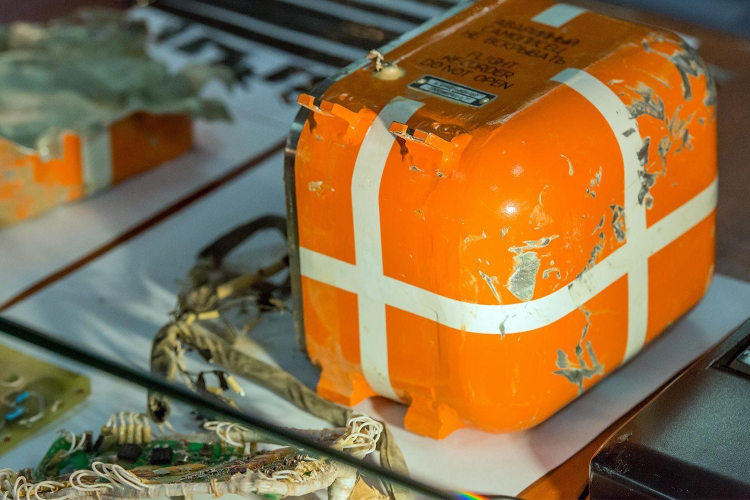
Despite its nickname, it isn’t black at all. It’s painted vivid orange because investigators need to find it quickly when every second matters.
To aviation accident investigators, these recorders are more than electronic equipment. They are silent witnesses that never panic, never forget, and never lie.
Every major improvement in aviation safety owes something to the lessons hidden inside these remarkable devices.
Related Reading: How Aircraft Pitot Tubes Measure Airspeed—and Why They Matter
What Exactly Is an Aircraft Black Box?
Commercial aircraft normally carry two separate recording systems.
-
Flight Data Recorder (FDR)
-
Cockpit Voice Recorder (CVR)
Together they are commonly known as the aircraft’s black boxes.
The Flight Data Recorder constantly records thousands of technical measurements throughout every flight.
These include:
-
Airspeed
-
Altitude
-
Engine performance
-
Control surface movements
-
Autopilot inputs
-
Aircraft attitude
-
Vertical speed
-
System warnings
Modern airliners can record hundreds or even thousands of flight parameters every second, allowing investigators to reconstruct an accident with extraordinary accuracy.
Meanwhile, the Cockpit Voice Recorder captures cockpit conversations, radio communications, warning alarms, switch clicks and even subtle sounds that may reveal problems developing before the crew recognises them.
Together, these systems tell investigators both sides of the story:
What the aircraft was doing—and what the pilots were experiencing.
You May Also Like: What Really Happens During an Aircraft Stall?
Why Isn’t It Actually Black?
One of aviation’s biggest misconceptions is that black boxes are black.
They’re actually painted bright orange with reflective strips.
The colour makes them easier to locate among twisted wreckage, forests, snowfields and the ocean floor.
The nickname probably originated from early electronic equipment that came inside dark protective housings.
Today, visibility saves valuable investigation time.
Travel Smarter Every Time You Fly
Whether you’re flying across Europe or embarking on a long-haul journey, protecting your trip is just as important as choosing the right seat.
Recommended for SkypropreAir readers: Compare affordable travel insurance before your next journey with SafetyWing. Unexpected delays, cancellations and medical emergencies can happen when you least expect them.
Planning your next flight? Compare fares using Aviasales to find competitive prices across hundreds of airlines.
Built to Survive What Almost Nothing Else Can
Aircraft black boxes are engineered for one purpose:
To survive when almost everything else cannot.
They are designed to withstand:
-
Violent impacts
-
Crushing forces
-
Extreme fires
-
Deep ocean pressure
-
Long underwater immersion
-
Severe structural destruction
The memory module is protected inside multiple layers of heat-resistant and impact-resistant materials.
Before certification, manufacturers expose these recorders to brutal testing involving crushing machines, fire furnaces, underwater pressure chambers and high-speed impacts.
The objective is simple.
Even if the aircraft is destroyed, the evidence should survive.
Related Reading: Why Do Boeing 787 Wings Bend So Much? The Science That Keeps You Safe
The Beacon That Never Stops Calling
If an aircraft crashes into water, finding it becomes dramatically more difficult.
That’s why every recorder carries an Underwater Locator Beacon (ULB).
Once submerged, the beacon automatically begins transmitting acoustic “pings.”
Specialised search vessels use underwater listening equipment to detect these signals.
The beacon usually operates for around 30 days, giving recovery teams a valuable opportunity to locate the recorder before the battery expires.
Without these beacons, some investigations would take years—or might never succeed.
What Happens After Investigators Recover the Black Box?
Finding the recorder is only the beginning.
Experts transport it to specialised laboratories where engineers carefully retrieve the recorded information.
Sometimes the recorder arrives heavily damaged.
Engineers may spend weeks rebuilding memory components before any data can be extracted.
Once recovered, investigators synchronise information from multiple sources:
-
Flight recorder data
-
Cockpit voice recordings
-
Air traffic control communications
-
Radar tracking
-
Maintenance records
-
Weather reports
-
Aircraft wreckage
-
Engine examinations
Only then does the complete story begin to emerge.
The goal isn’t simply assigning blame.
The real objective is preventing another accident from happening.
How Black Boxes Have Changed Aviation Forever
Many of aviation’s greatest safety improvements were born from black box evidence.
Investigators have uncovered:
-
Hidden mechanical failures
-
Unexpected weather hazards
-
Pilot workload issues
-
Aircraft design weaknesses
-
Maintenance shortcomings
-
Human factor challenges
Each investigation has led to improvements in:
-
Pilot training
-
Aircraft engineering
-
Warning systems
-
Airline procedures
-
International safety regulations
Every lesson learned has made modern flying even safer.
Related Reading: How Aircraft Oxygen Masks Really Work During Cabin Emergencies
Flying Soon? Make Your Journey More Comfortable
If you’re planning a long-haul trip, don’t stop at finding cheap tickets.
Read our guides on:
-
Best seats by aircraft type
-
Long-haul comfort strategies
-
Jet lag reduction techniques
-
Cabin air and hydration tips
Your journey begins long before boarding.
Can Black Boxes Ever Fail?
Although remarkably reliable, black boxes don’t always provide every answer.
Investigators sometimes face:
-
Severe physical damage
-
Missing recorders
-
Delayed recoveries
-
Corrupted memory
-
Incomplete evidence
That’s why accident investigations combine recorder data with wreckage analysis, maintenance history, weather information and engineering studies.
No single source tells the whole story.
Every investigation is a carefully assembled puzzle.
The Future of Aircraft Black Boxes
Technology continues to evolve.
Future developments may include:
-
Longer cockpit voice recordings
-
Enhanced memory capacity
-
Improved underwater locator beacons
-
Automatic transmission of selected flight data
-
Faster recovery systems
These innovations could dramatically shorten future investigations while improving aviation safety even further.
Why Every Passenger Benefits
Most passengers never think about black boxes.
That’s a good thing.
Commercial aviation remains one of the safest forms of transportation ever created.
But when rare accidents occur, investigators need facts—not speculation.
Black boxes provide those facts.
They explain the unexplained.
They improve pilot training.
They strengthen aircraft design.
They help engineers correct hidden flaws.
Most importantly, every lesson learned helps protect future passengers.
In many ways, black boxes are among aviation’s greatest silent heroes.
Final Thoughts
Aircraft black boxes are extraordinary engineering achievements.
Hidden deep inside every commercial aircraft, they quietly record the information investigators may one day need to understand an accident with remarkable precision.
Every recovered recording has helped improve aviation safety somewhere in the world.
Every lesson learned has contributed to stronger aircraft, better-trained pilots and safer skies.
The next time you board a flight, remember that two small orange recorders are silently documenting every second—not because aviation expects disaster, but because it never stops learning.
Their voices may never be heard during a routine flight.
But when the unimaginable happens, they become the most trusted witnesses in aviation.
FAQs
-
Why is an aircraft black box orange instead of black?
Although called a “black box,” it is painted bright orange with reflective markings so investigators can quickly locate it after an accident. -
Can aircraft black boxes survive a crash?
Yes. They are built to withstand extreme impacts, intense fires, crushing forces, and deep-sea pressure, making them among the toughest components on an aircraft. -
Do black boxes record video inside the cockpit?
No. Commercial aircraft black boxes typically record flight data and cockpit audio, not video. Some aviation authorities have discussed cockpit image recording, but it is not standard practice in commercial aviation.
Continue Exploring Aviation
If you enjoyed this article, you might also like: