
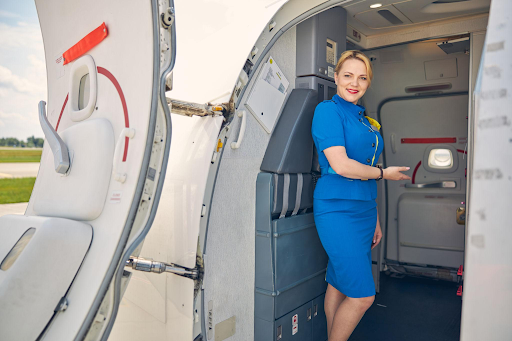
Hidden Engineering Behind Aircraft Passenger Doors
The Door Beside You Is One of the Most Important Safety Systems on the Aircraft
Every time you board an aircraft, you probably walk through the passenger door without giving it a second thought.
You find your seat, buckle up, and prepare for take-off.
Yet only a few feet away sits one of the most brilliantly engineered safety systems ever designed.
It doesn’t have a touchscreen.
It isn’t controlled by artificial intelligence.
Get the SkypropreAir Free Travel Pack
Plan smarter, choose a better seat and enjoy a more comfortable long-haul journey. Enter your details below to receive the Travel Pack.
It doesn’t rely on electric motors.
In fact, despite modern aircraft being filled with sophisticated computers, sensors, fly-by-wire controls, and advanced automation, passenger doors remain intentionally simple where it matters most.
That isn’t because aircraft manufacturers haven’t modernized them.
It’s because engineers know that when lives depend on a system, simplicity is often safer than complexity.
The hidden engineering behind aircraft passenger doors demonstrates one of aviation’s most important design philosophies: the safest system is the one that still works when everything else doesn’t.
Related Reading: The Dangerous Mistake Passengers Make During Aircraft Evacuations
Why Aircraft Passenger Doors Are Different From Almost Every Other Door
Walk through your home’s front door or open your car door, and you’re simply moving a panel attached by hinges.
Aircraft doors are completely different.
Most commercial airliners use what engineers call plug-type doors.
Instead of fitting inside the opening, the door is actually slightly larger than the opening in the fuselage.
To close it, cabin crew first move the door inward before rotating or sliding it into position.
Once locked, the door sits tightly inside its frame.
This design creates one extraordinary safety advantage.
As the aircraft climbs, cabin pressure increases inside the cabin.
Rather than trying to force the door open, that pressure actually pushes the larger door even more firmly into its frame.
The higher the pressure difference between the cabin and the outside atmosphere, the tighter the seal becomes.
Ironically, the force that keeps passengers comfortable at cruising altitude also helps lock the door in place.
The engineering behind aircraft passenger doors has evolved over decades to maximise passenger safety.
Why Opening an Aircraft Door During Flight Is Physically Impossible
Hollywood movies have created the impression that someone could suddenly open an aircraft door mid-flight.
Reality is very different.
At cruising altitude, the cabin is pressurized while the air outside is extremely thin.
This creates an enormous pressure difference.
Depending on the aircraft and altitude, several tonnes of force may be pressing against the inside of the door.
Before a plug-type door can open, it must first move inward.
The surrounding air pressure simply won’t allow that.
Even the strongest person on Earth could not overcome that force with their hands.
That’s why passengers can remain calm whenever sensational headlines appear about disruptive individuals attempting to open an aircraft door during flight.
Under normal cruising conditions, physics—not locks—prevents it from happening.
Unlike ordinary doors aircraft passenger doors are designed to withstand enormous pressure differences.
Related Reading: What Really Happens When an Aircraft Window Breaks Mid-Flight
Why Passenger Doors Are Still Mostly Mechanical
This surprises many travellers.
Modern aircraft contain millions of lines of software.
Autopilots can land aircraft.
Navigation systems communicate with satellites.
Engines constantly monitor themselves.
Yet the emergency exit beside your seat still depends largely on mechanical engineering.
The reason is reliability.
Imagine an emergency evacuation after landing.
Electrical systems may have been damaged.
Hydraulic systems could have failed.
Smoke may reduce visibility.
The aircraft might even have lost all electrical power.
Passengers cannot wait for computers to reboot.
The doors must open immediately.
A purely mechanical operating mechanism gives cabin crew the greatest chance of opening the exit under the worst possible conditions.
In aviation, redundancy saves lives.
Mechanical systems provide another layer of redundancy that is independent of electrical power.
Every commercial aircraft relies on aircraft passenger doors that can operate reliably during emergencies.
Related Reading: What Happens During an Aircraft Evacuation at Night?
The Clever Engineering Hidden Inside Every Passenger Door
Although passengers mainly see a handle and a window, dozens of engineering systems work together inside every aircraft door.
These include:
- Powerful locking mechanisms
- Multiple locking latches
- Pressure seals
- Safety interlocks
- Warning indicators
- Escape-slide attachment systems
- Viewing windows
- Emergency assist mechanisms
Each component is carefully designed so that failure of one part does not automatically prevent safe operation.
The result is an incredibly robust system that can withstand thousands of flight cycles over many years.
How Cabin Crew Prepare the Doors Before Every Flight
One of the most important tasks performed before departure is arming the doors.
When a door is armed, the emergency evacuation slide is connected to the aircraft.
If the door is opened during an emergency, the slide deploys automatically within seconds.
After landing, cabin crew disarm the doors before passengers leave normally.
This disconnects the slide, preventing an accidental deployment.
You may hear announcements such as:
“Cabin crew, arm doors and cross-check.”
Or after landing:
“Disarm doors and cross-check.”
These routine calls represent one of the most important safety procedures performed on every commercial flight.
Why Emergency Slides Deploy So Quickly
During an evacuation, every second matters.
International safety regulations require manufacturers to demonstrate that a fully loaded aircraft can be evacuated within 90 seconds, even if half the available exits cannot be used.
That leaves almost no room for delay.
When an armed passenger door is opened in an emergency, compressed gas systems inflate the escape slide almost instantly.
Within just a few seconds, passengers have a safe path to the ground.
The speed of deployment is the result of decades of engineering refinement and rigorous certification testing.
Engineers continue refining aircraft passenger doors through rigorous testing and certification.
Why Cargo Doors Work Differently
Some passengers wonder why cargo doors often appear to operate using hydraulic or powered systems while passenger doors remain primarily mechanical.
The answer lies in their purpose.
Cargo doors are designed to handle heavy freight efficiently.
They are not emergency evacuation exits.
Passenger doors, on the other hand, must always remain operable by cabin crew under emergency conditions—even if electrical or hydraulic systems become unavailable.
This difference explains why passenger door operation prioritizes simplicity over automation.
Related Reading: Why Flight Attendants Sit on Their Hands During Take-off and Landing
The Extensive Testing Behind Every Aircraft Door
Before entering airline service, aircraft doors undergo extraordinary testing.
Manufacturers repeatedly:
- Pressurize and depressurize the cabin
- Open and close doors thousands of times
- Test emergency slide deployment
- Simulate harsh environmental conditions
- Verify operation after repeated use
- Inspect locking mechanisms for wear
Only after passing strict certification requirements can an aircraft enter commercial service.
Even then, airlines continue regular inspections and maintenance throughout the aircraft’s operational life.
Related Reading: The Seat Beneath You Could Save Your Life: Why Aircraft Seats Matter
Common Myths About Aircraft Passenger Doors
Myth 1: Someone could open the door during flight.
False.
The pressure difference at cruising altitude makes opening a plug-type passenger door physically impossible under normal operating conditions.
Myth 2: Passenger doors rely entirely on electricity.
False.
The primary operating mechanism remains mechanical to maximize reliability during emergencies.
Myth 3: Passenger doors are just larger versions of ordinary doors.
False.
Aircraft doors are highly engineered safety systems specifically designed for pressurized flight and rapid emergency evacuation.
✈️ Planning Your Next Flight?
Understanding how aircraft safety systems work can make flying far less stressful.
If you’re searching for affordable flights, compare fares using Aviasales before you book.
And for international travel, consider protecting your trip with SafetyWing travel insurance for added peace of mind.
The Real Lesson Hidden Inside Every Aircraft Door
Aircraft passenger doors perfectly illustrate one of aviation’s greatest engineering principles.
Sometimes the smartest technology isn’t the newest technology.
Rather than relying entirely on electronics, engineers deliberately chose a design that uses physics, mechanical reliability, and intelligent simplicity to protect millions of passengers every year.
It is easy to admire the sophisticated computers that fly modern aircraft.
Yet one of the most important safety systems on board still depends on a handle, a robust mechanical mechanism, and the invisible force of cabin pressure.
The next time you board a flight, take a moment to look at the door you walk through.
It isn’t simply an entrance.
It is a carefully engineered life-saving system designed to perform flawlessly when passengers need it most.
The hidden engineering behind aircraft passenger doors is one of aviation’s greatest safety achievements.
Manufacturers continuously improve the hidden engineering behind aircraft passenger doors through rigorous testing.
Frequently Asked Questions
Why can’t passengers open an aircraft door during flight?
Because plug-type passenger doors are held firmly in place by the cabin pressure difference. The force pressing the door into its frame makes it physically impossible to move inward and open under normal cruising conditions.
Why aren’t aircraft passenger doors fully electric?
Mechanical operation provides maximum reliability. During an emergency, the doors must work even if electrical or hydraulic systems have failed.
How do emergency slides deploy automatically?
When a passenger door is armed before departure, the evacuation slide is attached to the aircraft. Opening the door during an emergency activates a compressed-gas inflation system that deploys the slide within seconds.