
The Dangerous Mistake Passengers Make During Aircraft Evacuations
The Dangerous Mistake Passengers Make During Aircraft Evacuations
The Suitcase That Could Cost Hundreds of Lives
The aircraft had finally stopped.
Smoke was beginning to fill the cabin.
Flight attendants shouted the same command over and over again.
“Leave everything! Evacuate! Evacuate!”
Yet instead of rushing towards the exits, several passengers did something aviation professionals never want to see.
Get the SkypropreAir Free Travel Pack
Plan smarter, choose a better seat and enjoy a more comfortable long-haul journey. Enter your details below to receive the Travel Pack.
They reached into the overhead lockers.
They pulled out suitcases.
Some even struggled to remove heavy bags while frightened passengers waited behind them.
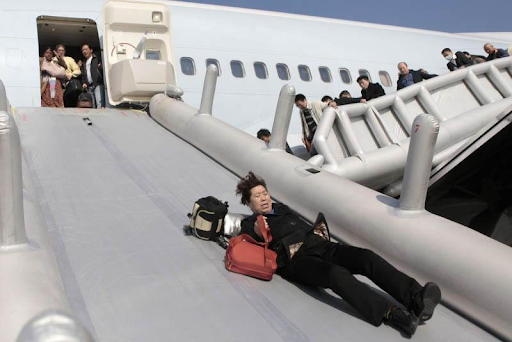
These scenes were captured after Emirates Flight 521 crashed during landing in Dubai in 2016. Remarkably, all 300 people on board survived the accident. However, investigators noted that several passengers delayed their escape by retrieving their carry-on luggage before leaving the aircraft.
The incident highlighted a dangerous behaviour that has appeared in emergency evacuations around the world.
Aviation authorities such as the FAA and EASA continually remind passengers never to retrieve carry-on baggage during an emergency evacuation because delays can cost lives.
It raises an important question every traveller should ask before boarding their next flight:
Why do people risk their lives and the lives of everyone behind them for a suitcase?
The answer involves psychology, human instinct, and one of aviation’s most important safety rules.
Related Reading: What Happens During an Aircraft Evacuation at Night?
Aircraft Evacuations Are Designed Around One Number: 90 Seconds
Every commercial aircraft must pass one of the toughest safety tests in aviation.
Before regulators certify an aircraft, manufacturers must demonstrate that every passenger can evacuate within 90 seconds, even if only half of the emergency exits are available.
That requirement isn’t arbitrary.
A post-crash fire can spread rapidly. Thick smoke and toxic gases can fill a cabin in moments, while intense heat can make survival impossible long before emergency services arrive.
Those 90 seconds are often the difference between everyone walking away safely and a catastrophe.
Every second counts.
Every delay matters.
One Passenger Can Delay Hundreds of Others
Many people assume grabbing a backpack or suitcase takes only a few seconds.
But inside a crowded aircraft, those few seconds multiply.
A passenger opening an overhead bin blocks the aisle.
People behind are forced to stop.
Others become confused.
Panic increases.
The entire evacuation slows down.
Imagine a narrow aircraft aisle with hundreds of passengers trying to escape through a single exit.
One person stopping to retrieve luggage creates a bottleneck that affects everyone behind them.
In an emergency, your actions don’t just affect you—they affect every person on the aircraft.
Related Reading: Why Aircraft Seat are Critical to Flight Safety
Your Suitcase Can Damage the Escape Slide
Emergency escape slides are remarkable pieces of safety equipment.
Within seconds of a door opening, they inflate into large slides capable of allowing dozens of passengers to escape quickly.
But they are designed for people not heavy luggage.
Suitcases with hard wheels, sharp corners or metal frames can puncture or damage evacuation slides.
Even if they don’t cause physical damage, large bags can slow passengers as they attempt to slide down, increasing the risk of collisions and injuries.
That’s why flight attendants repeatedly instruct passengers to leave all belongings behind.
Why Do People Still Grab Their Bags?
It seems irrational.
Yet psychologists say it is surprisingly normal.
During extreme stress, the brain often switches into automatic behaviour.
People instinctively protect what feels valuable.
A laptop.
A passport.
Medication.
A handbag.
Some passengers believe they’ll have time.
Others assume the danger isn’t immediate because the aircraft has stopped.
But emergencies don’t wait for anyone.
A small delay that feels harmless can become fatal if smoke suddenly fills the cabin or fire reaches the fuselage.
Related Reading: What Are MANPADS
Flight Attendants Are Trained for Exactly These Moments
Most passengers see flight attendants serving meals or helping with luggage.
In reality, their primary responsibility is safety.
They undergo rigorous emergency training that includes:
- Aircraft evacuations
- Firefighting
- Smoke-filled cabin procedures
- Crowd management
- Passenger rescue
- First aid
During an evacuation, they may shout loudly, physically direct passengers, or even leave luggage behind themselves.
Why?
Because they understand something passengers often don’t.
Saving one suitcase is never worth risking one life.
Related reading: Why Flight Attendants Sit on Their Hands During Take-Off explains another safety procedure that passengers often misunderstand.
History Shows Why the Rule Exists
Emirates Flight 521 is not the only example.
Videos from several aircraft evacuations over the past decade have shown passengers escaping with backpacks, rolling suitcases and shopping bags despite repeated instructions to leave everything behind.
Each incident has renewed calls from aviation experts for greater passenger awareness.
Airlines, regulators and safety investigators continue to remind travellers that emergency evacuations succeed because people move quickly not because they save their belongings.
What Should You Do During an Aircraft Evacuation?
If you’re ever involved in an emergency evacuation:
✔ Leave all luggage behind.
✔ Follow crew instructions immediately.
✔ Keep moving.
✔ Don’t stop to film the incident.
✔ Help only if instructed by the crew.
✔ Move well away from the aircraft after exiting.
These simple actions could save not only your own life but the lives of dozens of other passengers.
Related Reading: What Really Happens When an Aircraft Window Breaks Mid-Flight?
Why Modern Aviation Is Still One of the Safest Ways to Travel
Stories like Emirates Flight 521 demonstrate something remarkable.
Although the aircraft was destroyed by fire, every passenger survived.
That outcome wasn’t luck.
It reflected decades of improvements in aircraft design, cabin materials, evacuation procedures, emergency training and international safety standards.
Commercial aviation continually learns from every accident and incident.
Each investigation helps make future flights even safer.
✈️ Planning Your Next Trip?
Once you understand how aviation safety works, you can travel with greater confidence.
Compare flight prices with Aviasales to find the best fares for your next journey.
🌍 Travel With Peace of Mind
Unexpected events can happen anywhere.
SafetyWing Travel Insurance helps protect travellers against medical emergencies, trip interruptions and other unexpected situations while abroad.
Final Thoughts
Most passengers will never experience an emergency evacuation.
But if it ever happens, the decision you make in those first few seconds could affect hundreds of lives.
Your passport can be replaced.
Your laptop can be replaced.
Your suitcase can be replaced.
A human life cannot.
The next time you hear a flight attendant say, “Leave everything behind,” remember that those words are not simply airline policy.
They are based on decades of hard-earned lessons that have saved countless lives.
Sometimes, the safest thing you can carry off an aircraft is nothing at all.
Frequently Asked Questions
Why can’t I take my carry-on bag during an aircraft evacuation?
Carry-on luggage slows evacuations, blocks aisles, and can damage emergency escape slides. Every second counts during an aircraft evacuation.
Can flight attendants stop passengers from taking luggage?
Yes. Flight attendants are trained to instruct passengers to leave all belongings behind and may physically direct people towards the exits if necessary.
How long should an aircraft evacuation take?
Commercial aircraft are certified so that all occupants can evacuate within 90 seconds, even if only half of the emergency exits are usable.