
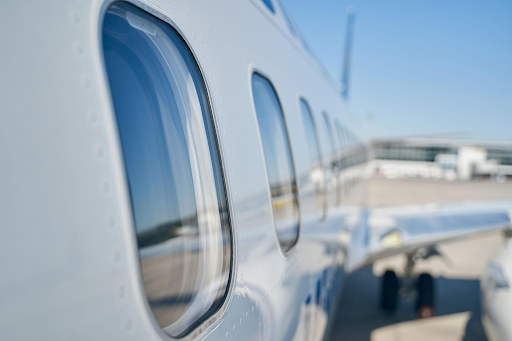
What Really Happens When an Aircraft Window Breaks Mid-Flight? The Truth Behind One of Flying’s Biggest Fears
What really happens when an aircraft window breaks mid-flight? It’s one of the most frightening questions many passengers ask.
Why an Aircraft Window Breaks Mid-Flight Is So Rare
Imagine settling into your seat just minutes after take-off.
The engines are climbing steadily. The seatbelt sign is still on. Everything feels routine.
Then, without warning, a loud explosion shakes the aircraft.
A cabin window shatters.
Air rushes out with incredible force.
Get the SkypropreAir Free Travel Pack
Plan smarter, choose a better seat and enjoy a more comfortable long-haul journey. Enter your details below to receive the Travel Pack.
Loose objects begin flying through the cabin.
Passengers scream.
One traveller is violently pulled toward the opening, surviving only because of his fastened seatbelt and the quick actions of nearby passengers.
Recent reports described a passenger being pulled toward a damaged aircraft window during a Ryanair flight. While investigators continue examining exactly what happened, the incident highlights an important question: what really happens when an aircraft window breaks?
But beyond the headlines lies a much bigger question.
What actually happens when an aircraft window breaks at 35,000 feet?
The answer reveals one of aviation’s most remarkable engineering achievements and why commercial flying remains one of the safest ways to travel.
Planning your next flight? Compare fares and routes with Aviasales to find the best value for your journey.
Why Aircraft Windows Are Much Stronger Than They Look
Most passengers think aircraft windows are made from ordinary glass.
They’re not.
Aircraft windows are built from multiple layers of specially engineered acrylic materials designed to withstand enormous pressure differences between the cabin and the outside atmosphere.
Each layer serves a different purpose.
- An outer structural pane bears most of the pressure.
- A middle pane provides backup protection.
- An inner pane protects passengers from touching the structural layers.
Together, these layers can endure thousands of pressurization cycles over many years.
Window failures are therefore extremely rare.
The Hidden Force Inside Every Aircraft Cabin
At cruising altitude, the air outside an aircraft is far too thin for humans to breathe comfortably.
That’s why aircraft cabins are pressurized.
Inside the cabin, the pressure is maintained at the equivalent of being approximately 6,000 to 8,000 feet above sea level even when the aircraft is cruising above 35,000 feet.
This difference creates enormous pressure against the aircraft’s fuselage.
Every door.
Every panel.
Every window.
Every rivet.
Everything is constantly engineered to contain that pressure safely.
What Is Rapid Decompression?
When a window or part of the aircraft structure suddenly fails, cabin air escapes almost instantly.
This is called rapid decompression.
Passengers often describe hearing:
- a loud bang
- rushing wind
- flying debris
- sudden fog inside the cabin
- a dramatic drop in temperature
The cabin becomes extremely noisy within seconds.
Yet the aircraft itself usually remains fully controllable.
Are People Really Sucked Out of the Aircraft?
Hollywood has exaggerated this for decades.
The reality is more complicated.
The escaping air creates a powerful airflow toward the opening.
Anyone sitting immediately beside a large opening could be pulled toward it, particularly if they are not wearing a seatbelt.
However, passengers seated elsewhere are not suddenly pulled across the cabin.
The airflow lasts only a short time until cabin pressure equalizes.
This is why aviation authorities always encourage passengers to keep their seatbelts fastened even when the seatbelt sign is switched off.
SkypropreAir Tip: Keeping your seatbelt loosely fastened throughout the flight is one of the simplest ways to protect yourself from unexpected turbulence or decompression.
Related Reading: Why Flight Attendants Sit on Their Hands During Takeoff and Landing
Why Oxygen Masks Drop Automatically
One of the first things passengers notice during decompression is the sudden appearance of oxygen masks.
Many people assume they’re connected to large oxygen tanks.
They’re not.
Most commercial aircraft use chemical oxygen generators, which begin producing oxygen automatically when activated.
Each mask provides enough oxygen for the aircraft to descend to a safer altitude where normal breathing becomes possible.
This is why flight attendants always repeat the famous instruction:
“Put on your own oxygen mask before helping others.”
You have only a limited amount of useful consciousness at very high altitudes without supplemental oxygen.
Related Reading: The Hidden Science Behind Aircraft Oxygen Masks
Travel with peace of mind. Protect your trip against unexpected emergencies with SafetyWing Travel Insurance before you fly.
Why Pilots Descend So Quickly
One of the most dramatic parts of a decompression emergency is the rapid descent.
Passengers sometimes mistake it for a crash.
It isn’t.
Pilots immediately begin an emergency descent to reach breathable altitudes typically below 10,000 feet as quickly and safely as possible while coordinating with air traffic control.
The aircraft remains under full control throughout the maneuver.
It may feel alarming, but it’s a well-practiced emergency procedure.
Can an Engine Failure Cause a Window to Break?
Although uncommon, yes.
In some cases, fragments from an uncontained engine failure can strike the aircraft’s fuselage or windows.
Modern jet engines are designed with containment systems to prevent debris from escaping.
However, aviation history has shown that extremely rare failures can still occur.
When they do, investigators examine every component in detail to determine exactly what happened and how similar events can be prevented.
Every investigation contributes to making future flights even safer.
Why Seatbelts Save Lives
One of the most important lessons from decompression incidents is surprisingly simple.
Seatbelts matter.
Many passengers remove them once the seatbelt sign turns off.
Yet unexpected turbulence, sudden descents, or decompression events can happen without warning.
A loosely fastened seatbelt dramatically reduces the risk of serious injury.
It’s one of aviation’s simplest and most effective safety devices.
Related Reading: What Really Happens During an Aircraft Stall?
Why Cabin Windows Have Tiny Holes
Look closely at an aircraft window next time you fly.
You’ll notice a tiny hole near the bottom.
It’s called a bleed hole.
Its purpose is to equalize pressure between the different window panes while preventing condensation and reducing stress on the window assembly.
That tiny hole plays a surprisingly important role in keeping the window structurally sound.
How Rare Are Aircraft Window Failures?
Considering the millions of commercial flights that operate every year, aircraft window failures remain exceptionally uncommon.
Commercial aviation is built around multiple layers of redundancy:
- rigorous inspections
- scheduled maintenance
- structural fatigue monitoring
- certification testing
- continuous safety improvements
Each incident is thoroughly investigated, and the findings often lead to new engineering standards that make flying even safer.
The Bigger Picture: Every Incident Improves Aviation Safety
When passengers hear about a shattered aircraft window, it’s easy to imagine the worst.
Yet these rare events demonstrate something remarkable about aviation.
Pilots follow established emergency procedures.
Cabin crew manage passengers under immense pressure.
Aircraft are engineered with multiple safety systems.
Investigators analyze every detail afterward to ensure similar incidents become even less likely.
The result is an industry that continuously learns from every event.
That’s one of the reasons commercial aviation continues to be among the safest forms of transportation in the world.
Final Thoughts
A broken aircraft window is one of the most dramatic emergencies imaginable.
But it also showcases the extraordinary engineering, training, and safety systems that protect passengers every day.
The next time you look out of that small oval window, remember:
It’s far more than just a view.
It’s one of the most carefully engineered components on the aircraft.
Frequently Asked Questions
Can an aircraft window really break during flight?
Yes, but it is extremely rare. Aircraft windows are built with multiple reinforced layers designed to withstand immense pressure differences.
Would everyone be sucked out if a window broke?
No. The airflow is strongest near the opening, and passengers wearing seatbelts are significantly better protected. Hollywood often exaggerates this scenario.
Why do oxygen masks only work for a short time?
The masks provide enough oxygen for the aircraft to descend to a safe altitude where passengers can breathe normally without supplemental oxygen.
Become a smarter traveller. Browse more SkypropreAir guides to understand the science, safety, and comfort behind modern aviation.
- The Hidden Science Behind Aircraft Oxygen Masks
- Why Flight Attendants Sit on Their Hands During Take-off
- How Aircraft Black Boxes Help Investigators Solve Aviation Mysteries
- Why Do Airplanes Shake During Turbulence?