
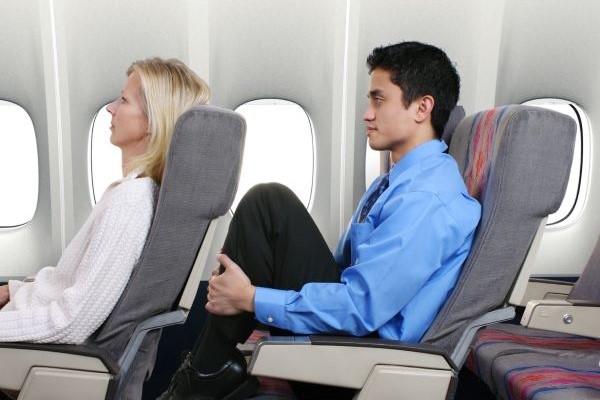
How to Handle the Person in Front Reclining Their Seat
(A Calm, Smart Strategy for Long-Haul Comfort)
Reclining seats are one of the most common friction points in economy cabins. On long-haul flights, where space is already limited, the moment the seat in front tilts back can feel like your comfort just disappeared.
But here’s the reality: reclining isn’t the problem — how you respond to it is.
Let’s break this down like a seasoned long-haul traveller.
Why Seat Reclining Feels Worse Than It Is
Modern economy seats typically recline 2–5 inches, but psychologically it feels much bigger because:
Get the SkypropreAir Free Travel Pack
Plan smarter, choose a better seat and enjoy a more comfortable long-haul journey. Enter your details below to receive the Travel Pack.
-
Your personal space shrinks instantly
-
Your screen distance changes
-
Your tray table angle becomes awkward
Key insight: It’s not just physical discomfort — it’s the loss of control.
Step 1: Adjust Before You React
Your first instinct might be frustration. Resist that.
Instead:
-
Reposition your screen or device immediately
-
Lower your tray slightly (if adjustable)
-
Shift your posture — sit slightly forward or recline your own seat a bit
Small adjustments often recover 70–80% of your comfort without confrontation.
Step 2: Use the “Reciprocal Recline” Strategy
This is one of the most effective (and least talked about) strategies:
-
If the person in front reclines → you recline slightly too
-
This restores your body angle and space perception
Why it works:
-
Keeps spinal alignment natural
-
Reduces the “cramped” feeling
-
Prevents neck strain
SkypropreAir Tip: Recline early in the flight (especially on overnight routes) — it sets a “comfort baseline” for everyone.
Step 3: Timing Is Everything
Not all reclines are equal.
-
Acceptable times: After meal service, during cruise, overnight
-
Frustrating times: During meals or when you’re actively using your tray
If it happens at a bad moment:
-
Wait a minute (they may adjust back)
-
If not, a polite request is completely acceptable
Step 4: How to Politely Ask (If Needed)
Use simple, calm language:
“Hi, would you mind bringing your seat up slightly while I finish eating?”
This works surprisingly well because:
-
Most people aren’t aware of the impact
-
Tone matters more than words
Avoid:
-
Tapping aggressively
-
Complaining loudly
-
Passive-aggressive reactions
Step 5: Pre-Flight Strategy (The Real Game Changer)
The best solution happens before you board:
-
Choose seats with more buffer:
-
Exit rows
-
Bulkhead seats
-
Seats behind non-reclining rows
-
-
Check aircraft type (some offer better spacing):
These aircraft are typically designed with better cabin pressure and ergonomics, making recline feel less intrusive.
Chudi’s Seat Strategy
If there’s one rule to remember:
Don’t fight the recline — manage your environment around it.
Passengers who stay comfortable long-haul aren’t the ones with the most space —
they’re the ones who adapt fastest and smartest.
Final Take
Seat reclining isn’t going away. In fact, on long-haul flights, it’s essential for rest.
The winning approach is:
-
Adjust first
-
Mirror strategically
-
Communicate politely (only when necessary)
-
Plan your seat before the flight
That’s how you stay in control — even when the seat in front isn’t.
Suggested FAQs
1. Is it rude for someone to recline their seat on a plane?
No — it’s a built-in feature. However, reclining during meals or abruptly can be inconsiderate.
2. Should I recline my seat too when the person in front does?
Yes, slightly. It helps restore your comfort and posture balance.
3. What’s the best seat to avoid recline issues completely?
Exit rows, bulkhead seats, or seats behind non-reclining rows are your best options.