
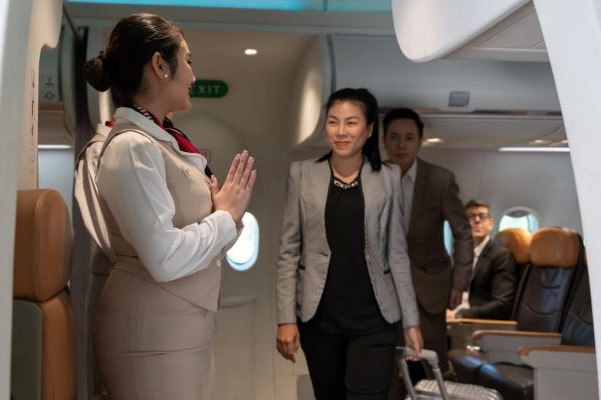
The Hidden Reason Flight Attendants Ask Passengers to Review Emergency Exits
The aircraft door has just closed. The cabin lights glow softly. Passengers are settling into their seats, scrolling through phones, adjusting pillows, and preparing for another routine flight.
Then a flight attendant approaches a passenger seated near an emergency exit row.
“Are you willing and able to assist in the event of an emergency?”
Most people barely look up before saying yes.
A few seconds later, the safety briefing begins. Flight attendants point toward emergency exits and ask everyone to review their locations.
Get the SkypropreAir Free Travel Pack
Plan smarter, choose a better seat and enjoy a more comfortable long-haul journey. Enter your details below to receive the Travel Pack.
For many travelers, it feels like a formality.
A legal requirement.
A routine script repeated thousands of times every day.
But hidden behind that simple request is a reality few passengers ever consider.
If something goes terribly wrong at 35,000 feet, the difference between life and death may depend on whether passengers remember what they were told in those few moments before takeoff.
And that is precisely why flight attendants insist on it.
The Chilling Reality Airlines Hope Never Happens
Commercial aviation is extraordinarily safe.
Millions of people fly every day without incident.
Yet aviation safety is built on a principle that may seem strange:
Airlines prepare constantly for events they hope will never occur.
Every emergency procedure, every safety card, every exit sign, and every crew briefing exists because history has shown that when emergencies happen, they happen fast.
Very fast.
In some aircraft accidents, passengers have had less than 90 seconds to evacuate.
That means there is no time for confusion.
No time to search for instructions.
No time to wonder where the nearest exit is located.
The preparation must already be in your mind before the emergency begins.
That is the hidden reason flight attendants repeatedly ask passengers to review emergency exits.
They are helping passengers build mental familiarity before stress takes over.
Related: The Hidden Reason You Must Put Your Own Oxygen Mask On First and What Really Happens During an Airline Emergency Evacuation.
Your Brain Changes During an Emergency
One of the least understood aspects of aviation safety is human psychology.
When people face sudden danger, the brain often reacts in unexpected ways.
Heart rate increases.
Adrenaline surges.
Decision-making becomes slower.
Memory can become unreliable.
People who confidently believe they will react perfectly during an emergency often behave very differently when real fear appears.
This phenomenon has been observed in numerous emergency situations worldwide.
Passengers may freeze.
They may follow crowds.
They may forget instructions they heard only minutes earlier.
Flight attendants know this.
That is why they ask passengers to locate exits before takeoff.
The goal is simple:
Reduce the amount of thinking required during a crisis.
If passengers already know where exits are located, precious seconds can be saved.
Travel Protection Recommendation
If you travel internationally frequently, consider comprehensive travel insurance before departure. Medical emergencies, delays, and unexpected disruptions can happen anywhere. Compare plans from SafetyWing or your preferred travel insurance provider before your next trip.
The Dangerous Instinct Most Passengers Have
Here is something surprising.
During many emergencies, people instinctively try to leave the way they entered.
Even if another exit is closer.
Even if another exit is safer.
Even if another exit is completely unobstructed.
Human beings naturally gravitate toward familiar paths.
This instinct is powerful.
Researchers studying evacuations have repeatedly found that people often head toward known routes rather than the nearest escape route.
Inside an aircraft, that behavior can become dangerous.
A passenger seated near the wing may be only a few feet from an emergency exit but still attempt to move toward the front door because it feels familiar.
By encouraging passengers to identify exits before departure, flight attendants are helping counteract this instinct.
They want passengers to remember that the closest exit may not be the one they boarded through.
For travelers who experience anxiety during turbulence or emergencies, you may also find our article The Hidden Reason Turbulence Feels More Terrifying Than It Really Is helpful.
Why Counting Rows Could Save Your Life
Many experienced travelers quietly practice a safety habit.
After sitting down, they count the number of rows between their seat and the nearest exit.
Some count forward.
Some count backward.
Why?
Because visibility may disappear during an emergency.
Smoke can fill a cabin.
Lighting can fail.
Passengers may struggle to see clearly.
In those situations, knowing that the nearest exit is “five rows ahead” can become incredibly valuable.
Flight attendants often recommend this awareness because emergencies are not always neat and orderly.
Conditions can change rapidly.
Passengers who know where exits are located may have a significant advantage over those who do not.
Related Reading: The Safety Jacket Under Your Seat Most Passengers Never Think About.
The Extraordinary Responsibility of Exit Row Passengers
When flight attendants speak directly to passengers seated in exit rows, they are doing far more than checking a box.
Those seats carry responsibility.
An exit row passenger may be required to:
-
Open a heavy emergency exit.
-
Assess outside conditions.
-
Help direct evacuating passengers.
-
Follow crew instructions immediately.
-
Assist others moving toward the exit.
That responsibility is significant.
During an evacuation, every second matters.
A delayed exit opening can create dangerous bottlenecks.
That is why flight attendants carefully verify that exit-row passengers understand their duties.
The conversation may feel brief.
But its purpose is serious.
Airlines need confidence that those seated beside emergency exits can act quickly if necessary.
Comfort Upgrade Tip
Many airlines allow travelers to reserve exit-row seats for additional legroom. Before booking, compare fares and seating options through your preferred flight search platform. The extra space can make a significant difference on long-haul flights.
The 90-Second Rule Most Travelers Never Hear About
One of aviation’s most impressive safety standards is the evacuation requirement.
Aircraft manufacturers and airlines must demonstrate that a fully loaded aircraft can be evacuated within 90 seconds using only half of the available exits.
Think about that for a moment.
Hundreds of passengers.
Limited exits.
Dark conditions.
Potential obstacles.
And everyone must be out within a minute and a half.
This requirement exists because post-crash fires can spread rapidly.
Survival often depends on how quickly people can leave the aircraft.
Every safety briefing supports this goal.
Every reminder about emergency exits supports this goal.
Every passenger who pays attention improves the chances of a successful evacuation.
To better understand cabin safety systems, read Why Seeing an Oxygen Mask Can Trigger Instant Anxiety.
Flight Attendants Are Watching More Than You Realize
While passengers listen—or pretend to listen—to the safety demonstration, flight attendants are observing the cabin.
They watch for:
-
Distracted passengers.
-
Exit-row readiness.
-
Potential mobility concerns.
-
Safety compliance issues.
-
Passenger behavior.
The briefing serves another purpose beyond education.
It helps crew members identify who may need assistance during an emergency and who may be able to provide help.
In many ways, the safety demonstration is also a quick assessment of the cabin itself.
Every flight attendant understands that if something unexpected happens, those observations could become important.
You may also enjoy What Flight Attendants Notice About You Within Seconds of Boarding.
The Few Seconds That Could Matter Most
Most flights end exactly as expected.
The aircraft lands safely.
Passengers collect their belongings.
The safety briefing is forgotten before reaching baggage claim.
Yet every flight attendant knows a simple truth.
Safety procedures are not designed for ordinary moments.
They are designed for extraordinary ones.
The request to review emergency exits may seem insignificant.
A small interruption before takeoff.
A routine announcement lost among dozens of travel rituals.
But hidden inside that request is decades of aviation safety experience, human psychology research, and lessons learned from past emergencies.
Flight attendants do not ask passengers to review emergency exits because they expect something bad to happen.
They ask because if the unexpected ever does happen, those few seconds of preparation could become the most important seconds of the entire flight.
And that is a reason worth paying attention to.
FAQs
Why do flight attendants ask passengers seated in exit rows if they are willing to help?
Exit-row passengers may need to assist during an evacuation by opening exits, following crew instructions, and helping direct other passengers to safety.
Should I count the rows between my seat and the nearest emergency exit?
Yes. Many aviation safety experts recommend it because smoke, darkness, or confusion during an emergency can make exits difficult to locate.
Are safety briefings really necessary for frequent flyers?
Absolutely. Aircraft layouts, emergency equipment, and evacuation procedures vary. Reviewing safety information on every flight ensures passengers remain familiar with their surroundings.