
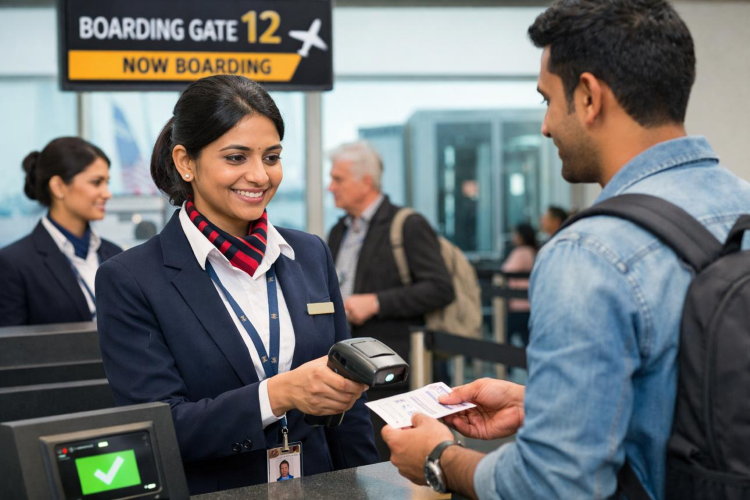
The Boarding Process Is More Psychological Than Most Travelers Realise
You Haven’t Even Taken Off—Yet Your Brain Is Already Being Controlled
The boarding announcement echoes across the terminal.
Within seconds, people who have been comfortably sitting for an hour suddenly leap to their feet.
Some begin queuing immediately.
Others quietly worry they might lose overhead bin space.
A few check their boarding passes for the fifth time.
Get the SkypropreAir Free Travel Pack
Plan smarter, choose a better seat and enjoy a more comfortable long-haul journey. Enter your details below to receive the Travel Pack.
Children become restless.
Business travelers instinctively move toward the gate.
Nothing dangerous has happened.
Nothing urgent has changed.
Yet nearly everyone behaves as though every second suddenly matters.
Why?
Because boarding an aircraft isn’t simply an operational process.
It’s an extraordinary psychological event that influences how hundreds of strangers think, feel, and behave—all within a few minutes.
The airlines know it.
Airport designers know it.
Behavioral scientists know it.
Most passengers never realise it.
Your Brain Hates Uncertainty
Humans naturally seek certainty.
Boarding creates the exact opposite.
Passengers don’t know whether there will be enough luggage space.
They don’t know whether someone is sitting in their seat.
They don’t know how long they’ll be standing in the aisle.
They don’t know if they’ll delay everyone behind them.
This uncertainty activates mild stress responses.
The result?
People move earlier than necessary.
Standing in line feels like taking control—even when boarding will not begin for several minutes.
Psychologists call this an illusion of control.
Simply joining the queue reduces anxiety, even if boarding has not started.
Related Reading: The Airline Secret Most Passengers Discover Too Late explores how hidden passenger behaviors influence the entire travel experience.
Why Everyone Wants to Board Early
Ask most travelers why they rush.
Many will say:
“I just want to get settled.”
That’s only part of the story.
Research into passenger behavior consistently finds several hidden motivations:
-
Fear of running out of overhead bin space.
-
Desire to avoid walking against a crowded aisle.
-
Preference for sitting rather than waiting.
-
Concern about being separated from travel companions.
-
Social pressure from watching everyone else queue.
Very few people admit another powerful influence:
Nobody wants to feel left behind.
Humans evolved in groups.
Being among the last often feels psychologically uncomfortable—even when there is no genuine disadvantage.
Travel Smarter
If you’re planning your next journey, compare fares across hundreds of airlines before booking. Use SkypropreAir’s recommended flight search partner (Aviasales) to find competitive prices and flexible travel options.
The Invisible Power of Social Proof
Imagine only three people standing near the boarding gate.
Most passengers remain seated.
Now imagine thirty people standing.
Suddenly everyone starts moving.
Nothing changed except the behavior of others.
This phenomenon is called social proof.
People assume the crowd knows something they don’t.
Perhaps boarding has started.
Perhaps luggage space is disappearing.
Perhaps they’re about to miss their turn.
The crowd itself becomes the signal.
This is why one small queue can rapidly become a long one within seconds.
The Fear of Missing Out Starts Before Takeoff
FOMO doesn’t only exist on social media.
It appears at airport gates too.
Passengers often fear missing:
-
Overhead baggage space
-
Preferred walking pace
-
Time to settle into their seat
-
Priority treatment
Ironically, boarding five minutes earlier rarely changes arrival time.
Everyone departs together.
Yet emotionally, boarding early feels like gaining an advantage.
Behavioral economists call this a perceived competitive benefit.
Related Reading: If you’ve ever wondered why passengers become anxious before departure, read The Most Dangerous Phase of Every Flight to understand what really happens during takeoff.
Why Boarding Groups Actually Reduce Stress
Many passengers dislike boarding groups.
Yet they exist for more than operational efficiency.
They reduce psychological overload.
Instead of hundreds of people making simultaneous decisions, passengers receive a simple instruction:
“Group Three.”
The brain prefers clear rules.
This decreases uncertainty.
Even when travelers complain about the process, structured boarding generally creates more order than allowing everyone to board at once.
Overhead Bin Space Changes Everything
Cabin baggage has transformed boarding psychology.
Years ago, passengers routinely checked luggage.
Today many try to carry everything onboard.
Suddenly, overhead bins become valuable territory.
This scarcity changes behavior.
Passengers rush.
They watch others closely.
Some even place small bags sideways to occupy extra space.
Others become frustrated when bins near their seat are already full.
The fear isn’t irrational.
If the bins fill up, bags may need to be checked at the last minute, creating inconvenience at the destination.
Scarcity is one of the strongest psychological motivators in human behavior.
Recommended Travel Protection
Unexpected delays, lost baggage and medical emergencies can happen on any trip.
Before you fly, consider protecting your journey with SafetyWing Travel Insurance, SkypropreAir’s recommended travel insurance partner for international travelers and digital nomads.
Why Window Seats Usually Board First
Many airlines use boarding methods that load window seats before aisle seats.
This isn’t random.
It reduces aisle congestion because passengers seated by the window are less likely to force others to stand up later.
From a psychological perspective, it also creates smoother passenger flow.
Less stopping.
Less waiting.
Less visible frustration.
Passengers may never notice these design choices, but they significantly influence the mood inside the cabin.
Related Reading: Discover Why Flight Attendants Sit on Their Hands During Takeoff to learn another fascinating aviation procedure most passengers never notice.
The Hidden Stress of Walking Down the Aircraft Aisle
Many travelers experience subtle anxiety while walking to their seat.
Everyone appears to be watching.
People behind are waiting.
Finding the correct row suddenly feels difficult.
Placing luggage into the overhead bin becomes a performance.
Behavioral psychologists refer to this as evaluation apprehension—the feeling that others are judging your actions.
Even experienced travelers aren’t completely immune.
This is one reason cabin crew encourage passengers to keep moving until they reach their assigned row.
Why Flight Attendants Smile Even During Busy Boarding
That welcoming smile serves an important purpose.
Cabin crew aren’t simply being polite.
They’re regulating the emotional atmosphere.
Humans subconsciously mirror the emotions of people around them.
A calm, confident greeting reassures passengers that everything is proceeding normally.
It lowers visible tension before departure.
This emotional management becomes even more valuable when flights are delayed or operating at full capacity.
A composed crew often helps prevent stress from spreading through the cabin.
Related Reading: You may also enjoy The Hidden Science Behind Aircraft Oxygen Masks, which reveals another little-known aspect of passenger safety psychology.
Music, Lighting and Cabin Temperature Are Carefully Considered
Many airlines subtly influence passenger mood using environmental psychology.
Soft lighting encourages relaxation.
Background music reduces perceived waiting time.
Comfortable temperatures help limit irritation.
These details may seem insignificant individually.
Together they shape the emotional experience before the aircraft even pushes back from the gate.
Airlines know that calmer passengers usually board faster and interact more positively with both crew and fellow travelers.
Frequent Flyers Think Differently
Experienced travelers often display noticeably different boarding behavior.
They understand that boarding ten minutes earlier rarely changes the outcome.
Many remain seated until their group is actually called.
They prepare passports and boarding passes beforehand.
They organise cabin bags before reaching the aircraft door.
These small habits reduce stress for themselves—and for everyone behind them.
Confidence replaces urgency.
Experience replaces anxiety.
The Future of Boarding Will Be Even More Personal
Artificial intelligence and biometric technology are already changing airport operations.
Future boarding systems may analyse passenger flow in real time.
Digital boarding notifications could reduce crowding near gates.
Smart baggage tracking may ease fears about overhead space.
Facial recognition could shorten identity checks.
As technology evolves, boarding may become less about standing in queues and more about seamless movement.
But one thing is unlikely to change:
Human psychology.
People will always seek certainty, fairness and reassurance when entering an aircraft filled with strangers.
Understanding those emotions may be the key to making flying feel calmer for everyone.
Final Thoughts
The next time you hear your boarding group announced, pause before joining the crowd.
Ask yourself one simple question:
Are you boarding because you genuinely need to…
Or because your brain believes everyone else knows something you don’t?
For millions of travelers every day, the answer is surprisingly psychological.
Once you understand the hidden forces shaping boarding behavior, you’ll never look at an airport gate the same way again.
Join the Conversation
Have you ever stood in line to board a flight, only to realise later that there was no real advantage to rushing? Or do you believe boarding early is always worth it? Share your experience in the comments—we’d love to hear your perspective.
Frequently Asked Questions
Why do passengers rush to board airplanes even when seats are assigned?
Most passengers are motivated by concerns over overhead bin space, social pressure, fear of missing out and the psychological desire to reduce uncertainty.
Does boarding earlier make the flight leave sooner?
No. Boarding earlier rarely changes the departure time for individual passengers, but orderly boarding helps airlines load the aircraft more efficiently.
What is the biggest psychological trigger during boarding?
Behavioral experts point to a combination of social proof, scarcity of overhead bin space, fear of missing out and the illusion of control as the strongest psychological influences on passenger behavior.