
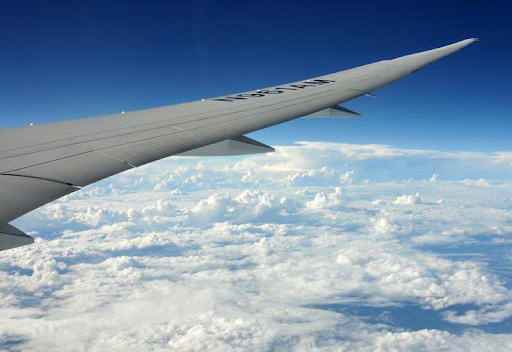
Boeing 787 Wing Flex: Why Dreamliner Wings Bend So Much
Boeing 787 Wing Flex is One of the Most Impressive Engineering Innovations in Modern Commercial Aviation.
They Look Like They’re About to Break…
You’re cruising at 38,000 feet.
The seatbelt sign is off.
The engines are humming quietly.
Then you glance out of the window of a Boeing 787 Dreamliner. The Boeing 787 wings are moving
Not just vibrating—but bending upward by what looks like several metres.
Get the SkypropreAir Free Travel Pack
Plan smarter, choose a better seat and enjoy a more comfortable long-haul journey. Enter your details below to receive the Travel Pack.
For a split second, panic sets in.
“Is this normal?”
“Should aircraft wings really bend this much?”
“What if they snap?”
If you’ve ever flown on a Boeing 787 Dreamliner, you’re not alone. Thousands of passengers experience this moment on their first Dreamliner flight.
The surprising truth is this:
Those dramatically bending wings are doing exactly what Boeing designed them to do. Boeing 787 wing flex is one of the aircraft’s most distinctive engineering features and often surprises first-time passengers.
In fact, that flexibility is one of the reasons the Boeing 787 is considered one of the safest and most advanced commercial aircraft ever built.
Related Reading: If turbulence makes you nervous, don’t miss our guide to Why Do Airplanes Shake During Turbulence? to understand what’s really happening when the cabin starts to shake.
Why Aircraft Wings Need to Bend
Many people assume that stronger means stiffer.
In aviation, that’s not always true.
Aircraft wings constantly experience enormous forces during flight.
As the engines generate thrust and the wings produce lift, they support an aircraft weighing hundreds of tonnes while encountering changing air currents, turbulence, and gusts.
If the wings were completely rigid, these forces would transfer directly into the structure, increasing stress and fatigue over time.
Instead, engineers design wings to flex much like a tree sways in strong winds instead of snapping.
That flexibility absorbs energy rather than resisting it.
This is one reason modern airliners can safely handle conditions that would seem alarming to passengers.
Many first time passengers are surprised by Boeing 787 wing flex, but it is completely normal part of the aircraft’s design.
SkypropreAir Tip: Understanding how aircraft are designed to cope with turbulence can make your next flight much less stressful.
The Boeing 787 Changed Aircraft Wing Design
The Boeing 787 Dreamliner represented one of the biggest technological leaps in modern aviation.
Unlike older aircraft that relied mainly on aluminium, approximately half of the 787’s primary structure is made from advanced carbon-fibre reinforced composite materials.
These composites are:
- Lighter
- Stronger
- More resistant to corrosion
- Better at handling repeated stress
- Naturally more flexible
The result is a wing that can safely bend much farther than traditional aluminium wings without compromising structural integrity.
Engineers designed Boeing 787 wing flex to absorb aerodynamic forces while reducing stress on the aircraft’s structure.
✈️ Planning to Fly on a Boeing 787?
Whether you’re flying to New York, Dubai, Tokyo, or Sydney, compare flight prices before booking to find the best deal for your Dreamliner journey.
➡️ Compare the latest flight prices here. Aviasales
How Much Can a Boeing 787 Wing Bend?
This is where things become truly remarkable.
During normal flight, a Boeing 787’s wingtips can move several metres upward as lift increases.
During turbulence, they may flex even more.
Before the aircraft was certified, Boeing engineers pushed the wings far beyond anything they would experience in airline service.
In one famous certification test, engineers loaded the wings until they bent to approximately 150% of their maximum expected operational load before structural failure testing concluded.
That means the aircraft is designed with substantial safety margins well beyond anything passengers experience during normal flights.
The remarkable Boeing 787 wing flex helps improve fuel efficiency by allowing the wings to maintain an optimal aerodynamic shape.
Why Wing Flex Makes Flying Safer
Wing flexibility isn’t simply an engineering curiosity.
It provides several real-world safety benefits.
1. It Reduces Structural Stress
Instead of resisting every gust of wind, flexible wings absorb loads gradually.
This reduces fatigue throughout the aircraft structure and extends its service life.
2. It Improves Turbulence Performance
During turbulence, Boeing 787 wing flex allows the wings to respond smoothly to changing air currents instead of resisting them.
Rather than transferring every bump directly into the fuselage, some of the energy is absorbed through controlled wing movement.
Passengers may still feel turbulence, but the Boeing 787 wing flex itself is better equipped to manage these forces.
For a deeper understanding of what pilots experience during rough air, check out our article The Hidden Science Behind Turbulence and Why Aircraft Rarely Get Damaged by It.
3. It Improves Fuel Efficiency
A wing that flexes slightly can maintain a more efficient aerodynamic shape throughout different phases of flight.
Reduced drag means lower fuel consumption.
This is one reason the Boeing 787 burns significantly less fuel than many aircraft it replaced.
4. It Increases Aircraft Durability
Every flight subjects an aircraft to thousands of loading cycles.
Allowing the structure to flex reduces long-term fatigue damage, helping the Boeing 787 wing flex remain reliable over decades of operation.
Does Wing Flex Mean the Aircraft Is in Danger?
Quite the opposite.
Visible wing movement is usually evidence that the aircraft is functioning exactly as engineers intended.
Commercial aircraft are certified to withstand loads far beyond those encountered during routine airline operations.
Even severe turbulence rarely approaches the structural limits established during certification testing.
Pilots monitor weather continuously and avoid conditions that could expose the aircraft to unnecessary stress.
Passengers may feel uncomfortable during turbulence, but the Boeing 787 wing flex is operating within a carefully engineered safety envelope.
If you’re a nervous flyer, you’ll also enjoy our article The Most Dangerous Phase of Every Flight—And Why It’s Still Safer Than You Think.
🛡️ Protect Every Trip
Even though modern aircraft are exceptionally safe, travel disruptions can happen.
Protect yourself against medical emergencies, cancellations, delays, and lost baggage before your next journey.
➡️ Get affordable travel insurance here. SafetyWing
Why the Wings Seem to Move More Than Older Aircraft
Many travellers notice that the Boeing 787’s wings appear more dramatic than those of older aircraft such as the Boeing 767 or Airbus A320.
That’s because they genuinely are.
The Dreamliner’s composite wing was intentionally designed to flex more than earlier aluminium designs.
The movement is also easier to notice because of the aircraft’s exceptionally large passenger windows, which provide an unobstructed view of the wing throughout the flight.
What appears alarming is actually a visible demonstration of modern aerospace engineering.
Interested in how aircraft have evolved? Read How Airbus Went from Underdog to Aviation Giant to see how modern engineering has transformed commercial aviation.
What About the Engines?
Some passengers also notice that the engines seem to move slightly during turbulence.
This is normal as well.
The engines are attached to the wings by specially engineered pylons that allow controlled movement.
This flexibility helps absorb vibrations and loads rather than concentrating stress in one location.
Every component works together to distribute forces safely throughout the aircraft.
The Future of Aircraft Wings
The Boeing 787 is only the beginning.
Aircraft manufacturers are already exploring even more advanced wing technologies, including:
- Adaptive wing shapes
- Folding wingtips
- Active load-control systems
- Morphing wing concepts inspired by birds
Future aircraft may feature wings that adjust continuously during flight to maximise efficiency while further improving passenger comfort.
The dramatic wing flex seen on today’s Dreamliner could become even more sophisticated in the next generation of airliners.
Learn more about tomorrow’s aviation innovations in Future Airplanes Could End Turbulence as We Know It.
The Next Time You See the Wing Bend… Smile
It’s easy to mistake movement for weakness.
In reality, the opposite is true.
The Boeing 787 wing flex demonstrates decades of aerospace innovation, materials science, and rigorous safety testing.
Every graceful bend is helping the aircraft absorb forces, improve efficiency, and protect everyone on board.
The next time you notice Boeing 787 wing flex, you’ll know you’re watching sophisticated aerospace engineering working exactly as intended.
You’re not witnessing something going wrong.
You’re watching one of the smartest engineering achievements in modern aviation doing exactly what it was designed to do.
Frequently Asked Questions
Can Boeing 787 wings really bend without breaking?
Yes. The wings are built from advanced carbon-fibre composites and are certified to withstand loads far beyond those encountered in normal airline operations.
Does wing flex make turbulence safer?
Yes. Flexible wings help absorb and distribute aerodynamic forces, reducing stress on the aircraft and contributing to smoother handling in turbulent air.
Are Boeing 787 wings more flexible than older aircraft?
Yes. The Dreamliner’s composite wing was intentionally designed to flex more than many traditional aluminium wings, improving efficiency, durability, and overall performance.