
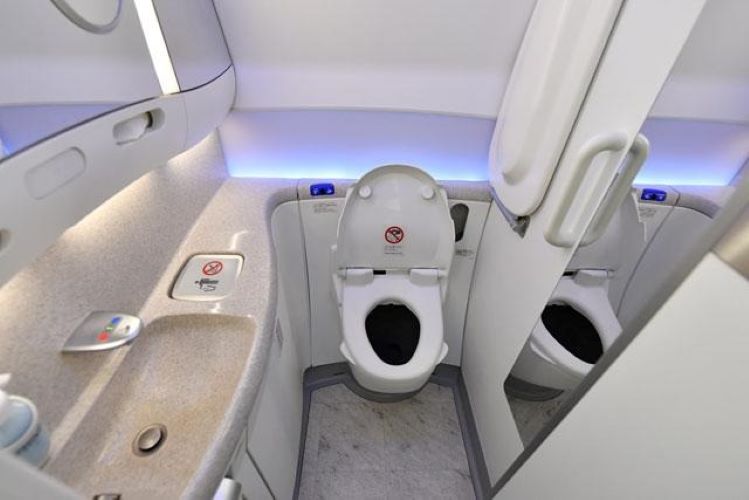
The Strange Reason Airplane Toilets Flush So Loudly
It Sounds Like the Toilet Is Trying to Suck the Cabin Away…
You’re settling into your seat on a long-haul flight when suddenly…
WHOOSH!
A deafening roar erupts from the lavatory.
For a split second, it sounds powerful enough to pull someone through the floor.
If you’ve ever jumped at that sound, you’re certainly not alone.
Get the SkypropreAir Free Travel Pack
Plan smarter, choose a better seat and enjoy a more comfortable long-haul journey. Enter your details below to receive the Travel Pack.
Millions of passengers wonder the same thing every year:
Why do airplane toilets flush so incredibly loudly?
Is the aircraft dumping waste into the sky?
Is there a giant vacuum under the cabin?
Could something actually get pulled into the toilet?
The answer is far stranger—and far more fascinating—than most travelers realize.
That dramatic flush isn’t a design flaw.
It’s one of aviation’s smartest engineering solutions.
Related Reading: Why You Should Never Wear Shorts on an Airplane
The Loud Flush Isn’t About Power—It’s About Air
Many people assume airplane toilets use huge amounts of water.
They don’t.
In fact, modern commercial aircraft use very little water compared with household toilets.
Instead, they rely on an incredibly powerful vacuum system.
Rather than pushing waste downward with gallons of water, the system creates a pressure difference that rapidly pulls everything into sealed waste tanks.
That sudden movement of air is what creates the famous roar.
You’re not hearing water.
You’re hearing thousands of litres of air rushing through specially designed pipes in less than a second.
Why Airplanes Can’t Use Normal Toilets
Imagine carrying enough water for 300 passengers to flush normally during a 12-hour flight.
It would add several tonnes of unnecessary weight.
Extra weight means:
-
Higher fuel consumption
-
Increased operating costs
-
Lower aircraft efficiency
-
Reduced payload for passengers and cargo
Every kilogram matters in aviation.
Vacuum toilets solved this problem by reducing water usage dramatically.
A typical household toilet may use 6–9 litres per flush.
Many modern aircraft toilets use only a fraction of that amount.
Multiply those savings by hundreds of passengers over thousands of flights every day, and airlines save enormous amounts of fuel.
Related Reading: The Airline Ticket Pricing Secret Most Travelers Never Learn
Travel Smarter on Every Trip
Whether you’re flying for business or leisure, comparing fares across hundreds of airlines can save you both time and money.
- Compare flight prices with Aviasales before booking your next trip.
The Science Behind the Famous ‘Whoosh’
The toilet bowl itself isn’t connected directly to the outside world.
Instead, it connects to a sealed vacuum waste system beneath the cabin floor.
When you press the flush button:
-
A valve opens.
-
The pressure difference instantly pulls waste away.
-
A small amount of rinse water follows.
-
The valve immediately seals again.
The entire process takes only a couple of seconds.
That speed is intentional.
The faster the waste moves, the cleaner the bowl remains.
The loud sound simply reflects how quickly air is moving through the system.
No, Waste Is Not Released Into the Sky
This is one of aviation’s oldest myths.
Some people still believe airplane toilets dump waste directly from the aircraft during flight.
They don’t.
Every flush goes into specially designed holding tanks inside the aircraft.
After landing, airport ground crews connect servicing vehicles to the aircraft.
Those tanks are emptied safely using specialized equipment before the next flight.
Modern aviation regulations are extremely strict about waste handling.
Nothing is intentionally discharged during normal commercial flights.
Related Reading: 15 Airport Secrets Airlines Hope You Never Discover
Could Someone Actually Get Sucked Into the Toilet?
Hollywood has certainly encouraged that fear.
Fortunately…
No.
The vacuum is strong enough to move waste quickly.
It is not strong enough to pull an adult into the plumbing.
The toilet opening is far too small, and the system is carefully engineered with safety in mind.
However, aviation experts do recommend remaining seated until the flush cycle finishes.
Loose clothing, tissues, or small lightweight objects can occasionally be pulled toward the opening if they’re very close.
Why Engineers Wanted the Flush to Be Fast
Speed isn’t just about convenience.
It’s also about hygiene.
The quicker waste leaves the bowl:
-
fewer odours escape,
-
bacteria have less opportunity to spread,
-
surfaces remain cleaner,
-
less water is required.
That powerful vacuum helps keep aircraft lavatories cleaner throughout long journeys where hundreds of passengers may use the same toilet.
Related Reading: The Cleanest and Dirtiest Places on an Airplane: What Most Passengers Never Think About
Don’t Forget Travel Insurance
Unexpected flight delays, lost baggage, medical emergencies, and cancellations can happen on any trip.
- Protect your journey with SafetyWing travel insurance before you fly.
The Sound Is Actually Reassuring
Oddly enough, that loud flush is evidence the system is working correctly.
If the flush became weak or unusually quiet, maintenance crews would likely investigate.
The distinctive roar tells engineers that:
-
vacuum pressure is functioning,
-
valves are operating correctly,
-
waste is moving efficiently,
-
the plumbing remains unobstructed.
In other words, the noise is a sign of a healthy system.
Why Airplane Toilets Have Blue Water
Look inside an aircraft toilet before flushing and you’ll often notice bright blue liquid.
That isn’t simply coloured water.
It’s a specially formulated disinfectant and deodorizing solution.
It helps:
-
reduce odours,
-
disinfect the bowl,
-
prevent bacterial growth,
-
lubricate components,
-
improve cleanliness throughout the flight.
Combined with the vacuum system, it keeps lavatories surprisingly hygienic despite constant use.
Modern Aircraft Toilets Are Smarter Than Ever
Today’s newest aircraft—including the latest generations of long-haul airliners—use improved vacuum systems that are lighter, more efficient, and easier to maintain than earlier designs.
Engineers continue refining:
-
valve design,
-
airflow,
-
water usage,
-
maintenance requirements,
-
waste storage capacity.
Some systems even monitor toilet performance electronically, allowing maintenance crews to identify potential problems before passengers notice them.
Related Reading: Why Airplane Cabins Make Your Nose Dry
What Happens If the Vacuum Stops Working?
Like every aircraft system, the toilet system has backup procedures.
If a vacuum fault develops:
-
individual toilets may be taken out of service,
-
cabin crew can lock affected lavatories,
-
maintenance teams inspect the aircraft after landing.
On longer flights with multiple lavatories, passengers are simply directed to functioning toilets.
Complete failures across every lavatory are uncommon because aircraft are designed with redundancy and rigorous maintenance schedules.
One Small Invention That Changed Air Travel
Before vacuum toilets became common, aircraft lavatories used much larger amounts of water.
They were heavier.
More complex.
Less hygienic.
And significantly more expensive to operate.
Vacuum technology revolutionized onboard sanitation by making aircraft:
-
lighter,
-
cleaner,
-
more fuel-efficient,
-
easier to maintain.
It’s one of those invisible engineering advances that passengers rarely think about—until that unmistakable WHOOSH echoes through the cabin.
Related Reading: Why Frequent Flyers Never Travel Without Noise-Cancelling Headphones
The Next Time You Hear That Loud Flush…
What sounds like an explosion inside a tiny bathroom is actually the sound of modern aviation engineering working exactly as intended.
The roar isn’t there to scare passengers.
It’s the result of powerful airflow replacing gallons of water, saving fuel, improving hygiene, reducing aircraft weight, and making modern air travel far more efficient.
The next time you hear that startling flush, you’ll know you’re listening to one of the most ingenious systems hidden inside a commercial airliner.
Sometimes, the loudest sounds on an airplane tell the smartest engineering stories.
If you enjoyed this article, you may also like:
Frequently Asked Questions
Why are airplane toilet flushes so much louder than toilets at home?
Aircraft toilets use a powerful vacuum system instead of gravity and large amounts of water. The rapid movement of air creates the loud “whoosh” sound.
Do airplane toilets dump waste into the sky?
No. Waste is collected in sealed holding tanks inside the aircraft and is safely emptied by ground crews after the plane lands.
Can the vacuum flush pull a person into the toilet?
No. The opening is too small, and the vacuum system is designed only to move waste efficiently. It cannot pull an adult into the plumbing.
Question for Our Readers
Have you ever been startled by an airplane toilet flush—or believed one of the myths about how aircraft toilets work? What’s the most surprising thing you’ve learned about flying that turned out to be completely different from what you expected? Share your experience in the comments below!