
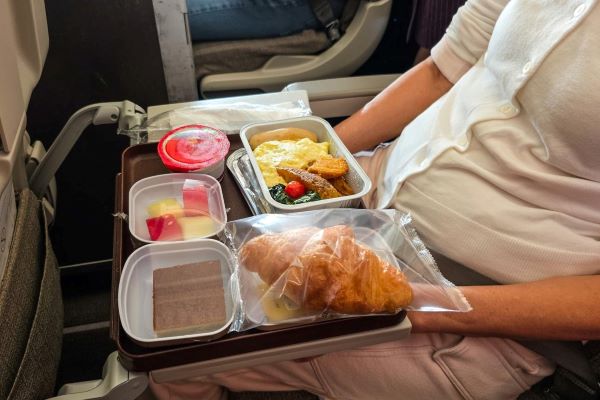
The Truth About Airline Meal Quality in 2026
You paid hundreds, sometimes thousands, for your flight. Then a foil-covered tray lands on your table. A few bites later, you’re wondering: Is airline food really getting better—or are airlines simply getting better at marketing it?
At 35,000 feet, your senses behave differently. Taste changes. Smell weakens. Dry cabin air affects your palate. Yet every year airlines spend millions trying to convince passengers that inflight dining has entered a new golden age.
The reality in 2026 is more complicated.
Some airlines are serving restaurant-quality meals designed by celebrity chefs. Others are quietly cutting costs, shrinking portions, and relying on clever presentation to disguise declining quality.
The truth about airline meal quality isn’t found in glossy advertisements. It’s found somewhere between science, economics, and passenger expectations.
Get the SkypropreAir Free Travel Pack
Plan smarter, choose a better seat and enjoy a more comfortable long-haul journey. Enter your details below to receive the Travel Pack.
Let’s open the tray table and uncover what’s really happening.
Why Airline Food Tastes Different Than It Does on the Ground
At cruising altitude, cabin pressure and extremely low humidity can reduce your ability to taste sweetness and saltiness by as much as 30%.
Your nose becomes less sensitive, making aromas harder to detect.
Since flavor is heavily connected to smell, meals that might taste excellent on the ground can seem disappointing in the air.
This is why airlines increasingly design meals specifically for high-altitude consumption.
Foods rich in umami flavors—such as tomatoes, mushrooms, cheese, soy sauce, and slow-cooked meats—perform better during flights.
It’s also why tomato juice becomes unexpectedly popular onboard.
What tastes ordinary on the ground can become surprisingly satisfying in the sky.
Related Reading: Why Airplane Air Feels Different Than Air on the Ground
Travel Comfort Recommendation: Staying hydrated can improve comfort and reduce some of the unpleasant effects of dry cabin air. A reusable insulated water bottle is one of the simplest long-haul travel upgrades.
The Great Divide Between Economy and Premium Cabins
The difference between economy and premium cabin meals has never been greater.
In 2026, airlines are competing fiercely for business-class and premium-economy passengers.
Many premium cabins now offer restaurant-style plating, multi-course dining, fresh ingredients, on-demand meal service, and carefully selected wine pairings.
Meanwhile, economy passengers often receive standardized meals designed for mass production and long shelf life.
Airlines know where the profits are.
A business-class ticket can generate several times the revenue of an economy seat, making investment in premium dining financially worthwhile.
This has created what many travelers describe as the “two-airline experience.”
Passengers sitting only a few rows apart may receive dramatically different meals.
Related Article: Is Premium Economy Really Worth the Extra Cost?
How Airline Catering Actually Works
Many travelers imagine meals being cooked inside the airport shortly before departure.
The reality is far less glamorous.
Most airline meals are prepared hours before takeoff in enormous catering facilities.
Thousands of meals may be produced every day.
After preparation, meals are chilled, transported to aircraft, stored onboard, and later reheated during the flight.
Every step is carefully controlled for safety.
This system prioritizes consistency and food safety over culinary perfection.
The challenge for caterers is creating food that still tastes appealing after reheating.
That challenge remains one of the biggest obstacles to truly exceptional airline dining.
The Hidden Cost-Cutting Behind Some Airline Meals
Passengers often assume airline food quality improves as ticket prices rise.
Not always.
Airlines face enormous financial pressure from fuel costs, labor expenses, airport fees, and aircraft leasing costs.
Food is one of the easiest areas to reduce spending without attracting major headlines.
Common cost-saving measures include:
-
Smaller portions
-
Cheaper ingredients
-
Reduced menu choices
-
Less fresh produce
-
Simplified preparation methods
Many travelers notice these changes subconsciously.
The meal may still look attractive, but portion sizes gradually shrink.
The dessert becomes smaller.
The protein serving gets thinner.
The airline saves money while avoiding obvious passenger backlash.
Further Reading: What Airlines Don’t Tell You About Ticket Pricing Strategies
Why Some Airlines Are Suddenly Improving Their Food
Not all news is negative.
Several airlines have realized that dining quality directly influences customer satisfaction scores.
A memorable meal can transform an entire journey.
Social media has amplified this effect.
Passengers now photograph nearly every premium-cabin meal.
A beautifully presented dish can generate thousands of views online.
An embarrassing meal can spread just as quickly.
This has encouraged many airlines to partner with chefs, nutritionists, and food consultants.
The result is a growing focus on healthier ingredients, regional cuisine, sustainability, fresh preparation methods, and improved presentation.
For premium travelers especially, inflight dining has become a key battleground.
The Rise of Health-Conscious Airline Dining
One of the biggest changes in 2026 is the shift toward healthier meals.
Passengers increasingly want lower-sodium options, plant-based meals, high-protein choices, reduced sugar, and sustainable ingredients.
Airlines have responded.
Vegetarian and vegan meals are no longer niche requests.
Many carriers now actively promote them.
Travelers are also paying greater attention to how food affects jet lag, hydration, and overall comfort.
A heavy, greasy meal before trying to sleep on a long-haul flight often leaves passengers feeling worse upon arrival.
Lighter meals are becoming more common as airlines focus on passenger wellbeing.
For travelers interested in maximizing comfort, meal choice has become almost as important as seat selection.
Related Reading: The Long-Haul Survival Guide: How to Arrive Feeling Human After 10 Hours in the Air
Travel Protection Recommendation
Food-related illness, unexpected delays, missed connections, and medical issues abroad can quickly disrupt a trip.
Before your next international flight, compare coverage options through SafetyWing Travel Insurance to help protect yourself against unexpected travel disruptions.
The Sustainability Revolution Happening on Your Tray Table
Passengers may not notice it immediately, but sustainability is reshaping airline catering.
Single-use plastics continue to disappear.
Airlines are reducing packaging waste.
Some carriers are sourcing more local ingredients to reduce transportation emissions.
Food waste is another major focus.
Every uneaten meal represents both financial and environmental costs.
Artificial intelligence and improved passenger data are helping airlines predict meal demand more accurately.
The goal is simple:
Serve what passengers actually want while wasting less food.
It’s a challenge that will likely define airline catering over the next decade.
Are Airline Meals Worth Looking Forward To?
The answer depends largely on where you’re sitting.
In premium cabins, the quality of airline dining has improved significantly over the past few years.
Some business-class meals now rival good restaurants on the ground.
In economy, improvements are less dramatic.
The primary focus remains delivering safe, affordable meals to hundreds of passengers efficiently.
That doesn’t mean economy meals are terrible.
It means expectations need to match reality.
Airline catering is one of the most complex food-service operations in the world.
Preparing thousands of meals that remain safe, edible, and reasonably enjoyable after hours of storage and reheating is a remarkable achievement.
Recommended Reading: The Best Aircraft for Long-Haul Comfort Ranked
Save Money on Your Next Flight
Many travelers focus on meal quality but overlook ticket pricing.
Before booking your next trip, compare fares through Aviasales to see how much prices vary across airlines and booking platforms.
A cheaper ticket could leave room in your budget for seat upgrades, airport lounge access, or travel comfort essentials.
Want More Airline Secrets?
Join the SkypropreAir Long-Haul Comfort Newsletter and receive:
- Long-haul comfort strategies
- Aircraft seat guides
- Airline meal and service reviews
- Travel comfort product recommendations
- Premium Economy comparisons
Hidden travel hacks used by frequent flyers
The Real Truth About Airline Meal Quality
The truth about airline meal quality in 2026 isn’t that airline food is terrible.
It’s that airline food is fighting against conditions that make great dining extraordinarily difficult.
Airlines are balancing science, safety, logistics, cost control, sustainability, and passenger expectations—all inside a pressurized metal tube crossing oceans.
Some airlines are winning that battle.
Others are merely trying to survive it.
The next time a meal tray arrives at your seat, remember:
You’re not just eating lunch.
You’re experiencing one of the most complicated catering operations ever created.
And whether it delights or disappoints you may have less to do with the chef—and more to do with being 35,000 feet above the Earth.
Frequently Asked Questions
Why does airline food taste bland during flights?
Cabin pressure and low humidity reduce your sense of taste and smell, making food seem less flavorful than it would on the ground.
Are airline meals cooked on the plane?
No. Most meals are prepared in airport catering facilities before departure, chilled for safety, loaded onto aircraft, and reheated during the flight.
Which cabin usually has the best airline food?
Business Class and First Class generally offer the highest-quality meals, greater menu variety, and more personalized dining experiences.
Join the Discussion
If airlines offered you a choice between a significantly better meal or a cheaper ticket price, which would you choose—and why?
Share your answer in the comments below. Your experience may help fellow travelers decide what really matters most when flying.