
Seat Selection Strategies That Actually Work on Long Flights (2026 Guide)
Long-haul flights are rarely ruined by the airline alone. They’re ruined by the wrong seat.
On a 9–14 hour flight, your seat choice affects:
- Sleep quality
- Legroom comfort
- Noise levels
- Bathroom access
- How quickly you escape the aircraft
And yet most passengers choose randomly.
This guide breaks down seat selection strategies that actually work, based on aircraft layout logic, passenger flow patterns, and real-world long-haul experience written for serious travellers who want comfort without paying business-class prices.
Why Seat Selection Matters More on Long-Haul
On short flights, you tolerate discomfort.
On long-haul? Small annoyances multiply.
Get the SkypropreAir Free Travel Pack
Plan smarter, choose a better seat and enjoy a more comfortable long-haul journey. Enter your details below to receive the Travel Pack.
If you’ve read our guide on Worst Seats to Avoid on Long-Haul Flights, you already know seat location can dramatically change your experience. But here’s how to actively choose smarter, not just avoid mistakes.
Before choosing a seat, see our Long-Haul Master Guide — Complete Strategy for Comfortable Flying for the bigger picture on aircraft choice, cabin comfort, flight timing and seat strategy.
Choose Your Priority First (Sleep, Space, Quiet, or Speed)
Before opening the seat map, ask:
What matters most on this flight?
 Sleep
Sleep- Legroom
- Easy movement
- Fast exit
 Sleep
Sleep Legroom
 Easy movement
 Fast exit
Your answer determines everything.
Not sure where to start? See our complete Best Seats on a Plane guide to find the strongest seat choices for comfort, sleep, legroom and long-haul travel.
Best Seats by Goal
| Goal | Smart Strategy |
| Sleep | Window seat, mid-cabin, away from toilets |
| Legroom | Exit row or selected bulkhead |
| Easy movement | Aisle (not near lavatories) |
| Fast deplaning | Forward economy cabin |
Trying to optimise everything usually leads to a compromise seat.
Avoid the “Foot Traffic Triangle”
There are three high-traffic zones that quietly ruin flights:
- Lavatories
- Galleys
- Cross-aisles
 Lavatories
 Galleys
 Cross-aisles
If your seat sits between these, expect:
- People queuing beside you
- Light switching on overnight
- Crew movement noise
- Accidental bumps
Pro tip: Sit 3–5 rows away from these zones not beside them.
If you’re sensitive to noise, this matters more than legroom.
Window vs Aisle: The Honest Long-Haul Answer
This debate never ends, but here’s the practical truth:
Choose Window If:
- You plan to sleep
- You don’t want to be disturbed
- You enjoy leaning against the wall
Choose Aisle If:
- You hydrate often
- You stretch regularly
- You dislike climbing over people
If choosing aisle, avoid:
- The aisle directly beside toilets
- The last aisle near the galley
For more psychology behind cabin layouts, see our guide on How Airlines Design Cabins to Control Passenger Behaviour.
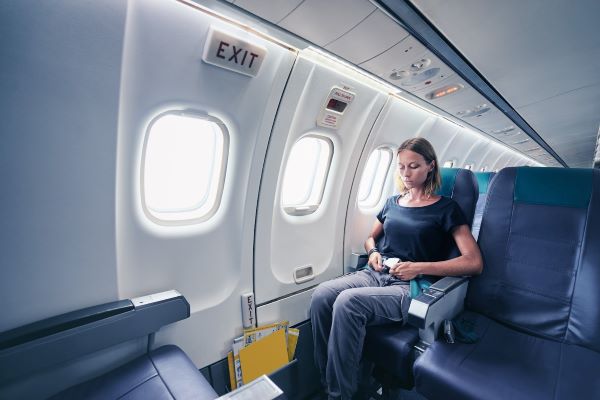
Exit Rows & Bulkheads: Worth It — Sometimes
These seats look premium. They aren’t always.
Exit Row Pros:
- Significant legroom
- Easier stretching
- Good for taller travellers
Exit Row Cons:
- Colder cabin zone
- No under-seat storage
- Fixed armrests (narrower feel)
- Sometimes limited recline
Bulkhead Pros:
- Clear space in front
- Potential faster deplaning
Bulkhead Cons:
- Bassinet zone (babies)
- IFE screen in armrest
- Less usable stretch space than expected
Tall travellers win here. Light sleepers sometimes lose.
If you’re debating paying extra, compare with our analysis:
When Is Premium Economy Worth Paying For?
Use “Seat Map Logic,” Not Airline Marketing
Seat maps don’t tell the full story.
Watch out for:
- Missing windows (window seat without a window)
- Limited recline rows
- Narrowed seats at the back
- Toilet adjacency disguised on map
 Missing windows (window seat without a window)
Before finalising, zoom in and look for odd gaps or layout shifts.
For a broader comparison, use our Economy Seat Comparison Database to compare aircraft layouts, seat configurations and comfort factors before choosing your flight.
If you’re booking soon, comparing aircraft types can help too especially between A330 vs 787 vs 777 configurations.
The “Empty Neighbour” Strategy (Underrated)
Sometimes the best seat is one with space next to you.
To increase your odds:
- Avoid the very front economy rows (they fill first)
- Avoid obvious “best” seats early
- Choose mid-cabin sections that fill slower
- Recheck seat maps 24 hours before departure
This works best on off-peak flights.
If you’re flexible with dates, you can compare loads and prices easily using Aviasales here:
Check long-haul options via Aviasales (flexible dates often show quieter flights)
Timing Your Seat Changes (Critical)
There are three windows where better seats appear:
 Immediately after booking
 At online check-in
 At the gate (last-minute upgrades & no-shows)
Many passengers never check again after booking; that’s a mistake.
Turbulence Concern? Sit Over the Wing
If turbulence makes you nervous:
- Seats over the wing feel more stable
- Rear cabin movement is more noticeable
- Front cabin can feel smoother but varies by aircraft
For nervous flyers, you may also like:
Why Some Long-Haul Flights Feel Longer Than Others
Couples & Friends: Sit Smart, Not Sentimental
On a 10-hour flight, comfort beats closeness.
Smart alternatives:
- Window + aisle in same row (middle might stay empty)
- Two aisles across from each other
- Split seating for better comfort
You can talk later. You can’t undo back pain.
Bonus: Travel Insurance for Long-Haul Flights
Seat comfort matters — but so does disruption protection.
Long-haul flights carry higher risk of:
- Missed connections
- Medical issues abroad
- Delays and cancellations
If you’re flying internationally, reviewing flexible coverage options like SafetyWing can be useful before departure especially for multi-stop trips or extended stays.
Final Verdict: What Actually Works
The best long-haul seat isn’t the “most expensive.”
It’s the one aligned with your priority:
- Sleep → Window, mid-cabin
- Legroom → Exit row (accept trade-offs)
- Quiet → Avoid triangle zones
- Stability → Over wing
- Control → Smart aisle
Most passengers choose randomly.
Experienced travellers choose strategically.
Frequently Asked Questions
1) Is an exit row always the best seat on long flights?
No. It’s best for legroom, but not always for sleep or warmth.
2) When is the best time to change seats?
At booking, online check-in, and again at the gate.
3) Which is better for long-haul: window or aisle?
Window for sleep. Aisle for movement. Your travel style decides.
If you’re planning your next long-haul route, compare aircraft types and seating maps before booking — it makes more difference than most people realise.
For flexible route comparisons, aircraft types and pricing shifts across dates, you can browse options via Aviasales before selecting your final seat.
Next Reads on SkypropreAir:
- Worst Seats to Avoid on Long-Haul Flights
- Premium Economy vs Economy: What You Actually Pay For
- How Airlines Design Cabins to Control Passenger Behaviour
- Why Some Long-Haul Flights Feel Much Longer Than Others