
Hate Turbulence? The Smoothest, Quietest Planes to Book in 2026 (Ranked)
Flying anxiety is incredibly common — and it’s not irrational. Noise, sudden bumps, and the feeling of instability can trigger stress even when the aircraft is operating perfectly normally.
The good news? Aircraft choice can meaningfully affect how calm a flight feels, even if it doesn’t change the actual safety level.
This SkypropreAir guide ranks the best aircraft for nervous flyers, focusing on:
- How turbulence feels (not how dangerous it is)
- Cabin noise levels
- Overall smoothness and psychological comfort
Quick reassurance: Turbulence is uncomfortable, not unsafe. Modern aircraft are engineered to withstand forces far beyond anything encountered in normal flight.
Even though turbulence is safe, some aircraft feel calmer than others. This ranking of the best aircraft for nervous flyers explains why larger, quieter jets reduce the sensation of bumps.
Get the SkypropreAir Free Travel Pack
Plan smarter, choose a better seat and enjoy a more comfortable long-haul journey. Enter your details below to receive the Travel Pack.
How this ranking works (transparent & data-informed)
Aircraft are ranked using a combined Nervous Flyer Comfort Score, based on:
- Perceived turbulence damping (aircraft size, mass, wing design)
- Cabin noise environment (measured studies + consistent passenger reports)
- Modern comfort cues that reduce anxiety (air pressure, humidity, lighting)
This is about how the flight feels, not which aircraft is “safer” — because they all are.
If turbulence and cabin noise are what make flights feel endless for you, aircraft choice matters more than most travellers realise — our guide to the best aircraft for nervous flyers ranks which planes feel the calmest in the air.
Best Aircraft for Nervous Flyers (Ranked)
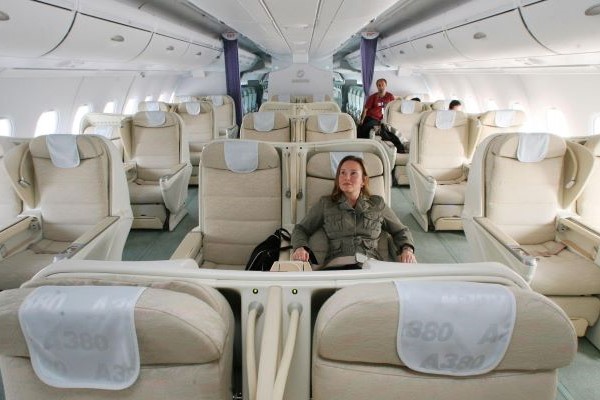
Airbus A380 — Calmest ride overall
Why nervous flyers love it
- Exceptional stability due to sheer size and weight
- Turbulence often feels slower and more damped
- One of the quietest widebody cabins in service
If you dislike sudden drops or sharp jolts, the A380 consistently feels the most “solid” in the air.
If you’re choosing routes like London–Los Angeles or London–Singapore, it’s worth checking whether an A380 option appears on Aviasales — sometimes prices are similar to smaller aircraft.
Airbus A350 — Quiet, smooth, modern
Why it ranks highly
- Advanced composite fuselage reduces vibration
- Excellent noise insulation, especially mid-cabin
- Improved cabin humidity helps reduce dry-air discomfort (often linked to anxiety)
This aircraft strikes a perfect balance between quietness and smooth ride feel, making it ideal for long-haul nervous flyers.
If your priority is staying calm rather than maximising features, this comparison feeds directly into our ranking of the best aircraft for nervous flyers, where both the A350 and 787 score highly for comfort and quietness.
Boeing 787 Dreamliner — Best “fresh air” comfort
Why nervous flyers feel calmer onboard
- Lower cabin altitude and higher humidity than older jets
- Generally quiet cabin, especially away from engines
- Modern lighting and cabin design reduce claustrophobic feelings
While turbulence may still be felt, the overall cabin environment feels calmer, which matters more than many people realise.
Airbus A330 — Underrated comfort choice
Why it deserves attention
- Consistently smooth ride characteristics
- Some studies show surprisingly low cabin noise levels
- Proven, predictable long-haul performer
It may not look flashy, but many anxious travellers report feeling unexpectedly relaxed onboard.
Quiet cabins don’t just improve sleep — they reduce anxiety too. If you’re a nervous flyer, this breakdown of the best aircraft for nervous flyers shows which jets combine low noise with the smoothest ride feel.
Boeing 777 — Stable but seat choice matters
Strengths
- Large, heavy aircraft → steadier than smaller jets
- Very capable in moderate turbulence
Caution
- Cabin noise can vary significantly by engine type and seat location
- Rear sections tend to feel bumps more strongly
If flying a 777, aim over the wing or slightly forward for the calmest experience.
Seat location is only part of the comfort equation aircraft type also plays a major role. This ranking of the best aircraft for nervous flyers explains why some planes feel calmer even before seat choice comes into play.
Airbus A321neo — Best narrowbody, but not ideal for high anxiety
Why it’s last
- Smaller aircraft feel turbulence more sharply
- Still excellent for short or transatlantic “long-thin” routes
If you’re very nervous, a widebody aircraft will almost always feel more reassuring.
Where to sit for the least turbulence & noise
No matter the aircraft:
- Least turbulence sensation: seats over the wing
- Least engine noise: just forward of the wing
- Avoid: far rear rows (motion feels amplified)
This pairs well with our Worst Seats to Avoid on Long-Haul Flights and Most Comfortable Economy Seats on Long-Haul Aircraft guides.
For travellers with flight anxiety, comfort goes beyond legroom. Our guide to the best aircraft for nervous flyers explains which planes naturally dampen turbulence and cabin noise.
Booking tips for anxious flyers (without pressure)
When comparing flights:
- Use Aviasales to filter by aircraft type, not just airline — the same airline can feel very different depending on the jet used.
- If you’re already investing in comfort, consider protecting the trip too. SafetyWing travel insurance quietly covers delays, cancellations, and medical issues — removing “what if?” stress before you even board.
Beyond seat hacks and sleep tips, choosing the right aircraft can significantly reduce anxiety — our guide to the best aircraft for nervous flyers shows which planes feel the smoothest on transatlantic routes.
Key takeaway (worth bookmarking)
Turbulence doesn’t mean danger — but comfort matters.
Larger, quieter aircraft reduce sensory stress, which is often what triggers fear.
If aircraft choice gives you even a small sense of control, it’s worth paying attention to.
FAQs: Nervous Flyers Ask Us This All the Time
1) Is the Airbus A380 actually less turbulent, or does it just feel calmer?
It feels calmer because of size and mass. The turbulence itself isn’t weaker — your body just perceives it differently.
2) Which is better for anxiety: Airbus A350 or Boeing 787?
The A350 usually feels slightly smoother; the 787 often feels better for breathing comfort. Noise-wise, both are excellent.
3) Can seat choice really reduce turbulence anxiety?
Yes. Sitting over the wing can noticeably reduce motion perception, especially during light-to-moderate turbulence.