
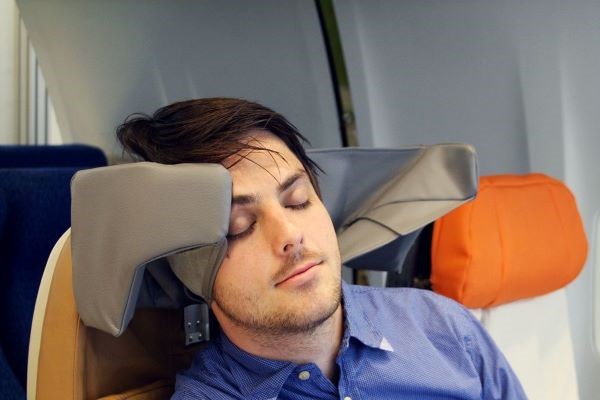
Biometric Headrests Are Coming to Flights — Smart Comfort or a Privacy Nightmare?
Your seat might soon know more about you than your smartwatch does.
Air travel is entering a new phase — not just smarter, but more personal than ever before. In 2026, airlines and seat manufacturers are quietly testing something that could redefine long-haul comfort:
Biometric headrests.
At first glance, it sounds like a breakthrough. Seats that detect your body, adjust automatically, and help you sleep better on long flights? That’s exactly what travellers have been asking for.
But there’s a catch.
Because the same technology that improves your comfort… could also be tracking you.
Get the SkypropreAir Free Travel Pack
Plan smarter, choose a better seat and enjoy a more comfortable long-haul journey. Enter your details below to receive the Travel Pack.
And not everyone is happy about it.
What Are Biometric Headrests (And Why Airlines Want Them)?
Biometric headrests are next-generation seat systems designed to monitor subtle physical signals while you’re seated.
Think:
-
Heart rate
-
Body temperature
-
Head position
-
Movement patterns (are you restless or asleep?)
Using these signals, the seat can:
-
Adjust headrest angle automatically
-
Suggest optimal sleeping positions
-
Sync with cabin lighting for better rest
-
Even alert crew if a passenger may need assistance
For long-haul flights, this is potentially game-changing.
Imagine flying Dublin → Los Angeles and your seat actively helping you sleep, instead of fighting against you.
That’s the promise.
The Comfort Revolution (Why This Actually Makes Sense)
From a SkypropreAir perspective, this technology is not random — it directly targets one of the biggest long-haul pain points:
Sustained comfort over 6–12 hours
Biometric headrests could finally solve:
-
Poor neck support in economy
-
Constant micro-adjustments during sleep
-
Waking up fatigued despite “resting”
This aligns perfectly with what we’ve already analysed in:
In short:
This is the first real attempt to make economy sleep “adaptive.”
And that’s huge.
The Privacy Problem Nobody Can Ignore
Here’s where things get uncomfortable.
To function properly, biometric headrests need to collect and process personal biological data.
That raises serious questions:
-
Who owns your data — you or the airline?
-
Is it stored, or just used in real-time?
-
Could it be linked to your booking profile?
-
What happens if it’s shared with third parties?
In a world already sensitive to digital tracking, many travellers are asking:
“Am I paying for comfort… or becoming the product?”
Some early reactions from travellers and privacy advocates:
-
Concern over non-consensual data collection
-
Fear of data misuse or breaches
-
Discomfort with being “monitored” mid-flight
And unlike your phone —
You can’t just switch your seat off.
Chudi’s Seat Strategy
This is where the future splits into two paths:
Scenario 1 — Done Right:
-
Opt-in only
-
Data processed locally (not stored)
-
Clear passenger control
This becomes the biggest comfort upgrade in economy travel history
Scenario 2 — Done Wrong:
-
Default tracking
-
Data linked to profiles
-
No transparency
This becomes one of the biggest trust failures in aviation
My take?
Airlines that prioritise transparency + control will win.
Those that don’t… will face backlash fast.
Will You Actually See This on Your Next Flight?
Not immediately — but it’s closer than you think.
Expected rollout path:
-
First: Premium cabins (business / premium economy)
-
Then: Select long-haul economy routes
-
Finally: Standardisation across newer aircraft
Aircraft most likely to adopt early:
-
Airbus A350
-
Boeing 787
Why?
Because these aircraft already focus on passenger wellbeing (humidity, pressure, lighting) — biometric seating fits perfectly into that ecosystem.
What This Means for Your Next Booking
For now, this is still emerging — but here’s how to stay ahead:
When booking long-haul flights, focus on what matters today:
-
Aircraft type (A350 & 787 still lead for comfort)
-
Seat selection strategy
-
Flight timing (overnight vs daytime)
You can compare routes and aircraft types easily here:
Search smarter flights with Aviasales
And if you’re testing new travel tech or flying long-haul often, don’t overlook protection:
Travel with peace of mind using SafetyWing — especially when tech and travel are evolving this fast.
The Bigger Picture: Comfort vs Control
Biometric headrests represent something bigger than just better seats.
They raise a fundamental question about the future of flying:
How much of yourself are you willing to trade for comfort?
Because the next generation of air travel won’t just adapt to your body.
It will learn from it.
FAQs
1. Will biometric headrests be mandatory?
No — if implemented correctly, they should be optional or require consent. However, this will depend heavily on airline policies.
2. Are biometric seats safe?
From a physical standpoint, yes. The concern is not safety — it’s data privacy and usage.
3. Which airlines are introducing this first?
No airline has fully rolled this out yet, but expect early adoption from tech-forward carriers operating A350 and 787 fleets.
Final Thought (SkypropreAir Perspective)
For years, airlines ignored real comfort problems.
Now they’re finally solving them —
but possibly crossing a line at the same time.
And that’s what makes biometric headrests one of the most important aviation debates of 2026.