
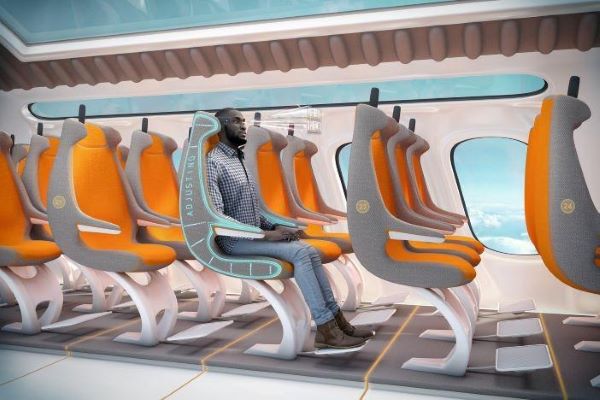
This Is What Flying Will Feel Like in 2030 — And It Might Surprise You
The seat adjusts automatically. The cabin responds to your body. And for the first time… you arrive feeling normal.
For decades, flying has followed the same pattern:
You board tired.
You sit uncomfortably.
You land even worse.
Now imagine this instead.
You sit down…
The seat adjusts to your posture instantly.
Lighting shifts subtly to match your sleep cycle.
The cabin environment adapts around you.
Get the SkypropreAir Free Travel Pack
Plan smarter, choose a better seat and enjoy a more comfortable long-haul journey. Enter your details below to receive the Travel Pack.
And when you land?
You feel like you’ve actually rested.
This isn’t science fiction.
It’s where flying is heading — faster than most passengers realise.
The Cabin Is About to Become “Intelligent”
By 2030, aircraft cabins won’t just be designed.
They’ll be responsive.
That means:
- Seats that adjust continuously to your body
- Lighting that aligns with your circadian rhythm
- Cabin environments that reduce fatigue automatically
Instead of one standard experience…
Every passenger gets a slightly personalised one.
The End of “Enduring” Long-Haul Flights
Right now, long-haul travel is something you get through.
In the future?
It becomes something that helps you recover.
This shift is already starting with:
- Biometric headrests
- Adaptive seating systems
- Improved cabin pressure and humidity
Aircraft like the Airbus A350 and Boeing 787 Dreamliner are leading this change.
They’ve already improved:
- Air quality
- Cabin altitude
- Passenger comfort baseline
The next step is making that comfort dynamic.
Chudi’s Perspective — The Future of Long-Haul Comfort Strategy
Here’s the shift most people aren’t seeing yet:
Flying is moving from:
“Transport efficiency”
To:
“Human experience optimisation”
That changes everything.
Because the real goal of flying isn’t just arrival anymore.
It’s how you feel when you arrive.
The New Comfort Framework (2030 Vision)
By 2030, expect airlines to compete on:
- Sleep Quality
Not just seat pitch — actual rest performance
- Recovery Experience
How refreshed passengers feel after landing
- Personalisation
Cabin adapting to individual needs
This is the next battleground in aviation.
The Trade-Off Nobody Can Ignore
There’s one thing powering all of this:
Data.
To personalise your experience, systems need to understand:
- Your behaviour
- Your comfort patterns
- Your sleep tendencies
Which raises a critical question:
How much of yourself are you willing to share for a better flight?
This is the same debate we’re already seeing with:
- Biometric seats
- Smart cabin systems
- Passenger tracking technologies
And by 2030…
It won’t be optional to think about it.
What Economy vs Premium Will Look Like
This is where things get interesting.
Economy Class (2030)
- Smarter seats
- Basic adaptive support
- Improved sleep assistance
Still affordable — but noticeably better
Premium Economy / Business Class
- Fully adaptive seating
- Personalised cabin settings
- Enhanced recovery-focused design
Less about luxury — more about performance
What You Should Do Today (Before 2030 Arrives)
The future is coming — but you don’t need to wait for it.
You can already improve your experience by focusing on:
Aircraft Type
A350 and 787 still offer the best baseline comfort
Check aircraft before booking using Aviasales
Smart Route Selection
Some routes consistently use better aircraft
Travel Protection
Especially as travel becomes more complex and tech-driven
Stay covered with SafetyWing
The Bigger Picture — Flying That Works With You
For most of aviation history, passengers adapted to the aircraft.
Seats were fixed.
Cabins were standardised.
Comfort was limited.
By 2030, that flips.
The aircraft adapts to you.
And once that shift happens…
There’s no going back.
FAQs
- Will all planes be “smart” by 2030?
Not all, but most new long-haul aircraft will incorporate adaptive comfort features.
- Will this make flying more expensive?
Not necessarily. Basic versions will likely appear in economy, with premium layers in higher cabins.
- Is this good or bad for passengers?
Both. It improves comfort significantly — but raises important privacy and data questions.
Final Thought
Flying is about to change in a way most people won’t expect.
Not louder.
Not faster.
Not even more luxurious.
Just… more human.
And for the first time in decades, airlines may finally be solving the problem that matters most:
How you feel when you land.