
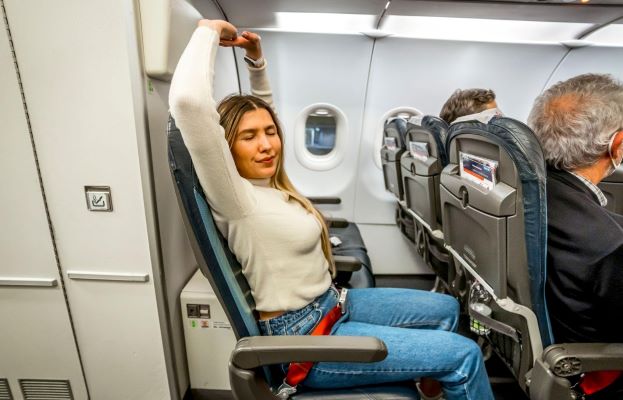
Why Sitting on a Plane Makes You More Tired Than Sleeping
The Exhaustion That Doesn’t Make Sense
You board the flight feeling fine.
You sit. You don’t sleep much. But you also don’t do anything strenuous.
Yet somehow…
You arrive feeling completely drained.
Here’s the strange part:
Get the SkypropreAir Free Travel Pack
Plan smarter, choose a better seat and enjoy a more comfortable long-haul journey. Enter your details below to receive the Travel Pack.
You often feel more tired sitting on a plane than actually sleeping on one.
Why?
The Real Reason: Your Body Is Fighting Your Position
Your body isn’t designed to sit still for hours.
Especially not like this:
- Upright
- Slightly compressed
- Limited movement
- Restricted space
This creates constant low-level strain.
Your muscles:
- Stay engaged
- Never fully relax
- Continuously adjust
Even though you’re “resting”… your body is working.
Posture Is Quietly Draining Your Energy
Most people sit like this on a plane:
- Leaning forward
- Head dropping
- Lower back unsupported
This posture:
- Restricts breathing
- Compresses your muscles
- Increases fatigue
That’s why you feel exhausted — even without moving.
If the space feels tight while this happens:
Why Economy Seats Feel So Cramped (It’s Not What You Think)
Why Sleeping Feels Better (Even If It’s Short)
Here’s the key difference:
When you sleep, your body lets go of tension.
Even brief sleep:
- Relaxes your muscles
- Slows your breathing
- Reduces mental load
Sitting without rest keeps your body in “active mode.”
That’s why even 30 minutes of sleep can feel better than hours of sitting.
If sleep is difficult for you onboard:
The Truth About Sleeping on Planes (Why It’s So Hard)
The Cabin Environment Is Working Against You
Airplane cabins are designed for safety not comfort.
You’re dealing with:
- Low humidity
- Lower oxygen levels
- Artificial lighting
- Limited movement space
This combination:
- Dehydrates you
- Slows your circulation
- Increases fatigue
Even if you sit still, your body is under stress.
Movement Restriction Is the Hidden Problem
Another key factor:
You’re not moving enough.
On long flights:
- Blood flow slows
- Muscles stiffen
- Energy levels drop
Your body isn’t built for long periods of stillness.
This is why aisle seats can sometimes feel less tiring:
Window vs Aisle Seat: The Truth No One Tells You
Recline Changes Everything (More Than You Think)
Here’s something many travellers overlook:
Slight recline reduces fatigue significantly.
Why?
- It improves spinal alignment
- Reduces muscle strain
- Allows partial relaxation
Sitting fully upright for hours is what drains you most.
If someone reclines in front of you and disrupts your space:
How to Handle the Person in Front Reclining Their Seat
Aircraft Type Can Reduce Fatigue
Not all planes affect your body the same way.
Modern aircraft like:
- Airbus A350
- Boeing 787 Dreamliner
Offer:
- Better cabin pressure
- Higher humidity
- Improved air quality
Result:
- Less fatigue
- Better recovery after flights
If you’ve ever felt a huge difference between flights, this is why:
Why Some Planes Feel More Comfortable Than Others
Quick tip: When booking, checking aircraft type on platforms like Aviasales can quietly improve how you feel after landing.
How to Stay Less Tired (Simple Fixes That Work)
You don’t need drastic changes just smarter habits:
1. Recline slightly early
Don’t wait until discomfort builds
2. Adjust posture regularly
Avoid staying in one position
3. Move when possible
Stand or stretch every few hours
4. Support your head and neck
Reduce muscle strain
Small changes = big difference.
The Smart Traveller’s Preparation
Fatigue doesn’t start on the plane.
It starts before booking.
Use tools like Aviasales to:
- Choose better aircraft
- Select smarter seating
- Avoid uncomfortable layouts
And for long-haul journeys:
Many travellers use SafetyWing for flexible travel coverage especially helpful when fatigue, delays, or disruptions affect your plans.
Chudi’s Perspective
You’re not tired because you did too much.
You’re tired because your body never got to relax.
That’s the difference.
The smartest travellers:
- Don’t just sit
- They manage their body
That’s how you arrive feeling better.
Final Verdict
You feel more tired sitting than sleeping because:
- Your muscles stay engaged
- Your posture drains energy
- Your environment adds stress
- Your body never fully relaxes
Sitting isn’t rest.
Smart positioning is.
FAQs
1. Why do I feel exhausted after sitting on a plane?
Because your body stays under constant low-level strain without proper relaxation.
2. Does reclining really help reduce fatigue?
Yes — it improves posture and allows your body to relax more naturally.
3. Which seats help reduce tiredness the most?
Seats that allow movement or better posture (aisle or well-positioned window seats) help reduce fatigue.