
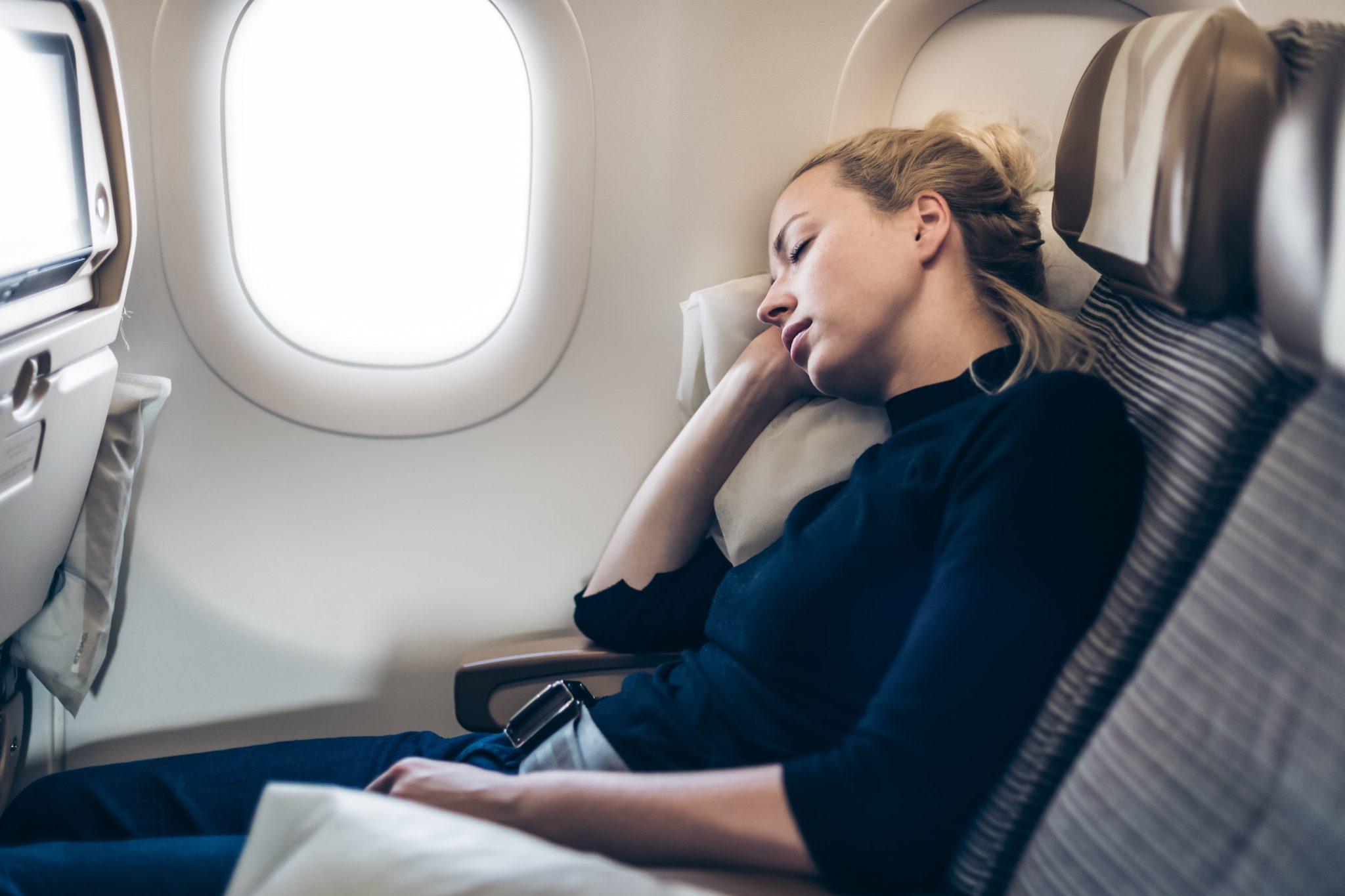
Best Seats for Sleeping on a Plane: A Practical Long-Haul Guide
Choosing the best seats for sleeping on a plane can make the difference between arriving refreshed and beginning your journey exhausted. On a long-haul flight, even a comfortable-looking seat may become difficult to sleep in if passengers constantly pass beside you, the toilets are nearby or the seat has limited recline.
For many travellers, a window seat offers the best opportunity to rest. It provides a surface to lean against, gives you control of the window shade and prevents other passengers from waking you when they need to leave the row. However, a window seat is not automatically the right choice for everyone. Passengers who need to stretch, use the toilet frequently or move around regularly may sleep more comfortably in an aisle seat.
Your position within the cabin matters as much as choosing between the window and aisle. Noise from galleys, toilets, crew activity and gathering passengers can disturb even a deep sleeper. Seats in the final row may also have restricted recline, while bulkhead and exit-row seats can come with fixed armrests or rules about storing personal belongings.
This guide explains where the quietest and most sleep-friendly seats are usually located, which seats you should avoid and how to match your seat choice to your personal sleeping habits. Because aircraft layouts differ between airlines, you should always check the exact seat map before paying for a particular seat.
What Makes a Plane Seat Good for Sleeping?
A good sleeping seat does more than provide sufficient legroom. It should reduce interruptions, offer reasonable support and place you away from the busiest parts of the cabin. The most important factors include the following:
Get the SkypropreAir Free Travel Pack
Plan smarter, choose a better seat and enjoy a more comfortable long-haul journey. Enter your details below to receive the Travel Pack.
A place to lean
Window seats allow you to rest your head against the cabin wall with the support of a travel pillow. This can feel more stable than attempting to sleep upright without anything beside you.
Fewer interruptions
Passengers in window seats do not have to move whenever someone else wants to leave the row. This is particularly valuable on overnight flights, when repeated interruptions can prevent you from reaching deeper stages of sleep.
Reasonable recline
Even a small amount of recline can reduce pressure on your lower back and make sleeping easier. Avoid seats directly in front of exit rows, cabin partitions or the rear wall because their recline may be limited.
Distance from toilets and galleys
Toilets and galleys create noise, light and movement throughout a flight. Passengers may form queues beside nearby seats, while doors, flushing sounds, meal preparation and crew conversations can disturb your rest.
A quieter cabin position
Seats away from high-traffic areas generally provide a calmer environment. On many aircraft, positions ahead of the engines may also experience less engine noise, although the exact difference depends on the aircraft and cabin layout.
Enough personal space
Seat pitch, width and the position of the armrests affect how easily you can relax. Extra-legroom seats can help taller passengers, but they are not always the best sleeping seats. Some have fixed armrests, are close to busy doors or galleys, or have restrictions on keeping bags near your feet.
The best sleeping seat therefore combines location, comfort and fewer disturbances. A seat with additional legroom may still provide poor sleep if it is beside a toilet, while a standard window seat in a quieter section may offer a much more restful journey.
You can compare seat width, pitch and cabin layouts using the [SkypropreAir Seat Comparison Database].
The Window Seat: Usually the Best Choice for Sleeping
For most passengers, a window seat is the best seat for sleeping on a plane. It gives you a surface to lean against and allows you to create a more stable sleeping position without drifting into another passenger’s personal space.
You can also control the window shade, although cabin crew may ask passengers to open it during take-off, landing or at certain times during the flight. Once the cabin lights are dimmed, closing the shade can reduce outside light and make it easier for your body to settle into sleep.
Another major advantage is freedom from row interruptions. In an aisle seat, you may have to stand whenever your seatmates want to use the toilet or walk around. From a window seat, you can usually remain undisturbed—provided you do not need to leave the row frequently yourself.
However, not every window seat provides the same experience. Some seats do not align properly with a window, leaving you beside a solid section of the cabin wall. Seats near emergency exits may also have unusual window positions, fixed armrests or colder areas near the aircraft doors.
Window alignment is particularly important on aircraft such as the Dreamliner, as explained in our [Boeing 787 best seats guide].
Before selecting a window seat, examine the airline’s seat map and, where possible, check photographs or passenger reviews of the exact aircraft configuration. Remember that airlines can change the aircraft before departure, so recheck your seat as the travel date approaches.
A window seat is particularly suitable if you:
- Can remain seated for long periods
- Do not need to use the toilet frequently
- Prefer something solid to lean against
- Want control over the window shade
- Are comfortable asking your seatmates to move when necessary
Although the window seat is usually the strongest overall option for sleeping, passengers who need regular movement or easier access to the aisle may find another position more suitable.
When an Aisle Seat May Be Better for Sleeping
Although window seats are often recommended for sleeping, an aisle seat may be the better choice for passengers who value freedom of movement. It allows you to stand, stretch or visit the toilet without climbing over another passenger.
This can be especially important on a long-haul flight. Remaining seated for many hours may cause stiffness and discomfort, making it harder to relax. Knowing that you can move whenever necessary may also help you feel less restricted and more comfortable.
An aisle seat may suit you if you:
- Need to use the toilet frequently
- Have long legs or experience stiffness
- Prefer to stand and stretch regularly
- Feel uncomfortable or confined beside the window
- Want easier access to the aisle after landing
However, aisle seats also have disadvantages for sleeping. Your seatmates may wake you when they need to leave the row. Passing passengers and cabin crew can brush against your shoulder, arm or leg, particularly if you lean into the aisle. Light and activity from the cabin may also be more noticeable.
If you choose an aisle seat, avoid positions beside toilets and galleys. A seat in a quieter section of the cabin, away from busy service areas, can provide a better balance between easy movement and uninterrupted rest.
In a three-seat section, the aisle seat may be particularly useful when travelling with a companion seated beside you. Your companion can wake you gently when necessary, reducing the likelihood of repeated disturbances from a stranger.
Why the Middle Seat Is Usually the Worst for Sleeping
The middle seat is generally the least suitable choice for sleeping because it offers neither a cabin wall to lean against nor direct access to the aisle. You may also be disturbed whenever the window-seat passenger needs to leave the row.
Personal space can become another problem. Although the middle-seat passenger is commonly considered entitled to use both armrests, this unwritten rule is not always respected. Without secure arm support, keeping your upper body stable while sleeping can be difficult.
There is also a greater risk of leaning unintentionally towards one of your neighbours. This can make you feel self-conscious and prevent you from relaxing fully, particularly when travelling between two strangers.
If a middle seat is your only option, you can make it more manageable by:
- Using a supportive neck pillow to keep your head upright
- Adjusting the headrest wings around your head, where available
- Keeping your arms close to your body
- Agreeing on armrest use before everyone settles down
- Fastening your seat belt over your blanket so cabin crew can see it
- Using an eye mask and earplugs to reduce surrounding distractions
On aircraft with a central block of seats, the middle positions may occasionally have one advantage: they can experience fewer interruptions if the passengers on either side have their own access to an aisle. Nevertheless, for most solo travellers hoping to sleep, a window or carefully selected aisle seat will usually be more comfortable.
The Best Part of the Cabin for Sleeping
After choosing between a window and aisle seat, consider where the seat is located within the cabin. A good position can reduce noise, foot traffic and other interruptions that make sleeping difficult.
Choose a seat away from toilets
Seats close to toilets are exposed to flushing sounds, bright lights, opening doors and passengers waiting in the aisle. Unpleasant smells may also become noticeable during a long flight. Try to leave several rows between your seat and the nearest toilet whenever possible.
Avoid seats beside the galley
Galleys remain active during meal preparation, drink services and cabin clean-up. Crew members may talk, organise equipment and open storage compartments while passengers are trying to sleep. Light from the galley can also reach nearby rows when the main cabin is dark.
Consider sitting ahead of the engines
On many aircraft, seats positioned ahead of the engines experience less engine noise than those directly beside or behind them. This area may therefore provide a calmer environment. However, these seats are often located in premium cabins or the more expensive forward section of economy.
Avoid the final rows
The last rows of a cabin are frequently close to toilets and galleys. They may receive more passenger traffic and could have restricted recline because of a wall behind them. These rows can also feel busier during boarding and after landing.
Look for a quieter middle section
A window seat in the middle portion of an economy cabin—away from toilets, galleys and emergency doors—often offers the best balance. It may not have the most legroom, but fewer disturbances can make it more suitable for sleeping than a supposedly superior seat in a busy location.
Aircraft design also affects cabin noise and comfort. Compare the options in our guide to the [best aircraft for long-haul economy].
The exact cabin layout varies by airline and aircraft. Always inspect the seat map carefully, as the same row number can occupy a completely different position on another aircraft or configuration.
Seats to Avoid When You Want to Sleep
Some seats may appear acceptable on the airline’s booking map but become uncomfortable once the flight begins. If sleeping is your priority, examine the surrounding facilities and possible restrictions before making your selection.
Seats directly beside toilets
These are among the poorest choices for sleeping. Toilet doors open and close throughout the flight, bright light enters the cabin and passengers may gather beside your row while waiting. Flushing sounds and occasional odours can also disturb your rest.
Seats beside galleys
Cabin crew need to prepare meals, organise trolleys and secure equipment in the galley. This work may continue while the cabin lights are dimmed, particularly before breakfast on an overnight flight.
The final row of a cabin
Seats in the last row may have limited or no recline because of a wall behind them. They are also frequently close to toilets or galleys and can experience heavy passenger traffic.
Seats directly in front of an exit row
These seats often have restricted recline to keep the emergency exit clear. A seat that cannot recline properly may place additional pressure on your lower back and make it difficult to find a comfortable sleeping position.
Bulkhead seats
Bulkhead seats can provide additional knee space, but they are not automatically good for sleeping. Their armrests may be fixed because the tray tables and entertainment screens are stored inside them. You may also be required to place all personal belongings in the overhead locker during take-off and landing.
Bulkhead rows are sometimes used for infant bassinets. This does not make them unsuitable for every passenger, but travellers who are highly sensitive to noise should consider the possibility before booking.
Seats near emergency doors
Emergency exit seats may offer more legroom, but areas close to aircraft doors can sometimes feel colder. Fixed armrests and restrictions on storing bags around your feet may also reduce comfort.
Seats with missing or misaligned windows
Not every window seat has a properly positioned window. Some are beside a solid wall panel or have a window located too far forward or behind the seat, making it difficult to lean comfortably.
A little research before paying for seat selection can prevent hours of discomfort. Check the airline’s official seat map, confirm the aircraft model and remember that an aircraft substitution may change the seating arrangement before departure.
Are Extra-Legroom Seats Better for Sleeping?
Extra-legroom seats can make sleeping easier, particularly for taller passengers or anyone who feels uncomfortable when their knees are close to the seat in front. Additional space allows you to adjust your legs more easily and may reduce stiffness during a long flight.
If you are considering paying for more space and recline, our guide explains [whether premium economy is worth it].
However, extra legroom does not always mean better sleep. Many of these seats are located in exit rows or bulkhead rows, where other comfort limitations may apply.
Exit-row seats can have fixed armrests, colder conditions near the aircraft doors and restrictions on storing bags around your feet during take-off and landing. Some exit-row seats also have limited recline, particularly when another emergency exit is located directly behind them.
Bulkhead seats do not have another passenger reclining into your space, but their tray tables and entertainment screens may be stored inside the armrests. This can slightly reduce usable seat width. Passengers may also gather in the open space in front of the row, and bassinets are sometimes fitted in this section.
Before paying for an extra-legroom seat, check:
- Whether the seat reclines normally
- Whether the armrests are fixed
- How close it is to a toilet, galley or emergency door
- Whether personal belongings can remain under the seat
- Whether a bassinet position is located nearby
- Whether the additional space justifies the fee
For many travellers, a standard window seat in a quiet section of the cabin may provide better sleep than an extra-legroom aisle seat beside a busy galley. Consider the complete location of the seat rather than focusing only on the amount of legroom.
Best Sleeping Seats by Cabin Layout
The cabin layout determines how many passengers share each row and how easily they can reach the aisle. Understanding the configuration can help you identify the most sleep-friendly position.
2-4-2 layout
A 2-4-2 configuration is often one of the most comfortable economy layouts for couples. The window-side pairs contain only two seats, so the window passenger needs to disturb just one person when leaving the row.
For sleeping, choose a window seat in one of the two-seat sections, preferably several rows away from toilets and galleys. If travelling as a couple, booking the window-and-aisle pair gives you control of the entire section.
The Airbus A330 frequently uses a passenger-friendly 2-4-2 economy layout. See our complete [Airbus A330 best seats guide] before choosing your row.
3-3-3 layout
In a 3-3-3 cabin, a window-seat passenger must pass two people to reach the aisle. This makes the window position suitable for passengers who can remain seated for extended periods.
If you need to move regularly, select an aisle seat in a quieter part of the cabin. Avoid the middle seat unless you are travelling with family or companions who do not mind sharing space.
3-4-3 layout
The 3-4-3 configuration can feel more crowded, especially when ten seats are fitted across the cabin. Window seats still provide the strongest support for sleeping, but personal space may be limited.
The two central seats in the four-seat middle block can occasionally be useful for couples when the outer passengers have direct aisle access. However, these positions do not provide a wall to lean against and may feel enclosed.
2-3-2 layout
This less common arrangement can provide a good experience for couples seated in one of the two-seat side sections. As with a 2-4-2 layout, the window passenger only needs to pass one person to reach the aisle.
Staggered or angled premium cabins
In premium economy and business class, the seat configuration may be more important than the row number. Some seats offer direct aisle access, greater recline or additional privacy, while others are close to galleys and toilets.
Do not assume that every premium seat provides equally good sleep. Examine the precise aircraft layout and check whether the seat reclines deeply, lies fully flat or requires you to step over another passenger.
Whatever the configuration, the same basic principle applies: select a seat that provides support, limits interruptions and keeps you away from the busiest cabin areas.
For another aircraft-specific comparison, explore our [Airbus A380 best seats guide].
Match the Seat to Your Sleeping Habits
The best sleeping seat depends partly on how your body behaves during a flight. A seat that works well for one passenger may feel uncomfortable or restrictive to another.
If you sleep against a surface
Choose a window seat. The cabin wall can support a pillow and help keep your head from falling sideways. Check that the window is correctly aligned with the seat before booking.
If you need to move frequently
An aisle seat will usually be more practical. You can stand, stretch and walk around without waking your seatmates. Select an aisle position away from toilets and galleys to reduce passing traffic.
If you are a light sleeper
Prioritise a quiet location over extra legroom. Choose a seat several rows away from toilets, galleys, bassinets and cabin partitions. An eye mask, earplugs or noise-cancelling headphones can provide additional protection from light and noise.
If you are tall
Look for additional legroom, but confirm that the seat reclines and is not located in a busy area. An exit-row seat with full recline may be valuable, while one with restricted recline could leave you upright for the entire journey.
If you use the toilet frequently
An aisle seat is likely to be more comfortable than a window seat. Easy access means you will not need to climb over sleeping passengers or avoid drinking water because you are worried about disturbing them.
If you are travelling with a partner
A pair of seats beside the window in a 2-4-2 or 2-3-2 layout can be ideal. You can share the space without worrying about disturbing a stranger. In a three-seat section, consider booking the window and middle seats if one person wants to sleep while the other manages aisle access.
If you feel confined
Choose an aisle seat rather than forcing yourself into a window position. The ability to see and access the aisle may help you feel more relaxed, even if the seat offers less physical support for sleeping.
Your comfort depends on more than general advice. Think honestly about how often you move, how easily you wake and what normally prevents you from sleeping before selecting your seat.
How to Check a Seat Before Booking
A seat map may show whether a seat is beside a window or aisle, but it does not always reveal noise, restricted recline or other comfort problems. Before paying for seat selection, carry out a few basic checks.
Confirm the exact aircraft
Airlines may operate different aircraft on the same route. Even aircraft with the same name can have several cabin configurations. Check the aircraft type and, where available, the version shown for your particular flight.
Study the complete seat map
Do not look only at the seat number. Identify the locations of toilets, galleys, bassinets, emergency exits and cabin partitions. Allow several rows of distance from areas likely to generate light, noise or passenger queues.
Check the seat’s recline
Pay particular attention to final-row seats and seats directly in front of emergency exits. These positions may have restricted recline even when the booking system does not make the limitation immediately obvious.
Examine the window alignment
A seat labelled as a window seat may have a missing or poorly positioned window. Photographs of the precise aircraft configuration can help you determine whether the cabin wall will provide suitable support for sleeping.
Read recent passenger reviews carefully
Passenger photographs and reviews can reveal problems that are not visible on the official seat map. Look for repeated comments about noise, cold areas, fixed armrests, limited recline or heavy foot traffic rather than relying on a single opinion.
Recheck before departure
Aircraft substitutions and seat changes can happen before the flight. Check your booking again during the days leading up to departure and when online check-in opens. If the aircraft or seat has changed, look for a suitable alternative immediately.
No seat-selection method can guarantee uninterrupted sleep, but careful research can greatly reduce the chance of choosing a noisy or restricted position.
How to Make the Best Seats for Sleeping on a Plane More Comfortable
Even the best seat cannot guarantee a good night’s sleep. Cabin temperature, noise, lighting, turbulence and your own preparation all influence how well you rest. Once onboard, use the following steps to make your seat more sleep-friendly.
Support your neck properly
Use a supportive travel pillow that prevents your head from repeatedly falling forward. If the seat has an adjustable headrest, fold the side wings inward to help hold your head in position.
Our [best long-haul flight accessories guide] compares practical products that can improve comfort and sleep onboard.
Reduce light and noise
An eye mask can block cabin lighting, entertainment screens and reading lights from nearby passengers. Earplugs or noise-cancelling headphones can reduce conversations, engine noise and general cabin activity.
Keep essential items within reach
Before settling down, take out anything you may need, such as water, medication, an eye mask or headphones. This prevents you from repeatedly opening the overhead locker or disturbing other passengers.
Fasten your seat belt visibly
Keep your seat belt fastened whenever you are seated, including while sleeping. If you use a blanket, fasten the belt over it so cabin crew can see that you are secured without waking you during turbulence.
Recline with consideration
Check behind you before reclining and move the seat back slowly. Avoid reclining suddenly, particularly during meal service when the passenger behind may have food, a drink or a laptop on the tray table.
Dress for changing temperatures
Aircraft cabins can become cold during overnight flights. Wear comfortable layers that can be added or removed easily. Avoid clothing that feels tight around your waist, shoulders or legs when seated for several hours.
Limit alcohol and excessive caffeine
Alcohol may make you feel sleepy initially, but it can reduce sleep quality and contribute to dehydration. Too much caffeine can also prevent your body from settling, especially when consumed shortly before you plan to sleep.
Choose your sleeping time carefully
Try to align your sleep with the time at your destination, especially on overnight journeys. Once you intend to rest, reduce screen use and create a simple routine that signals to your body that it is time to sleep.
A carefully selected seat works best when combined with thoughtful preparation. Small decisions—such as supporting your neck, controlling light and keeping your seat belt visible—can significantly improve the quality of your rest.
For help adjusting your sleep around your destination’s time zone, read our guide on [how to reduce jet lag].
For a complete preparation plan covering seating, movement, hydration and rest, visit the [Long-Haul Flight Survival Guide].
Frequently Asked Questions
What is the best seat for sleeping on a plane?
For most travellers, a window seat in a quiet section of the cabin is the best choice. It provides a surface to lean against and prevents other passengers from waking you when they need to leave the row.
Is it better to sit over the wing when sleeping?
Seats around the wings may feel more stable during turbulence because they are closer to the aircraft’s centre of gravity. However, they may also experience more engine noise. Light sleepers may prefer a seat farther forward when the price allows.
Is a window or aisle seat better for an overnight flight?
Choose a window seat if you want support and fewer interruptions. Choose an aisle seat if you need to use the toilet, stretch regularly or dislike feeling confined.
Are exit-row seats good for sleeping?
Some exit-row seats provide valuable legroom, but others have limited recline, fixed armrests or colder conditions near the doors. Check the exact seat before paying an additional fee.
Should I choose the front or back of the plane?
The forward section is often quieter and allows you to leave the aircraft sooner. The rear may experience more noise and passenger traffic because toilets and galleys are frequently located there. However, the precise arrangement depends on the aircraft.
Can I sleep during turbulence?
You may sleep while the aircraft experiences mild turbulence, but your seat belt should remain fastened. Keep it visible over your blanket so cabin crew can confirm that you are secured without waking you.
Is premium economy better for sleeping?
Premium economy generally offers more legroom, greater recline and a wider seat than standard economy, which can improve sleep. Nevertheless, the seat’s location still matters. A premium economy seat beside a galley, toilet or bassinet may be more disruptive than expected.
When should I select my seat?
Select your seat as early as possible if sleeping is a priority, especially when you want a window seat. Recheck the booking before departure because an aircraft change could alter the cabin layout or your assigned seat.
Final Thoughts: Which Seat Should You Choose?
The best seats for sleeping on a plane are usually window seats located in a quiet section of the cabin, several rows away from toilets, galleys and other busy areas. They provide a surface to lean against, give you control of the window shade and reduce interruptions from other passengers.
However, the window is not the right choice for everyone. An aisle seat may be more suitable if you need to stretch, visit the toilet frequently or feel uncomfortable when confined beside the cabin wall. Extra-legroom seats can also improve comfort, but only when they offer normal recline and are not positioned beside a noisy galley or emergency door.
Do not choose a seat based on its row number or extra-legroom label alone. Examine the complete cabin layout, confirm the aircraft configuration and consider your own sleeping habits before paying for seat selection.
No economy seat can guarantee perfect sleep, but the right location, supportive accessories and good preparation can make a long-haul journey considerably more restful. The goal is not simply to find the seat with the most space—it is to choose the one that gives you the best opportunity to remain comfortable and undisturbed.