
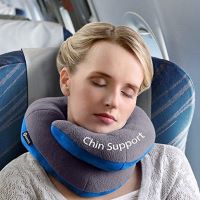
Best Neck Pillows for Long Flights: Which Design Actually Supports You?
A neck pillow can make a long flight more comfortable, but the familiar U-shaped design does not work for everyone. Some passengers need support under the chin, others lean towards the window, and many want a pillow that takes up very little bag space.
In this guide to the best neck pillows for long flights, we compare different designs and explain who each one may suit. We also look at a few small comfort products that can work alongside a pillow. The aim is to help you choose for your seat and sleeping habits, rather than assume one pillow is best for every traveller.
What Makes a Good Neck Pillow for a Long Flight?
A good travel pillow should support your head without pushing it forward or forcing your neck into an awkward position. The right choice depends on your seat, body shape and the way you naturally fall asleep.
Before buying, consider these five points:
- Support: Does it stop your head dropping forward or sideways?
- Fit: Can you adjust it comfortably around your neck and jaw?
- Seat compatibility: Will it work with the headrest on your aircraft seat?
- Packing space: Can you carry it easily with your other essentials?
- Cleaning: Is the cover removable and washable?
Try the pillow at home while sitting upright. If it feels uncomfortable after 15–20 minutes, it is unlikely to become more comfortable several hours into a flight.
Get the SkypropreAir Free Travel Pack
Plan smarter, choose a better seat and enjoy a more comfortable long-haul journey. Enter your details below to receive the Travel Pack.
1. Cabeau Evolution S3: For Headrest Support
The Cabeau Evolution S3 combines raised side supports, a flat back and an adjustable front clasp. It also has straps designed to attach to a seat headrest, which may appeal to passengers whose heads tip sideways when they fall asleep. Its cover is removable and washable, and it comes with a compression case. (cabeau.com)
Best suited to: Travellers who want firm side support and have a seat with a headrest that accommodates the straps.
Consider before buying: Check how the straps fit your likely aircraft seat. A firm foam pillow also takes up more space than an inflatable one, even when compressed.
This is a comparison based on the product’s stated features; SkypropreAir has not tested this pillow in flight.
2. Trtl Pillow Plus: For Travellers Who Lean to One Side
The Trtl Pillow Plus uses an internal support beneath a soft fabric wrap. Its height can be adjusted, allowing you to position the support where your head naturally leans when you sleep upright. (eu.trtltravel.com)
Best suited to: Travellers who tend to rest their head to one side and want an adjustable alternative to a U-shaped pillow.
Consider before buying: The wrap sits close to the neck, so check that it feels comfortable for you before taking it on a long flight. Its support is concentrated on one side at a time; you may need to reposition it if you change sleeping sides.
Product details are based on the manufacturer’s description. SkypropreAir has not tested this pillow in flight.
3. Travelrest Ultimate: For Travellers Short on Bag Space
The Travelrest Ultimate is an inflatable pillow with a long, curved shape. It can sit between your head and shoulder, attach to a suitable seat headrest, or be worn across the body. That gives you more positioning options than a conventional U-shaped pillow. (www.travelrest.net)
Best suited to: Travellers who want a pillow they can deflate and pack away after the flight.
Consider before buying: Its unusual shape takes some practice to position. Try inflating and adjusting it at home before relying on it for an overnight flight.
Product details are based on the manufacturer’s description. SkypropreAir has not tested this pillow in flight.
4. Ostrichpillow Go: For Adjustable Neck and Chin Support
The Ostrichpillow Go has an asymmetrical shape, with different heights around the neck. You can rotate it to place more support where you need it, including beneath the side of your jaw. (global.ostrichpillow.com)
Best suited to: Travellers who want a foam pillow they can adjust by turning it to suit their preferred sleeping position.
Consider before buying: Its higher sides may touch large over-ear headphones. If you normally sleep with headphones on, check that the combination feels comfortable. (ostrichpillow.com)
Product details are based on the manufacturer’s description. SkypropreAir has not tested this pillow in flight.
Which of the Best Neck Pillows for Long Flights Should You Choose?
Choose according to what happens to your head when you doze off, then consider how much space you can spare in your bag.
| If you usually… | Consider… |
|---|---|
| Tip sideways against the seat | A pillow with raised side support, such as the Cabeau Evolution S3 |
| Lean consistently to one side | An adjustable wrap design, such as the Trtl Pillow Plus |
| Pack with very limited space | An inflatable design, such as the Travelrest Ultimate |
| Shift between different resting positions | A pillow you can rotate, such as the Ostrichpillow Go |
If possible, try your chosen pillow while sitting upright before travelling. Comfort is personal: a design that supports one passenger well may feel too firm, warm or restrictive to another.
Your seat matters too. See our guide to Best Seats for Sleeping on a Plane.
Other Travel Comfort Products Worth Considering
A neck pillow can support your head, but it cannot solve every obstacle to resting on a plane. These small items may be useful alongside one:
Sleep mask: Cabin lights and a neighbour’s reading light can make it harder to settle. Choose a mask that blocks light without pressing uncomfortably against your eyes.
Earplugs or noise-cancelling headphones: These can reduce distracting cabin noise. If you wear large headphones, check that they do not clash with the sides of your pillow.
Lightweight layer: Cabin temperature can change during a flight. A soft jumper or scarf is often easier to adjust than relying on a bulky travel blanket.
Small lumbar cushion: If your lower back becomes uncomfortable, a compact cushion may help you find a better sitting position. Make sure it does not reduce the space you need to sit comfortably.
Pack for the problem you actually experience on flights. You do not need every comfort product to make a useful improvement.
How to Use a Neck Pillow on a Plane
Even a supportive pillow may feel awkward if it is positioned poorly. Before settling in for sleep:
- Adjust your seat and headrest first. Sit back comfortably and make sure the pillow does not push your head forward.
- Place support where your head actually falls. If you lean to the right, support that side rather than positioning the pillow by habit.
- Keep your seat belt visible. Fasten it over your blanket or outer layer so crew can see it while you rest.
- Change position occasionally. A pillow can make sitting more comfortable, but it does not replace getting up and moving when it is safe to do so.
- Put it away for take-off and landing if crew ask. Follow the cabin crew’s instructions for any item attached to your seat.
A pillow should help you rest in the seat you have; it should not interfere with your seat belt, your neighbour’s space or the crew’s safety instructions.
Frequently Asked Questions
Are inflatable or foam neck pillows better for long flights?
Inflatable pillows pack down smaller and let you adjust their firmness. Foam pillows keep their shape without inflation and may feel more supportive to some travellers. The better choice depends on your packing space and which design feels comfortable while you sit upright.
Can a neck pillow stop my head falling forward?
Some designs support the chin or attach to a suitable headrest, which may reduce head movement. Check the fit before flying: a pillow should support you without forcing your neck into an uncomfortable position.
Is a travel pillow worth buying for one flight?
If you often struggle to rest while sitting upright, it may be worth considering. For a single flight, first think about whether the seat’s adjustable headrest, a small cushion or a rolled-up layer already gives you enough support.
Should I wear my neck pillow throughout the flight?
You can remove it whenever you are awake or uncomfortable. Follow cabin crew instructions about storing it, particularly if it attaches to the seat.
Final Thoughts
The best neck pillow for a long flight is the one that supports the way you sleep while sitting upright. Raised foam sides may help if your head falls sideways; a wraparound design may suit a consistent side sleeper; and an inflatable pillow may be easier to pack.
Check the fit before you travel, especially if you plan to use headphones or attach the pillow to a headrest. Pair it with only the comfort items you find useful. A thoughtful choice can make an economy seat more manageable, even if no pillow can turn it into a bed.
For more ways to prepare, read SkypropreAir’s How to Sleep on an Overnight Flight and Best Long-Haul Flight Accessories guides.
You can remove it whenever you are awake or uncomfortable. Follow cabin crew instructions about storing it, particularly if it attaches to the seat.