
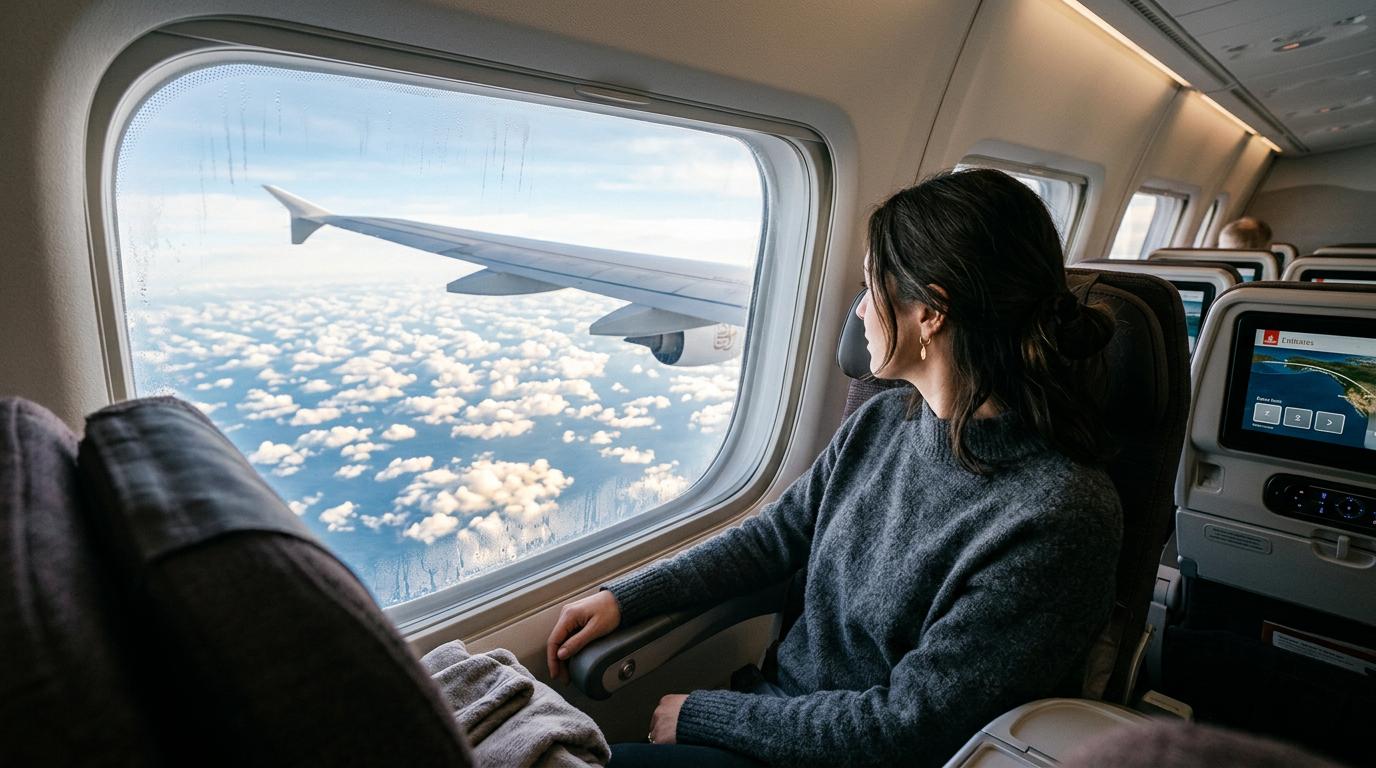
Best Seats for Avoiding Turbulence: Where to Sit for a Smoother Flight
Turbulence can turn an otherwise comfortable journey into an unsettling experience, particularly for nervous flyers. Although no part of an aircraft can completely avoid turbulent air, choosing the right seat can reduce how strongly you feel the movement.
The best seats for avoiding turbulence are generally those positioned directly over or close to the wings. This area is near the aircraft’s centre of lift and gravity, so it tends to experience less pitching and bouncing than seats near the rear. Seats toward the front may also feel steadier than those at the back.
In this guide, we explain where to sit for a smoother flight, which parts of the cabin experience the most movement and what else you can do to remain comfortable when the air becomes unsettled.
What Causes Turbulence?
Turbulence occurs when an aircraft passes through air that is moving unevenly. Just as waves disturb a boat travelling across water, changing air currents can cause an aircraft to rise, fall or move from side to side.
Common causes of turbulence include:
Get the SkypropreAir Free Travel Pack
Plan smarter, choose a better seat and enjoy a more comfortable long-haul journey. Enter your details below to receive the Travel Pack.
- Jet streams: Fast-moving bands of air at high altitude can create sudden changes in wind speed and direction.
- Thunderstorms: Strong rising and descending air currents around storms can produce severe turbulence.
- Mountains: Air flowing over mountain ranges can form waves and disturbed currents on the other side.
- Weather fronts: When warm and cold air masses meet, the resulting instability may create turbulent conditions.
- Clear-air turbulence: This can occur in apparently clear skies, often near jet streams, without visible clouds to warn passengers.
Turbulence is common during air travel and is usually not dangerous to the aircraft. Modern aircraft are engineered to withstand forces considerably stronger than those normally encountered in flight. However, passengers can still be injured if they are not wearing their seat belts when sudden turbulence occurs.
For this reason, keeping your seat belt fastened whenever you are seated remains the most important precaution—regardless of where you choose to sit.
What Are the Best Seats for Avoiding Turbulence?
The best seats for avoiding turbulence are generally those located directly over the wings or slightly in front of them. This part of the cabin is usually closest to the aircraft’s centre of gravity, so it tends to move less dramatically when the aircraft pitches up and down.
If seats directly over the wings are unavailable, choose a seat in the forward section of the cabin. Passengers seated near the front will often feel less movement than those sitting close to the tail.
When examining the airline’s seat map, look for:
- Seats positioned over the wings
- Seats slightly ahead of the wings
- Seats in the forward half of the aircraft
- A window seat if seeing the horizon helps you remain calm
- An aisle seat if you prefer greater freedom of movement
Try to avoid seats in the last few rows when possible. The rear of the aircraft is farther from its centre of gravity and may experience more noticeable vertical and side-to-side movement during turbulence.
However, seat selection can only reduce how strongly turbulence feels; it cannot remove turbulence or guarantee a completely smooth flight.
Why Do Seats Over the Wings Feel More Stable?
Seats over the wings usually feel more stable because this area is close to the aircraft’s centre of gravity and centre of lift. When turbulence causes the aircraft to pitch, roll or change altitude, the movement is often less pronounced near this central point.
Think of an aircraft as a seesaw. The middle moves less dramatically, while the ends travel through a wider arc. In a similar way, passengers near the front and especially the rear may notice more vertical movement than those seated closer to the wings.
The wings also generate the lift that supports the aircraft in flight. Sitting near their attachment point places passengers close to the aircraft’s main structural centre, where movement may feel more controlled.
This does not mean that an over-wing seat will remain completely still. Strong turbulence can be felt throughout the cabin. However, for passengers who are sensitive to motion or anxious about turbulence, choosing a seat near the wings can make the experience feel more manageable.
Are Front-Row Seats Better During Turbulence?
Seats at the front of the aircraft can feel more comfortable during turbulence than seats at the rear, but they are not necessarily smoother than seats positioned over the wings.
When an aircraft pitches up or down, the front and rear move around its central balance point. Because the tail is generally farther from this point, passengers seated at the back may experience more noticeable movement. The front of the cabin can therefore feel calmer by comparison.
Front-row seating may offer additional comfort benefits, such as:
- Less cabin noise on many aircraft
- Faster boarding or disembarkation
- Earlier meal and refreshment service
- Fewer passengers moving past your seat
- A less crowded cabin in some premium sections
However, the first row may have fixed armrests, limited under-seat storage or a nearby galley and toilet. Therefore, passengers should examine the seat map carefully before paying extra for a front-row seat.
If reducing the sensation of turbulence is your main priority, choose a seat over or slightly ahead of the wings. If those seats are unavailable, the forward cabin is usually the next best option.
Where Is Turbulence Felt Most Strongly?
Turbulence is usually felt most strongly toward the rear of the aircraft. The tail is farther from the aircraft’s centre of gravity, so it can move through a wider arc when the aircraft pitches or changes direction.
Passengers in the last few rows may notice more bouncing, swaying and vibration than those sitting near the wings. Rear seats can also feel less comfortable because of engine noise, nearby toilets, busy galleys and people waiting in the aisle.
The effect is similar to sitting at the back of a bus travelling over an uneven road: passengers farther from the vehicle’s central balance point often feel the movement more sharply.
However, the intensity of turbulence depends on several factors, including the airflow, aircraft type, altitude and weather conditions. During stronger turbulence, movement will be felt throughout the cabin.
If you are particularly sensitive to motion, avoid the last rows where possible and choose a seat over the wings or in the forward half of the aircraft.
Window or Aisle: Which Seat Feels Better During Turbulence?
A window and an aisle seat in the same row experience almost the same aircraft movement. However, your personal comfort and reaction to turbulence can make one feel better than the other.
A window seat may suit passengers who feel calmer when they can see outside. Looking at the horizon can give the brain a stable visual reference and may reduce feelings of motion sickness. The cabin wall also provides somewhere to lean, which can help you feel more supported.
However, watching the wings flex or seeing the aircraft move through clouds may increase anxiety for some passengers. In that case, an aisle seat may be more comfortable.
An aisle seat can feel less restrictive and makes it easier to speak to a flight attendant or leave your seat when conditions are calm. It may be preferable for passengers who dislike enclosed spaces. However, you must remain seated with your seat belt fastened whenever the seat-belt sign is illuminated, and the aisle may expose you to unsecured objects or passing trolleys.
For the smoothest possible position, the row matters more than the seat letter. First choose a row over or slightly ahead of the wings, and then select the window or aisle according to which makes you feel calmer.
Does Aircraft Size Make a Difference?
Aircraft size and weight can influence how turbulence feels. Larger and heavier aircraft often respond less sharply to disturbed air than smaller, lighter aircraft, although passengers may still experience noticeable movement.
Wide-body aircraft such as the Airbus A350, Airbus A380 and Boeing 787 generally provide a more settled experience on long-haul routes. Their greater mass, longer wingspans and advanced flight-control systems can help make changes in airflow feel less abrupt inside the cabin.
Smaller regional aircraft may feel more responsive to the same air currents because they have less mass. This does not mean they are unsafe; it simply means passengers might notice the movement more clearly.
Aircraft design also matters. Modern aircraft use sophisticated weather radar, flexible wings and automated systems to help pilots identify or manage turbulent conditions. Pilots can adjust altitude, change course or reduce speed when necessary.
Nevertheless, no aircraft is completely unaffected by turbulence. Even on a large wide-body aircraft, selecting a seat near the wings may provide a more stable experience than sitting in the last few rows.
How to Select the Smoothest Available Seat
Finding a smoother seat requires more than simply choosing the first available option. Before paying for seat selection, check the aircraft type and study the airline’s seat map carefully.
Use the following steps:
- Identify the aircraft type. Check your booking details to see which aircraft is scheduled to operate the flight.
- Locate the wings on the seat map. Most airline seat maps show the approximate wing position. Select a row over the wings or slightly ahead of them.
- Choose the forward cabin if necessary. If the over-wing rows are unavailable, choose a seat in the front half of the aircraft rather than one near the tail.
- Consider your personal comfort. Select a window seat if seeing the horizon reassures you, or an aisle seat if you prefer a less enclosed position.
- Check the seat’s disadvantages. Some over-wing exit-row seats have fixed armrests, limited recline or restrictions on who may occupy them.
- Recheck before departure. Airlines can change the scheduled aircraft, which may alter the cabin layout and the position of your selected seat.
Seat-selection websites can provide useful guidance, but the airline’s current seat map should be your primary reference. Even after choosing carefully, remember that no seat can guarantee a turbulence-free flight.
Tips for Nervous Passengers During Turbulence
Choosing a stable seat can help, but your actions during the flight also influence how manageable turbulence feels. If you are a nervous passenger, the following measures may help you remain calmer:
- Keep your seat belt fastened: Wear it low and snug across your hips whenever you are seated, even when the seat-belt sign is switched off.
- Listen to the cabin crew: Flight attendants receive safety training and will provide instructions when turbulence requires additional precautions.
- Use controlled breathing: Inhale slowly through your nose and exhale gently. Concentrating on your breathing can reduce anxiety.
- Avoid excessive caffeine and alcohol: Both may increase dehydration, restlessness or feelings of anxiety.
- Choose calming entertainment: Music, an audiobook or a familiar film can distract you from every movement.
- Watch the cabin crew: If they are continuing their normal duties, the conditions are generally routine. If they take their seats, follow their instructions promptly.
- Secure loose belongings: Store bags properly and avoid keeping heavy objects on your lap or tray table.
- Tell the crew if you are anxious: A flight attendant may explain the conditions and offer reassurance when it is safe to do so.
Remember that turbulence is an expected part of flying. It may feel uncomfortable, but discomfort does not automatically mean that the aircraft is in danger. Remaining seated, fastening your seat belt and following crew instructions are the most important steps you can take.
Frequently Asked Questions
What is the best seat for avoiding turbulence?
A seat directly over or slightly ahead of the wings is generally the best choice. This area is close to the aircraft’s centre of gravity, where pitching and vertical movement may feel less pronounced.
Is the front or back of the plane better during turbulence?
The front of the aircraft usually feels steadier than the back. Passengers near the tail may experience more noticeable movement because they are farther from the aircraft’s central balance point.
Can any seat completely avoid turbulence?
No. Turbulence affects the entire aircraft, so no seat can guarantee a completely smooth journey. Seat selection can only reduce how strongly some of the movement is felt.
Is a window or aisle seat better during turbulence?
The physical movement is almost identical within the same row. A window seat may help if seeing the horizon reduces motion sickness, while an aisle seat may feel better for passengers who dislike enclosed spaces.
Do larger aircraft experience less turbulence?
Larger aircraft still encounter turbulence, but their greater mass can make some changes in airflow feel less abrupt than on smaller aircraft. Aircraft design, weather conditions and the strength of the turbulence also influence the experience.
Are seats over the wings safe?
Yes. Seats over the wings are safe and may feel more stable during turbulence. Every approved passenger seat must meet aviation safety requirements, although over-wing exit-row passengers must be willing and physically able to assist in an emergency.
Is turbulence dangerous?
Turbulence is common and usually does not threaten the aircraft. The main risk is injury to passengers or crew members who are not properly restrained when unexpected movement occurs. Keep your seat belt fastened whenever you are seated.
Final Thoughts
The best seats for avoiding turbulence are generally those positioned directly over or slightly ahead of the wings. These seats are close to the aircraft’s centre of gravity and usually experience less noticeable movement than seats near the tail.
If the over-wing rows are unavailable, choose a seat in the forward half of the cabin. Your choice between a window and an aisle seat should depend on which makes you feel calmer, as seats in the same row experience almost identical movement.
Remember that no seat can eliminate turbulence. Weather conditions, aircraft type and airflow all affect how smooth a journey feels. The most important safety measure is to keep your seat belt fastened whenever you are seated, secure loose belongings and follow instructions from the flight crew. Choose the right seat for sleeping
A carefully selected seat may not guarantee a perfectly smooth flight, but it can make turbulent conditions feel less intense and help you travel with greater confidence.